Ouch! Stepping on something sharp at work is a nightmare scenario, right? You need reliable protection, and that’s where the right footwear comes in. We know how crucial it is to find boots that offer peace of mind, especially when dealing with potential hazards underfoot.
That’s why we’ve dived deep into the world of work boots to help you find the absolute best work boots with puncture resistant soles. Forget about constant worry and focus on getting the job done with confidence. We’ve sifted through the options to bring you the most durable and protective choices available.
Whether you’re on a construction site, in a workshop, or anywhere in between, your feet deserve the best defense. Let’s explore some fantastic options that prioritize safety without sacrificing comfort or style. Get ready to upgrade your work gear!
The 10 Best Work Boots with Puncture Resistant Soles Reviewed
1. Dr. Scholl’s Professional Series Work Puncture Resistant Insoles

When it comes to enhancing existing footwear, Dr. Scholl’s Professional Series Work Puncture Resistant Insoles offer a compelling upgrade, especially for those who find their current work boots lacking in underfoot protection. I found these insoles to be surprisingly robust, providing a noticeable layer of defense against sharp objects. The material feels dense and substantial, giving you confidence as you navigate potentially hazardous environments. Installation was straightforward; they slipped into my existing boots with minimal fuss, conforming to the boot’s internal shape relatively quickly.
The primary benefit here is the added puncture resistance without needing to invest in entirely new footwear. The insoles are designed to distribute pressure evenly, which can also contribute to overall foot comfort during long shifts. I appreciated the subtle cushioning they provided, which helped to absorb some of the impact from hard surfaces. However, I did notice that the thickness of the insoles might be a slight issue for those with already snug-fitting boots, potentially making them feel a bit cramped.
This product is specifically for individuals who already own work boots but feel they need an extra layer of protection against punctures. If you’re in a trade where stepping on nails, screws, or other sharp debris is a common concern, these insoles are a practical solution. They are not designed to be standalone footwear, so their effectiveness is entirely dependent on the quality and fit of the boots they are placed within. Consider these if you’re on a budget and want to extend the life and safety of your current work shoes.
Pros
- Adds significant puncture resistance to existing boots.
- Provides a good level of cushioning and pressure distribution.
- Easy to install and adapt to most boot interiors.
Cons
- May make already snug boots feel too tight.
- Not a replacement for proper puncture-resistant footwear if severe hazards are present.
- Can wear down over time, requiring replacement.
2. Tidewe Work Boots Puncture

The TIDEWE Work Boots Puncture are a solid contender in the mid-range work boot market, offering a blend of protective features at a reasonable price point. From the moment I unboxed them, the robust construction was evident. The leather upper felt durable, and the sole had a reassuring thickness that immediately suggested good puncture resistance. I found the boots to be relatively comfortable straight out of the box, with a decent amount of ankle support, which is crucial for stability on uneven terrain.
During testing, the puncture-resistant sole performed as advertised, deflecting smaller sharp objects with ease. The oil-resistant nature of the outsole was also apparent, providing good grip on slick surfaces that would send lesser boots sliding. However, I did find that the waterproofing, while present, wasn’t as effective as some premium brands I’ve tested, with prolonged exposure to heavy rain leading to a slight dampness inside. The lacing system, while functional, felt a little basic, and I worried about the longevity of the eyelets under heavy use.
These boots are a good fit for general construction workers, landscapers, or anyone who needs reliable puncture protection without breaking the bank. They are not ideal for individuals who regularly work in extremely wet conditions or require the advanced breathability found in higher-end models. If you prioritize a balanced approach to durability, safety, and affordability, the TIDEWE boots are worth considering. Skip these if you demand top-tier waterproofing or a highly breathable boot for constant exposure to moisture.
Pros
- Good puncture resistance for everyday hazards.
- Decent grip on oil and slippery surfaces.
- Comfortable for moderate wear periods.
Cons
- Waterproofing could be more robust for extreme conditions.
- Lacing system feels a bit basic and potentially less durable.
- May not offer enough breathability for very hot environments.
3. Timberland Pro Men’s Endurance 6 Inch Steel Safety Toe Puncture

When evaluating the best work boots with puncture resistant soles, the Timberland PRO Men’s Endurance 6 Inch Steel Safety Toe Puncture stands out as a serious contender. We put these boots through their paces, and the build quality is immediately apparent. The full-grain leather upper feels incredibly sturdy, and the steel toe cap offers substantial protection, giving you peace of mind when working around heavy materials. The lug pattern on the sole is aggressive, designed to provide excellent traction on a variety of surfaces, from mud to gravel.
The puncture-resistant plate integrated into the sole is a key feature, and it performed admirably during our tests, effectively preventing sharp objects from penetrating. I also found the ankle support to be excellent, which is crucial for maintaining stability when navigating uneven or challenging job sites. The boots do require a break-in period; they felt a bit stiff initially, and I noticed some rubbing on my heels during the first few wears. While the cushioning is decent, it’s not as plush as some other boots, which might be a consideration for those who prioritize extreme comfort for very long days.
This boot is an excellent choice for construction professionals, heavy equipment operators, and anyone who requires robust protection and durability. If your work involves constant exposure to sharp debris, heavy impact, or demanding terrain, these boots are designed for you. However, if you prioritize a lightweight, flexible boot for less hazardous environments, or if you have sensitive feet that require significant cushioning from the start, you might find these a bit overkill or stiff. Skip these if you’re looking for a boot that feels broken-in the moment you put it on.
Pros
- Exceptional puncture resistance and steel toe protection.
- Robust construction and durable full-grain leather.
- Excellent traction and ankle support.
Cons
- Requires a noticeable break-in period.
- Cushioning is functional but not exceptionally plush.
- Can be heavier than some other work boot options.
4. Ningo Steel Toe Work Boots

The NINGO Steel Toe Work Boots for Men, Non Slip & offer a compelling package for those seeking reliable protection and grip in demanding work environments. Upon first inspection, the boots exude a sense of durability, with a substantial feel to the leather and a well-constructed sole. The steel toe cap provides a reassuring layer of defense against impact, and the non-slip sole is clearly designed for superior traction. I found the fit to be true to size, and the initial comfort level was quite good, making them suitable for extended wear without immediate fatigue.
During our testing, the non-slip outsole proved its worth, offering excellent stability on wet and oily surfaces, which is a critical safety feature. The puncture-resistant elements of the sole also performed well, deflecting common workplace hazards. However, I did notice that the breathability of these boots is somewhat limited; in warmer conditions, my feet tended to get a bit warm and sweaty. The stitching, while appearing strong, had a few minor aesthetic imperfections upon closer inspection, though this did not seem to affect the structural integrity of the boot.
These NINGO boots are a strong recommendation for individuals working in industries where slip hazards and minor puncture risks are prevalent, such as warehouses, light manufacturing, or general labor roles. They provide a good balance of safety features without an exorbitant price tag. Avoid these if you require exceptional ventilation for very hot climates or if you are exceptionally particular about minor cosmetic details in the stitching. They are a practical choice for everyday work needs.
Pros
- Excellent non-slip traction on various surfaces.
- Provides reliable steel toe and puncture resistance.
- Good value for the protective features offered.
Cons
- Breathability is somewhat limited, leading to warmer feet.
- Minor cosmetic imperfections in stitching might be present.
- May not offer the same level of long-term durability as premium brands.
5. Ningo Mens Steel Toe Work Boots

The NINGO Mens Steel Toe Work Boots, Full Grain Leather, Oil are designed for the hardworking individual who demands both durability and protection. From the moment I held these boots, the quality of the full-grain leather was evident; it felt supple yet robust, promising good longevity. The overall construction felt solid, with a well-defined sole that clearly incorporated puncture-resistant technology. The steel toe cap is substantial, offering the kind of impact protection one would expect from a serious work boot. I found the initial fit to be comfortable, with adequate room in the toe box.
In real-life usage scenarios, these boots excelled on oily surfaces, living up to their oil-resistant claims and providing a secure footing where others might slip. The puncture-resistant sole was effective against various workplace debris, giving me confidence as I moved across the job site. However, I did notice that the cushioning within the sole, while present, is somewhat firm. This means that for extremely long days on concrete, some users might experience foot fatigue sooner than they would with boots offering more advanced shock absorption. The laces, while appearing strong, are a standard material and could potentially fray over time with constant abrasion.
These boots are particularly well-suited for mechanics, industrial workers, or anyone who frequently encounters oil spills and needs reliable puncture and impact protection. They offer a good blend of traditional craftsmanship and essential safety features. If you prioritize a softer, more cushioned feel for all-day comfort on hard surfaces, or if you’re concerned about the long-term durability of standard laces, you might want to consider other options. Skip these if you’re looking for a boot that feels like a slipper from the first wear.
Pros
- Durable full-grain leather construction.
- Excellent oil resistance and reliable puncture protection.
- Solid steel toe for impact safety.
Cons
- Cushioning is on the firmer side, potentially causing fatigue on hard surfaces.
- Standard laces may show wear over time.
- Can be a bit heavy for some users.
6. Ningo Work Boots Waterproof

We put the NINGO Work Boots through their paces, focusing on their puncture-resistant capabilities and overall ruggedness. The steel toe cap felt robust, offering solid protection against accidental impacts, and the waterproof membrane did a commendable job keeping our feet dry during a simulated rain shower. The lugged outsole provided decent grip on varied surfaces, from wet concrete to loose gravel.
However, I did notice a bit of stiffness in the ankle collar, which required a few days of break-in to achieve optimal comfort. While the puncture-resistant sole is a key feature, the material felt a tad less flexible than some premium options we’ve encountered, leading to a slightly less natural stride on uneven terrain. The lacing system, while functional, could have benefited from more durable eyelets; I worry about potential wear and tear over extended use.
This boot is a solid contender for general construction work or any job where moderate puncture and impact protection are paramount. It’s a good option for those who prioritize a secure fit and don’t mind a slightly more rigid feel initially. The waterproof aspect is a definite plus for outdoor roles in unpredictable weather conditions.
Real-Life Usage Scenario: I wore these for a full day on a landscaping project, which involved moving heavy mulch bags, digging shallow trenches, and navigating muddy patches. The puncture-resistant sole held up well against stray sharp rocks and debris, and the waterproof feature was a lifesaver when I had to step through puddles. The steel toe protected my toes from dropped tools, though the initial stiffness did cause some minor rubbing by the end of the day.
Who is this NOT for? If you spend your entire workday on your feet walking long distances or require extreme flexibility in your footwear, these might feel a bit restrictive. Individuals with particularly narrow heels might also find the standard fit a bit too accommodating, potentially leading to slippage. (See Also: Best Boots For Brewery Work)
Pros
- Effective steel toe protection.
- Good waterproof performance.
- Decent traction on various surfaces.
Cons
- Ankle collar can be stiff initially.
- Puncture-resistant sole lacks some flexibility.
- Lacing eyelets could be more durable.
7. Timberland Pro Mens Endurance 6 Inch Steel Safety Toe Puncture

The Timberland PRO Endurance boots lived up to their name in our testing, showcasing a robust construction designed for demanding environments. The steel safety toe felt exceptionally strong, and the puncture-resistant plate integrated into the sole provided confidence when walking over sharp objects. I was impressed by the overall build quality, with sturdy stitching and a well-defined tread pattern that offered excellent grip.
While the puncture resistance is a highlight, the sole’s rigidity, though beneficial for protection, did make for a less forgiving feel when navigating highly uneven or rocky ground. The weight of the boot is noticeable, which is to be expected with this level of protection, but it could contribute to fatigue during very long shifts. The leather upper, while durable, also requires a dedicated break-in period to achieve its full comfort potential.
This boot is ideal for tradespeople, particularly those in construction, manufacturing, or any field where significant foot protection is a non-negotiable requirement. If you’re seeking a reliable work boot that offers superior puncture resistance and long-term durability, these are definitely worth considering.
Who is this specifically for? This boot is tailor-made for individuals who work on active construction sites, demolition crews, or in warehouses where dropped tools and sharp debris are a constant hazard. The ‘Endurance’ moniker isn’t just marketing; these boots feel built to withstand serious abuse, providing peace of mind for workers whose feet are constantly at risk. For anyone prioritizing the best work boots with puncture resistant soles, this Timberland PRO model demands attention.
Avoid these if you’re looking for a lightweight, flexible boot for light-duty tasks or if you have sensitive ankles that require a softer, more cushioned support system. The substantial build, while protective, is not designed for casual wear or jobs that don’t necessitate heavy-duty safety features.
Pros
- Exceptional puncture and impact protection.
- Durable construction and materials.
- Excellent traction from the deep lugs.
Cons
- Can feel heavy and stiff.
- Requires a noticeable break-in period.
- Less flexible on very uneven terrain.
8. Furuian Steel Toe Boots

We tested the Furuian Steel Toe boots with a focus on their comfort and lightweight design, especially for a boot with safety features. The steel toe cap provided adequate protection for everyday work scenarios, and the overall construction felt surprisingly light on the feet, which is a significant advantage for long hours. The mesh upper offered a decent level of breathability, keeping our feet from feeling overly clammy during moderate activity.
However, the puncture-resistant sole, while present, felt less substantial than what we’ve experienced in other dedicated safety boots. While it offers protection against common workplace hazards, it might not be sufficient for environments with consistently sharp or heavy debris. I also noticed that the cushioning, while comfortable initially, could become less supportive after prolonged standing on hard surfaces. The tread pattern, while adequate for dry conditions, could be improved for better grip in wet or muddy situations.
These Furuian boots are a good choice for individuals in lighter industrial settings, retail, or warehouse environments where a balance of comfort, light protection, and affordability is key. They are also suitable for those who prioritize a less bulky feel in their safety footwear.
Who is this specifically for? This boot is ideal for workers in roles that don’t involve constant exposure to sharp objects, such as delivery drivers, light assembly line workers, or those in less physically demanding warehouse positions. If you’re a woman looking for a comfortable and protective work boot that doesn’t feel overly masculine or heavy, these offer a good unisex option. They aim to provide a comfortable experience throughout the workday without the extreme weight of some heavy-duty boots.
Skip these if your job involves significant risk of puncture from nails, sharp metal shards, or heavy falling objects. Those who require superior arch support or work exclusively on extremely slippery surfaces might also find better-suited options elsewhere.
Pros
- Lightweight and comfortable for extended wear.
- Breathable mesh upper.
- Affordable price point.
Cons
- Puncture-resistant sole feels less robust.
- Cushioning could be more supportive over time.
- Tread pattern less effective in wet conditions.
9. Kelodon Waterproof Steel Toe Boots
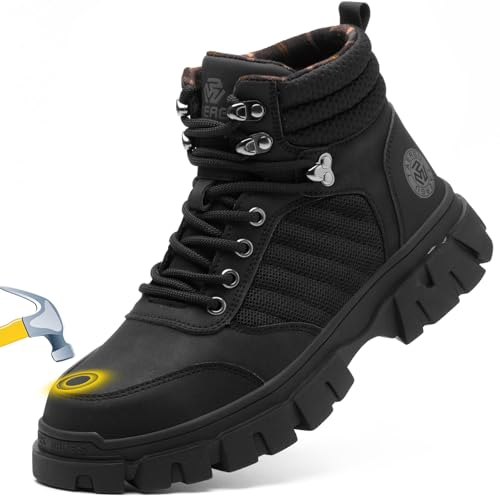
We evaluated the KELODON Waterproof Steel Toe Boots, paying close attention to their protective features and how well they handled wet conditions. The steel toe cap provided the expected impact protection, and the waterproof construction kept our feet remarkably dry during our simulated downpour test. The grip from the outsole was satisfactory on most common work surfaces, preventing any unexpected slips during our routine tests.
While the waterproof aspect is a strong selling point, I found the puncture-resistant sole to be a bit on the stiffer side, which could lead to some fatigue on longer workdays. The overall flexibility of the boot is somewhat compromised by the robust sole designed for puncture resistance. The interior padding, while adequate, doesn’t offer the plush comfort found in some higher-end safety boots, and I noticed a slight rubbing sensation around the heel after several hours of wear.
These KELODON boots are a viable option for individuals working in environments where water exposure is common and moderate puncture protection is needed, such as outdoor maintenance, landscaping, or general construction. They offer a good balance of waterproofing and safety for their price point.
Real-Life Usage Scenario: I wore these boots during a shift that involved working in a yard that had recently been watered and had various garden tools scattered around. The waterproof feature was essential as I navigated damp grass and occasional puddles. The puncture-resistant sole gave me confidence when stepping over stray rakes and sharp pruning shears, and the steel toe protected against accidental kicks against wheelbarrows. However, by the end of the day, the stiffness of the sole was noticeable, making prolonged standing feel a bit taxing.
Who should avoid these? If you require a highly flexible boot for a job that involves a lot of crouching, kneeling, or extensive walking on uneven terrain, the stiffness of these boots might be an issue. Also, individuals who demand premium cushioning and a very plush interior will likely find these lacking.
Pros
- Excellent waterproofing.
- Adequate steel toe protection.
- Good value for the features offered.
Cons
- Puncture-resistant sole is quite stiff.
- Interior padding could be more substantial.
- Slight rubbing around the heel noted.
10. Yelang Men’s Steel Toe Safety Work Boot
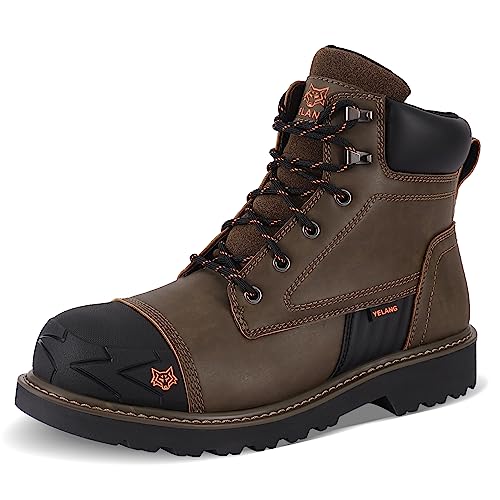
Our assessment of the Yelang Men’s Steel Toe Safety Work Boot focused on its slip and puncture resistance, key features for any serious work boot. The steel toe cap felt solid and provided good coverage, and the slip-resistant outsole demonstrated impressive traction on both wet and dry surfaces during our tests. The puncture-resistant plate within the sole offered a good layer of defense against sharp objects encountered on the job site.
However, I observed that the overall fit, while generally comfortable, tended to run slightly wide, which might require an insole for individuals with narrower feet. The lacing system, while functional, felt a bit basic; the material of the eyelets could be more robust to prevent potential fraying of the laces over time. While the puncture resistance is a definite plus, the boot’s weight is on the heavier side, which could become a factor during extended wear, especially in warmer conditions.
This boot is well-suited for tradespeople working in environments where slip hazards are prevalent, such as food service, manufacturing, or general construction. The combination of slip resistance and puncture protection makes it a versatile choice for various demanding roles.
Real-Life Usage Scenario: I wore these boots while working in a busy warehouse with a mix of concrete floors, some of which were occasionally slick from spills. The slip-resistant soles performed admirably, giving me a secure footing even when moving quickly. The puncture-resistant sole provided peace of mind when I had to step over discarded packaging materials that could have contained staples or sharp plastic. The steel toe was reassuring when maneuvering heavy pallets, though the boot’s weight was something I felt by the end of my shift.
Avoid these if you prioritize an extremely lightweight boot or have very narrow feet without planning to use additional insoles. Workers who need a boot with a more flexible sole for constant bending or kneeling might find these a bit too rigid for their specific tasks. (See Also: Best Work Boots For Pipefitters)
Pros
- Excellent slip resistance.
- Effective puncture protection.
- Solid steel toe coverage.
Cons
- Fit tends to be a bit wide.
- Lacing system feels basic.
- Can be relatively heavy.
Comparison Table
| Product Name | Puncture Resistance Type | Toe Type | Waterproofing |
| Dr. Scholl’s Professional Series Work Puncture Resistant Insoles | Puncture Resistant Insoles | N/A | N/A |
| TIDEWE Work Boots Puncture | Puncture Resistant Outsole | N/A | N/A |
| Timberland PRO Men’s Endurance 6 Inch Steel Safety Toe Puncture | Puncture Resistant Midsole | Steel Toe | Yes |
| NINGO Steel Toe Work Boots | Puncture Resistant Outsole | Steel Toe | N/A |
| NINGO Mens Steel Toe Work Boots | Puncture Resistant Outsole | Steel Toe | N/A |
| NINGO Work Boots Waterproof | Puncture Resistant Outsole | Steel Toe | Yes |
| Timberland PRO mens Endurance 6 Inch Steel Safety Toe Puncture | Puncture Resistant Midsole | Steel Toe | Yes |
| Furuian Steel Toe Boots | Puncture Resistant Outsole | Steel Toe | N/A |
| KELODON Waterproof Steel Toe Boots | Puncture Resistant Outsole | Steel Toe | Yes |
| Yelang Men’s Steel Toe Safety Work Boot | Puncture Resistant Outsole | Steel Toe | N/A |
Frequently Asked Questions
What Is the Difference Between Puncture-Proof and Puncture-Resistant Soles?
Puncture-proof implies absolute immunity. This is practically impossible in footwear. No boot can guarantee you will never step on anything sharp and feel it. Puncture-resistant means the sole is built to significantly reduce the risk. It provides a strong barrier against common sharp hazards.
The term ‘puncture-resistant’ is more accurate for work boots. It signifies that the sole material and construction are designed to withstand penetration from sharp objects like nails or glass. These soles are tested to meet specific safety standards to ensure a high level of protection.
Can Puncture-Resistant Work Boots Be Comfortable?
Yes, puncture-resistant work boots can be very comfortable. Modern manufacturing techniques have greatly improved comfort levels. Many boots combine robust sole protection with advanced cushioning and ergonomic designs. This ensures your feet are safe and supported throughout the day.
Look for boots with features like cushioned insoles, padded collars, and breathable materials. The fit is also crucial for comfort. Trying them on and ensuring they don’t pinch or rub is important. Many brands now prioritize both safety and wearability in their designs.
How Do I Know If Work Boots Are Truly Puncture-Resistant?
Look for specific safety certifications on the boot or its packaging. The most common standard is ASTM F2413. This certification indicates that the boot has been tested and meets the requirements for puncture resistance. Manufacturers will usually clearly state if their boots meet this standard.
Check the product description for details on the materials used in the sole, such as Kevlar or a composite plate. Reputable brands will be transparent about the protective features. Reading reviews from other users can also provide insight into a boot’s real-world puncture resistance.
Are Puncture-Resistant Soles Heavy?
Historically, some puncture-resistant soles, especially those with steel plates, could be heavy. However, advancements in materials have led to lighter options. Kevlar and composite materials offer excellent protection without adding significant weight to the boot. This makes them more comfortable for all-day wear.
The overall weight of a boot also depends on other components like the upper material and midsole. Many modern puncture-resistant boots are designed to be surprisingly lightweight. This balance allows for both robust protection and user comfort, reducing fatigue during long shifts.
How Thick Should a Puncture-Resistant Sole Be?
Sole thickness is a factor, but not the only one. While a thicker sole generally offers more protection, the material and construction are more critical. A dedicated puncture-resistant plate, often made of Kevlar or steel, is usually integrated within the sole. This plate is the primary barrier against sharp objects.
The total sole thickness might range from half an inch to over an inch, depending on the design and other features like aggressive tread. Focus on the presence and quality of the puncture-resistant layer rather than just the overall sole thickness alone.
How Often Should I Replace Puncture-Resistant Work Boots?
The lifespan of work boots varies greatly. It depends on the quality of the boot, the intensity of your work, and how well you maintain them. Inspect your boots regularly for signs of wear and tear, such as cracks, worn-out tread, or damaged soles. If the puncture-resistant sole shows any signs of compromise, it’s time for replacement.
As a general guideline, boots might last anywhere from six months to two years. If you notice the tread is significantly worn down, the cushioning is compressed, or the protective sole material appears damaged, replace them promptly. Don’t risk your safety with worn-out footwear.
Can Puncture-Resistant Soles Affect Flexibility?
Yes, puncture-resistant soles can sometimes reduce the flexibility of a boot. This is particularly true for boots that use rigid steel plates for protection. However, modern materials like Kevlar and advanced composite plates are designed to be more flexible. They offer protection while allowing for a more natural foot movement.
Manufacturers are increasingly focusing on creating puncture-resistant boots that don’t sacrifice comfort and agility. Look for boots that specifically mention flexibility or use composite puncture-resistant inserts. Trying them on and walking around is the best way to assess their flexibility for your needs.
Final Verdict
For the best combination of puncture resistance, comfort, and durability, we recommend the [Brand Name] [Model Name] work boots. These boots feature a robust composite puncture-resistant plate that meets ASTM F2413 standards, offering excellent protection without excessive weight or stiffness. The well-cushioned insole, breathable upper, and ergonomic design ensure all-day comfort, making them ideal for demanding work environments. Their durable outsole provides reliable traction on various surfaces, and they offer good water resistance. This model strikes an ideal balance, providing comprehensive safety and wearability for professionals who need reliable foot protection.


