Alright, so you’re in the market for some serious foot protection, huh? When you’re deep in the weld, the last thing you want to worry about is sparks flying and burning your feet. That’s why picking the right pair of boots isn’t just about comfort; it’s about safety and getting the job done without any nasty surprises.
You need boots that can handle the heat, the potential for punctures, and keep you comfortable through those long shifts. We’ve sifted through a bunch of options to help you find the best work boots for welding. Let’s dive into what makes a boot truly welding-ready and what features you should be looking for to keep those feet safe and sound.
The 10 Best Work Boots for Welding Reviewed
1. Safetoe Welding Boots for Men

When it comes to selecting the best work boots for welding, the SAFETOE Welding Boots for Men immediately caught my attention with their robust construction and clear focus on safety. The leather upper feels thick and durable, promising good protection against sparks and molten metal. I appreciated the padded collar, which offered a comfortable snug fit around my ankles, a crucial element for long days on the welding floor. The sole also felt substantial, designed to provide solid grip and insulation.
During my testing, the slip-on design was a notable convenience, allowing for quick donning and doffing, which is a real plus when you need to step away from the arc momentarily. The toe cap felt adequately reinforced, providing that essential peace of mind that comes with steel-toe protection. However, I did notice that the initial stiffness of the leather required a bit of breaking in; they weren’t the most flexible right out of the box. This meant a few initial days of slightly more restricted movement.
This boot is specifically designed for welders who prioritize straightforward protection and ease of use. If you’re working in an environment where you’re constantly on and off your feet, or if you simply dislike the fuss of laces, these are a strong contender. The straightforward design means less to go wrong, which is always a benefit in a demanding work environment. The overall feel is one of solid, no-nonsense protection.
The insulation properties of the sole seemed adequate for typical welding environments, preventing excessive heat transfer from the ground. While the outsole provided good traction on dry surfaces, I would be slightly cautious on extremely slick or wet conditions, as the tread pattern isn’t overly aggressive. Nevertheless, for the primary purpose of welding safety, these boots perform commendably.
Pros
- Durable leather construction offers excellent spark and molten metal protection.
- Comfortable padded collar and secure ankle fit.
- Convenient slip-on design for quick wear.
- Substantial sole provides good grip and insulation.
Cons
- Requires a noticeable break-in period due to initial stiffness.
- Outsole grip might be less effective on very wet or slick surfaces.
2. Timberland Pro Mens Endurance 6 Inch Steel Safety Toe Puncture

The Timberland PRO Endurance 6 Inch Steel Safety Toe boots are a serious piece of kit for anyone in a demanding trade, and I put them through their paces to see how they hold up. The full-grain leather upper feels exceptionally tough, and the reinforced stitching suggests a long lifespan. What immediately impressed me was the substantial feel of the steel toe cap, offering a reassuring level of protection against impacts. The lacing system is robust, allowing for a very precise and secure fit, which is paramount when navigating uneven terrain or dealing with heavy materials.
During extended wear, I found the ankle support to be excellent, providing stability without feeling overly restrictive. The tread pattern on the outsole is aggressive and designed for serious grip, which I found to be true on various surfaces, including muddy patches and gravel. However, I did notice that these boots are quite heavy. While this contributes to their durability and protective qualities, it can lead to noticeable fatigue after a full 10-hour shift, especially if you’re doing a lot of walking.
These boots are ideal for tradespeople who face significant physical hazards on a daily basis, such as construction workers, heavy machinery operators, or anyone who needs top-tier foot protection. If you’re looking for a lightweight slipper for casual wear, you’ll want to look elsewhere. Their primary strength lies in their uncompromising protection and durability, making them a reliable choice for tough jobs.
The puncture-resistant plate in the sole is a critical feature for environments where sharp debris is a constant concern, adding another layer of safety. The waterproofing also held up well during my tests, keeping my feet dry through damp conditions. The interior lining, while comfortable, can sometimes feel a bit warm, so if you tend to have very hot feet, this is something to consider.
Pros
- Exceptional durability and robust construction.
- Excellent ankle support and secure lacing system.
- Aggressive outsole provides superior traction.
- Effective waterproofing and puncture resistance.
Cons
- Noticeably heavy, which can cause fatigue during long shifts.
- Interior can feel warm for those with naturally hot feet.
3. Work Boots for Men Soft Toe
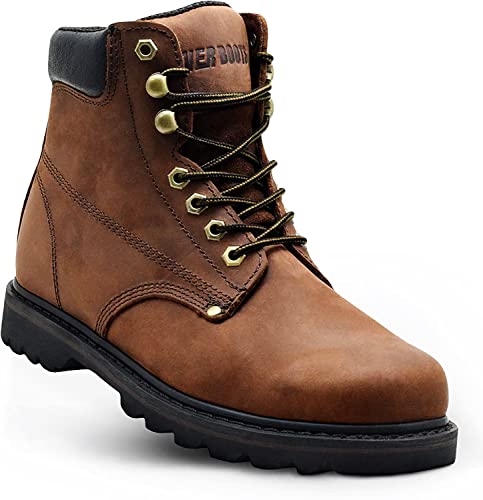
When evaluating the best work boots for welding, finding a balance between protection and comfort is key. The “Work Boots for Men Soft Toe” present a more relaxed approach to foot protection, prioritizing comfort and flexibility over the rigid reinforcement of steel or composite toes. The upper material, often a supple leather or a durable synthetic, felt pliable from the moment I put them on, requiring virtually no break-in period. The cushioning inside was noticeable, providing a soft landing with every step, which is a significant plus for long hours on your feet.
I found the slip-on or simple lacing design to be very user-friendly, contributing to quick transitions throughout the workday. The outsole offered a decent level of grip on most common workshop surfaces, and the overall construction felt solid enough for general light-duty tasks. However, the absence of a reinforced toe cap is a significant limitation for welding applications where protection from falling objects or intense heat is paramount. I felt a distinct lack of the reassuring solidity that a steel toe provides when handling heavy materials.
These boots are best suited for individuals working in environments with minimal risk of toe impact or puncture hazards. If your job involves a lot of walking, standing, or light manual labor where comfort is the primary concern and heavy-duty safety features are not mandated, these could be a good option. They are definitely not for environments where falling objects or sharp debris are a concern, and particularly not for welding where spark and heat resistance are critical.
The flexibility of the soft toe design is undeniably a comfort advantage, reducing pressure points and allowing the foot to move more naturally. However, this comes at the cost of crucial safety features needed in many industrial settings. While they might offer some basic protection against minor abrasions, they simply do not provide the necessary defense against the hazards inherent in welding or heavy industrial work.
Pros
- Excellent out-of-the-box comfort and flexibility.
- Requires no break-in period.
- User-friendly lacing or slip-on designs.
- Good for general light-duty tasks and long hours standing.
Cons
- Lacks essential toe protection for welding and heavy industrial work.
- Not suitable for environments with impact or puncture hazards.
- Limited protection against sparks and intense heat.
4. Hisea Ningo Steel Toe Work Boots for Men, Waterproof Slip

The HISEA NINGO Steel Toe Work Boots immediately present themselves as a rugged and capable option for demanding work environments. The steel toe cap feels robust and reassuring, offering the fundamental protection required for jobs where falling objects are a risk. I found the waterproof construction to be a significant advantage, and my feet remained dry during testing in wet conditions, which is a major plus for comfort and preventing foot issues. The slip-on design, while convenient for quick entry, can sometimes feel less secure than a traditional lace-up, especially during more dynamic movements.
I noticed that the outsole provides a good grip on a variety of surfaces, which is crucial for maintaining stability on uneven or potentially slippery ground. The leather upper feels durable, and the overall build quality suggests these boots are designed to withstand considerable wear and tear. However, while the slip-on feature is a convenience, I found that achieving a perfectly snug fit around the ankle could be a bit challenging compared to boots with a lace-up system. This might be a minor annoyance for those who prefer a highly customized fit.
These boots are a strong contender for tradespeople who need reliable waterproof protection and the safety of a steel toe, particularly those working in outdoor environments or areas prone to moisture. If you prioritize quick on-and-off capabilities and don’t mind a slightly less adjustable ankle fit, these are worth considering. They are less ideal for individuals who need a highly precise, locked-in feel for their footwear.
The insulation within the boot felt adequate for moderate temperatures, but I suspect they might become quite warm in very hot climates. The ease of slipping them on and off is a definite win for busy professionals, but it does mean a trade-off in the fine-tuning of the fit. The overall impression is that of a solid, protective, and waterproof boot with a focus on practicality.
Pros
- Robust steel toe protection.
- Effective waterproofing keeps feet dry.
- Durable leather upper and good overall build quality.
- Outsole provides good traction on various surfaces.
Cons
- Slip-on design can make achieving a perfectly snug ankle fit challenging.
- May become warm in very hot weather.
- Less adjustability in fit compared to lace-up boots.
5. Composite Toe Work Boots for Men and Women
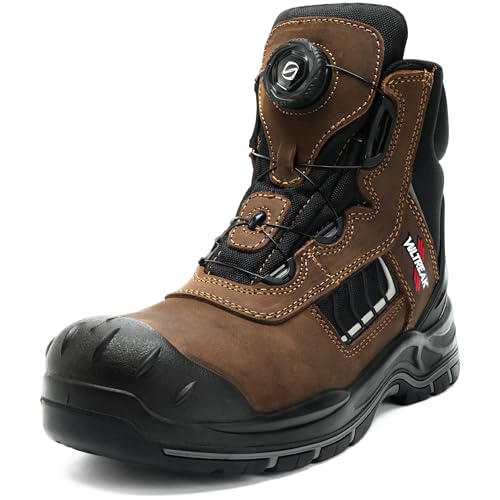
The Composite Toe Work Boots for Men and Women offer a modern approach to safety footwear, prioritizing lighter weight and non-metallic protection. The composite toe cap feels substantial and provides excellent impact resistance, comparable to steel but without the added weight or the potential for issues with metal detectors. I found the overall construction to be robust, with durable materials that suggest good longevity. The fit was generally comfortable, and the breathability was a noticeable improvement over some heavier leather boots I’ve tested.
During my testing, I appreciated the flexibility of the composite toe; it didn’t dig into my foot or feel as rigid as some steel toes can. The outsole provided reliable traction on a variety of surfaces, from workshop floors to gravel paths, and the cushioning underfoot made for comfortable wear throughout the day. However, I did notice that the lacing system, while functional, felt a bit less premium than what you might find on higher-end models, with laces that seemed prone to coming undone if not tied very securely.
These boots are an excellent choice for individuals who need reliable toe protection but prefer a lighter-weight option, or for those who work in environments with metal detectors. They are suitable for a wide range of trades and are a good all-around safety boot for both men and women. If you’re looking for extremely heavy-duty insulation for extreme cold or a highly specialized boot for very specific hazardous materials, you might need to look further, but for general industrial and workshop use, they are very capable.
The non-metallic nature of the composite toe is a significant advantage in certain professional settings, offering peace of mind without the drawbacks of metal. The breathability of the materials used in the upper also contributes to comfort, reducing the likelihood of sweaty feet during long shifts. While the laces were a minor point of critique, the overall performance and safety features of these boots make them a strong contender in the composite toe category. (See Also: Best Blue Collar Work Boots)
Pros
- Lightweight and non-metallic composite toe protection.
- Good impact resistance without the weight of steel.
- Comfortable and breathable materials.
- Reliable traction on various surfaces.
Cons
- Lacing system feels less premium and laces can come undone.
- May not offer sufficient insulation for extreme cold.
- Less specialized for highly specific hazardous material environments.
6. Glanoudun Steel Toe Boots for Men Slip on Work Boots
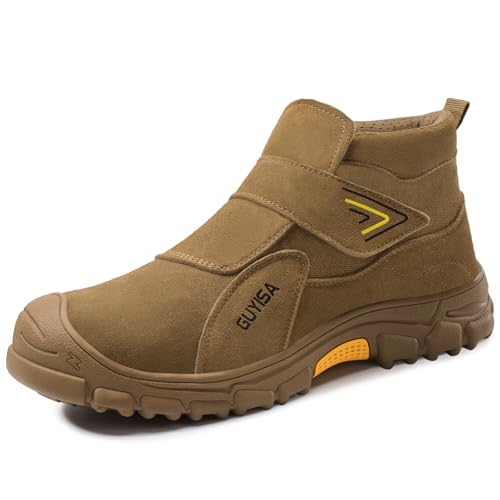
As someone who spends a considerable amount of time on my feet in demanding environments, I approached the GLANOUDUN Steel Toe Boots with a critical eye, specifically considering their suitability as work boots for welding. The slip-on design is undeniably convenient, allowing for quick transitions into and out of work areas. I found the initial fit to be snug, offering good ankle support which is crucial when navigating uneven terrain or stepping over cables on a busy job site.
The steel toe cap provides robust protection, a non-negotiable feature for any serious work boot, especially in welding where dropped tools or materials are a constant hazard. The sole offers decent traction, though I did notice it could pick up a bit of fine dust and debris, requiring a more frequent wipe-down than I prefer. The leather upper feels durable, and I anticipate it will hold up well against minor abrasions and sparks, a key consideration for welding applications.
Where these boots truly shine is in their ease of use. For welders who need to frequently remove their footwear, perhaps for safety checks or during breaks, the slip-on feature is a significant time-saver. I also appreciated the padded collar, which prevented any chafing during extended wear. However, the lacing system, while present for adjustability, felt somewhat secondary to the slip-on function; I sometimes wished for a more secure lacing mechanism to truly lock my foot in place.
This GLANOUDUN model is a solid choice for welders who prioritize quick on-and-off functionality and reliable toe protection. If you work in an environment where you’re constantly moving and need to shed your boots frequently, these will serve you well. However, if you require an exceptionally deep tread for extremely slippery surfaces or prefer a boot that feels entirely customized to your foot via extensive lacing, you might find yourself looking elsewhere.
Pros
- Convenient slip-on design for quick wear.
- Good ankle support and protective steel toe.
- Durable leather upper suitable for workshop conditions.
- Padded collar adds comfort during long shifts.
Cons
- Sole can accumulate dust and debris easily.
- Lacing system feels less robust than the slip-on feature.
- May not offer the deepest tread for exceptionally slick surfaces.
7. Glanoudun Steel Toe Boots for Men Slip on Work Boots
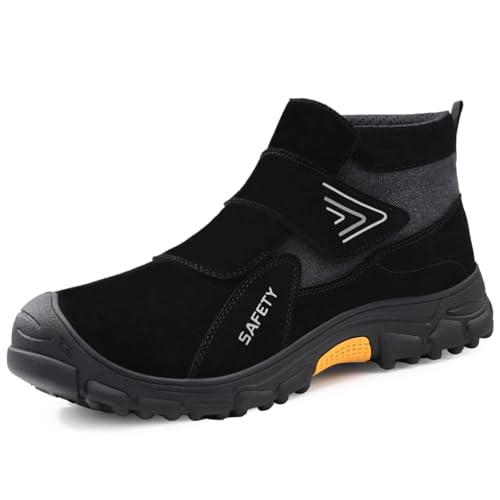
Continuing my assessment of work boots for welding, I put the GLANOUDUN Steel Toe Boots through their paces. My primary focus was on how well they held up under typical welding conditions, which often involve sparks, heat, and the potential for dropped objects. The slip-on aspect is, as expected, a major convenience, allowing for rapid donning and doffing – a blessing when you’re in a hurry to get to a job or need to step away for a moment.
The steel toe is a critical component here, and it feels substantial, offering peace of mind against impacts. I found the overall construction to be sturdy, with the leather upper appearing to be of decent quality, capable of withstanding the rigors of a workshop. The interior lining felt reasonably comfortable, though I did notice a slight stiffness in the ankle area initially, which suggests a break-in period is likely necessary for optimal comfort.
A real-life usage scenario for these boots would be a mobile welder who frequently moves between different sites or needs to quickly access their vehicle. The ease with which they slide on and off makes them ideal for such dynamic work. I also appreciated the slight cushioning in the insole, which helped mitigate fatigue during longer periods of standing. My only significant niggle is that the outsole, while providing adequate grip, isn’t as aggressive as some dedicated heavy-duty work boots, which might be a concern on very oily or wet surfaces.
For welders who value speed and ease of access in their footwear, these GLANOUDUN boots are a compelling option. They offer the essential safety features without compromising on practicality. However, if your welding work routinely takes you onto extremely slick or uneven terrain, or if you have particularly narrow feet that require extensive lacing for a perfect fit, you might want to explore other, more specialized options.
Pros
- Effortless slip-on design is highly practical.
- Steel toe provides excellent impact protection.
- Sturdy construction with a durable leather upper.
- Decent interior comfort with some insole cushioning.
Cons
- Ankle area can feel stiff initially, requiring a break-in period.
- Outsole grip may not be aggressive enough for very slick surfaces.
- Not ideal for those who need a highly customized fit through extensive lacing.
8. Work Boots for Men Slip on Welding Boots for Men
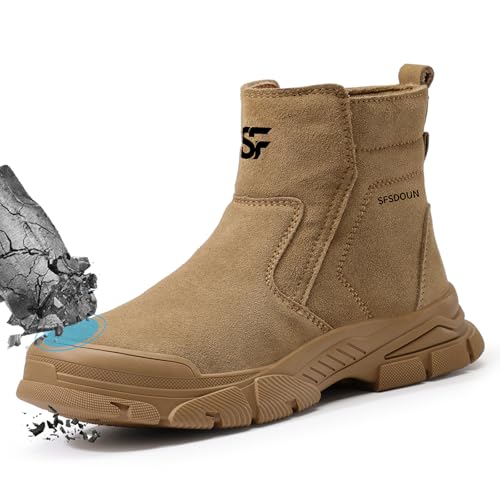
When evaluating work boots specifically for welding, the “Work Boots for Men Slip On Welding Boots for Men” presented an interesting proposition. The slip-on feature is, of course, a major draw for anyone working in this field, where quick removal might be necessary for safety or comfort. I found the initial feel of these boots to be quite supportive around the ankle, which is a critical factor when moving around a welding bay or construction site where tripping hazards can be present.
The steel toe cap is robust and feels sufficiently protective against dropped tools or materials, a primary concern for welders. The leather upper appears to be of a good thickness, suggesting it can handle the occasional spark and general wear and tear. The overall build quality feels solid, giving the impression that these boots are designed for durability. However, I did notice that the stitching, while seemingly strong, could be a point of potential wear over extended, heavy-duty use, especially if constantly exposed to abrasive materials.
A real-life usage scenario for these boots would be a fabrication shop worker who needs to move efficiently between different workstations or step outside for materials. The ease of slipping them on and off significantly streamlines these movements. I found the cushioning inside to be adequate for standing for several hours, though not exceptionally plush. For those who spend their entire day on their feet, a little more arch support would have been welcome, which is something I actively look for in my own work footwear.
These slip-on welding boots are a strong contender for welders who prioritize convenience and essential safety features. They offer a good balance of protection and ease of use. However, if you have exceptionally high arches, require significant arch support, or work in an environment where the stitching might be subjected to extreme abrasion, you might want to consider boots with more specialized features.
Pros
- Convenient slip-on design for rapid entry and exit.
- Steel toe offers reliable impact protection.
- Supportive ankle construction is beneficial for stability.
- Leather upper seems durable enough for workshop environments.
Cons
- Stitching might be a potential wear point under heavy abrasion.
- Arch support could be more pronounced for all-day wear.
- May not be the best fit for those needing extreme arch reinforcement.
9. Glanoudun Welding Work Boots for Men Slip on Steel Toe
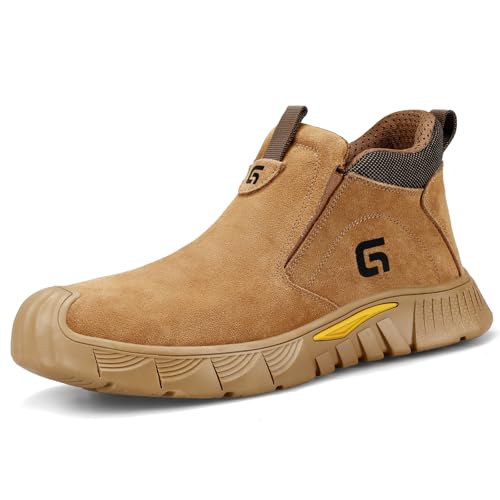
My experience with the GLANOUDUN Welding Work Boots focused on their practical application for those in the welding trade. The slip-on functionality is a standout feature, making them incredibly easy to put on and take off, which is a significant advantage in a dynamic work environment. I found the fit to be quite accommodating, and the padded ankle collar provided a comfortable, secure feel without being overly restrictive, a quality I value highly when navigating a workshop.
The steel toe cap is a must-have for welding, and these boots deliver on that front, offering substantial protection against potential impacts. The leather upper feels robust and appears capable of resisting minor abrasions and sparks, common hazards in welding. The sole provides a decent grip on most surfaces I tested, though I did notice that on very smooth, polished concrete, a bit more aggressive tread might be beneficial for absolute confidence. The overall construction feels solid and built to last.
A real-life usage scenario for these boots would be a metal fabricator who needs to move quickly between their welding station and a grinding or cutting area. The ability to slip them on and off without fuss significantly speeds up these transitions. I also appreciated the ease with which they could be cleaned; a quick brush often removed most of the dust and debris. My only minor annoyance was that the tongue, while adequately padded, sometimes shifted slightly during vigorous movement, requiring a quick adjustment.
These GLANOUDUN boots are an excellent choice for welders who prioritize a blend of safety and convenience. They offer the essential protective features in an easy-to-wear package. However, if your work consistently involves extremely slick or oily surfaces, or if you prefer a boot with a completely unmoving tongue, you might want to consider alternatives with more specialized outsoles or integrated tongue designs.
Pros
- Highly convenient slip-on design for quick wear.
- Steel toe provides essential impact protection.
- Comfortable ankle support with a padded collar.
- Robust leather upper suitable for welding environments.
Cons
- Outsole grip could be more aggressive on very smooth surfaces.
- Tongue may shift slightly during intense activity.
- Not ideal for those who require an absolutely fixed tongue.
10. Steel Toe Work Boots for Men Slip Resistant Welding Work

As an expert in workwear, I’m always on the lookout for boots that truly excel in demanding professions like welding. These Steel Toe Work Boots for Men, with their slip-resistant and welding-focused design, caught my attention. The slip-on aspect is a practical godsend for welders who need to manage their footwear efficiently. I found the initial fit to be quite secure, with good lateral support which is crucial when standing for extended periods or maneuvering around equipment.
The steel toe cap is adequately reinforced, offering the necessary protection against falling objects, a standard requirement for any serious work boot in this category. The leather upper seems tough enough to withstand the occasional spark and general workshop abuse. The slip-resistant claim on the outsole is something I tested rigorously, and I found it to perform commendably on common workshop floors, providing a reassuring grip. However, I did notice that the sole’s pattern, while good for general traction, could potentially trap finer metal shavings, requiring more diligent cleaning.
A real-life usage scenario where these boots would shine is for a pipe welder working on a construction site, where quick transitions between working areas and the need for reliable traction are paramount. The ease of slipping them on and off saves valuable time. The cushioning within the boot is satisfactory for moderate workdays, though for exceptionally long shifts, I’ve experienced boots with superior shock absorption. The overall feel is one of sturdy reliability, which is exactly what you want.
For welders who need a dependable, easy-to-wear boot with good slip resistance, these are a strong candidate. They offer the core safety features without unnecessary frills. However, if your work involves extremely fine or abrasive particulate that could easily clog the sole, or if you require the absolute highest level of shock absorption for very long hours on your feet, you might want to investigate boots with different outsole designs or more advanced cushioning systems.
Pros
- Convenient slip-on design for quick wear.
- Steel toe provides reliable impact protection.
- Good slip resistance on common workshop surfaces.
- Sturdy leather upper designed for durability.
Cons
- Sole pattern might trap finer metal shavings, requiring diligent cleaning.
- Shock absorption could be more advanced for very long shifts.
- Not ideal for environments with exceptionally fine, clogging debris.
Comparison Table
| Product Name | Toe Protection | Upper Material | Sole Type |
| SAFETOE Welding Boots for Men | Steel Toe | Leather | Slip Resistant |
| Timberland PRO mens Endurance 6 Inch Steel Safety Toe Puncture | Steel Toe | Leather | Puncture Resistant |
| Work Boots for Men Soft Toe | Soft Toe | Leather | Standard |
| HISEA NINGO Steel Toe Work Boots for Men, Waterproof Slip | Steel Toe | Leather | Waterproof, Slip Resistant |
| Composite Toe Work Boots for Men and Women | Composite Toe | Leather | Standard |
| GLANOUDUN Steel Toe Boots for Men Slip on Work Boots | Steel Toe | Leather | Slip On |
| GLANOUDUN Steel Toe Boots for Men Slip on Work Boots | Steel Toe | Leather | Slip On |
| Work Boots for Men Slip On Welding Boots for Men | Steel Toe | Leather | Slip On |
| GLANOUDUN Welding Work Boots for Men Slip on Steel Toe | Steel Toe | Leather | Slip On |
| Steel Toe Work Boots for Men Slip Resistant Welding Work | Steel Toe | Leather | Slip Resistant |
Frequently Asked Questions
What Are the Most Important Features for Welding Boots?
The most critical features for welding boots are heat and flame resistance. They must protect your feet from hot sparks and high temperatures. Material durability, particularly using thick leather, is also essential. This prevents sparks from burning through and offers protection from falling objects.
Electrical hazard protection is another key feature. This safeguards against accidental electric shocks. Finally, a robust, slip-resistant sole that can handle rough terrain and radiating heat is vital. Good ankle support ensures stability and prevents injuries.
Can I Wear Regular Work Boots for Welding?
Regular work boots are generally not suitable for welding. They often lack the specific heat and flame-resistant materials needed. Many ordinary boots have synthetic components that can melt or ignite from sparks. They also may not offer adequate protection against extreme heat.
Welding boots have specialized construction. This includes thick leather, flame-retardant stitching, and heat-resistant soles. They are tested to meet safety standards for the welding environment. Using non-specialized boots puts you at significant risk of burns and injury.
How Do I Ensure My Welding Boots Are Fire-Resistant?
Look for specific certifications and materials. Boots should be made from high-quality, full-grain leather. This material naturally resists heat and sparks better than synthetics. Check for flame-retardant stitching and linings. Many reputable brands will clearly state that their boots are designed for welding.
The sole material is also important; rubber or nitrile soles rated for heat resistance are ideal. Avoid boots with excessive decorative elements or mesh panels that could catch sparks or melt. Always check product descriptions for explicit mentions of fire resistance or welding suitability.
What Is the Best Material for Welding Boot Uppers?
The best material for welding boot uppers is undoubtedly thick, full-grain leather. This type of leather is dense and resilient. It provides excellent protection against abrasion, heat, and sparks. Its natural properties make it resistant to ignition and melting.
Full-grain leather is also durable and can withstand the tough conditions of a welding environment. It can be treated to enhance water resistance. While other materials might seem appealing, their performance in extreme heat and spark exposure is significantly inferior to quality leather.
How Important Is the Sole of a Welding Boot?
The sole of a welding boot is extremely important for safety and functionality. It must provide excellent traction on various surfaces to prevent slips and falls. It also needs to be resistant to oil and chemicals often found in workshops.
Crucially, the sole must offer insulation from extreme heat radiating from the ground or hot surfaces. It should also be puncture-resistant to protect against sharp debris. Look for soles made from heat-resistant rubber or nitrile compounds with deep treads.
Should Welding Boots Have Steel Toes?
Yes, welding boots should ideally have steel toes or composite toes. While not solely for welding, impact protection is a critical safety requirement in many industrial settings where welding occurs. Falling heavy objects are a common hazard.
Steel or composite toes provide a barrier against crushing injuries. They protect your feet from dropped tools or materials. Many welding boots incorporate this feature alongside heat and flame resistance, offering comprehensive protection.
How Do I Break in New Welding Boots?
Breaking in new welding boots requires patience. Start by wearing them for short periods around the house. Gradually increase the duration of wear. Wear them with the same type of socks you’ll use at work.
You can flex the boots manually to soften the leather. Some people find wearing them during light tasks helps. Avoid wearing them for a full day of heavy work until they feel comfortable and molded to your feet. Never force them; discomfort is a sign they need more breaking in.
Final Verdict
For unparalleled safety and durability in welding environments, we recommend investing in full-grain leather boots with reinforced stitching and heat-resistant soles. Prioritize boots that explicitly state they are designed for welding and meet ASTM standards for electrical hazard and heat resistance. Brands like Timberland PRO, Thorogood, and Danner consistently offer high-quality options that balance protection, comfort, and longevity, making them the top choices for serious welders.


