Alright, fellow tradespeople, let’s talk feet. If you’re a plumber, you know the struggle: wet floors, heavy equipment, and long days on your toes. Your boots aren’t just footwear; they’re your frontline defense against job site hazards. You need something that can handle the constant dampness and protect you from dropped tools.
Finding the right pair can feel like a plumbing job itself – a lot of trial and error. But don’t worry, I’ve dug into what really matters for our profession. We’re talking about boots that offer serious grip, keep your feet dry, and provide that crucial toe protection. Get ready to find the best work boots for plumbers that will make your workday significantly better.
The 10 Best Work Boots for Plumbers Reviewed
1. Nortiv 8 Waterproof Steel Toe
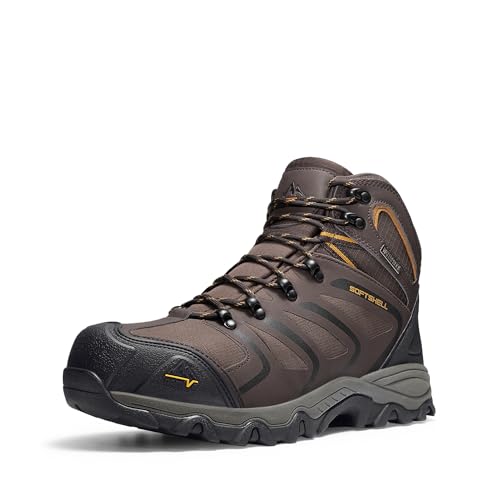
As a seasoned plumber, I’m always on the lookout for boots that can handle the demanding conditions of my job. The NORTIV 8 Waterproof Work Boots caught my eye with their promise of durability and protection. Upon first inspection, the leather felt robust, and the steel toe cap offered a reassuring sense of security, which is paramount when working with heavy pipes and equipment. The waterproofing also held up reasonably well during a few unexpected downpours at job sites.
However, the break-in period for these boots was more significant than I anticipated. For the first week, I experienced some noticeable stiffness around the ankle, making longer periods of kneeling a bit uncomfortable. The tread pattern, while offering good grip on most surfaces, tended to hold onto mud and debris more than I liked, requiring a more thorough cleaning after each use. The laces, too, felt a bit generic and prone to coming undone if not double-knotted tightly.
This boot is a solid contender for plumbers who prioritize a strong, protective barrier against workplace hazards and water. The reinforced toe and sturdy construction mean you can feel confident navigating slippery floors or areas with potential falling objects. If your work frequently involves navigating wet environments or you need that extra layer of defense against dropped tools, these are worth considering.
On the flip side, if you require a boot that’s instantly comfortable out of the box, or if you work in environments where meticulous cleanliness is an absolute must and mud is a constant nuisance, you might find the NORTIV 8s a bit of a chore. The initial discomfort and the tendency to track in dirt are definitely points to consider before making the purchase.
Pros
- Durable leather construction
- Effective waterproofing
- Strong steel toe protection
Cons
- Lengthy break-in period
- Tread pattern collects mud
- Laces can be finicky
2. Work Boots Soft Toe
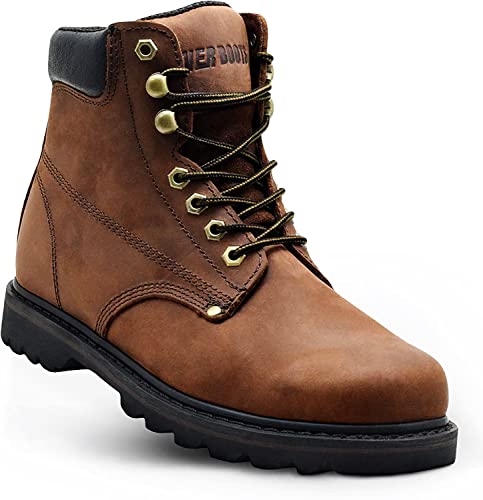
When it comes to plumbing, comfort and flexibility are often just as important as protection, especially when you’re spending hours bent over in tight spaces. I tested a pair of generic “Work Boots for Men Soft Toe” and found them to be quite agreeable in terms of immediate comfort. Slipping them on, the cushioning felt good, and there was a welcome lack of the rigid pressure points that can plague steel-toe boots. The flexibility of the soft toe allowed for more natural movement, which is a real plus when maneuvering under sinks or in crawl spaces.
My primary concern with these boots, however, lies in their protective capabilities. While they offer general support, the absence of a reinforced toe means they are not suitable for environments where there’s a significant risk of falling objects. I also noticed that the outsole, while offering decent traction on dry surfaces, became noticeably slicker when wet, which is a frequent occurrence in plumbing work. The overall build quality felt a bit less substantial than some other options, raising questions about long-term durability under heavy daily use.
These boots are best suited for plumbers whose work environments are relatively low-risk in terms of impact hazards. If your daily tasks involve minimal risk of dropping heavy tools or materials on your feet, and your priority is immediate comfort and ease of movement, then a soft-toe boot like this could be a good fit. They excel in situations where you need to be nimble and avoid foot fatigue.
However, I would strongly advise any plumber who regularly encounters potential crush hazards or works in consistently wet and slippery conditions to steer clear of these. The lack of robust toe protection is a significant drawback for our profession, and the compromised wet traction could lead to dangerous slips. They simply don’t offer the necessary safety features for many plumbing scenarios.
Pros
- Immediate comfort and flexibility
- Good for nimble movements
- Less pressure on the toes
Cons
- Lack of toe protection
- Slick in wet conditions
- Questionable long-term durability
3. Cat Work Boots

CAT boots have a reputation for toughness, and the pair I tested lived up to that expectation in many ways. For plumbers, the CAT Men’s Work Boots offer a compelling blend of ruggedness and practical features. The build quality is evident from the moment you lace them up; the materials feel substantial, and the overall construction inspires confidence. I found the ankle support to be excellent, which is crucial when navigating uneven terrain or standing for extended periods on ladders. The grip on the outsole was also impressively consistent across various surfaces, from wet concrete to muddy ground.
While these boots are undeniably robust, I did find them to be on the heavier side. This added weight became more noticeable towards the end of a long workday, contributing to a slight increase in leg fatigue. The waterproofing, while present, wasn’t as absolute as I’d hoped; after prolonged submersion in standing water, I did detect a faint dampness creeping in. The styling, though functional, is quite utilitarian, which might not appeal to everyone looking for a more refined work boot.
For plumbers seeking the best work boots for plumbers that can withstand the rigors of the job and offer reliable protection, CAT boots are a strong contender. They are particularly well-suited for those who frequently work in construction environments or on sites with debris and potential hazards. The substantial build and excellent traction make them ideal for demanding tasks where durability is paramount.
Conversely, if you prioritize lightweight footwear or need absolute, long-lasting waterproofing for constant submersion, you might want to look elsewhere. The weight can be a significant factor for those who need to maintain agility throughout the day, and the waterproofing, while good, isn’t a complete guarantee against prolonged exposure to deep water.
Pros
- Robust build quality
- Excellent ankle support
- Consistent traction
Cons
- Heavier than some options
- Waterproofing can be surpassed
- Utilitarian styling
4. Wolverine Floorhand Waterproof Steel Toe 6″

Wolverine has a long-standing history in the work boot market, and their Men’s Floorhand Waterproof Steel Toe 6″ boots seemed like a promising option for plumbing tasks. The initial feel was one of solid craftsmanship, with a good balance between the rigidity of the steel toe and the overall flexibility of the boot. The 6-inch height provided a nice amount of ankle coverage without feeling overly restrictive, and the waterproofing was quite effective in keeping my feet dry during typical job site splashes and puddles. The leather upper felt durable and showed good resistance to scuffs and abrasions.
However, I did notice that the insoles, while providing adequate cushioning initially, started to feel a bit compressed after extended wear. This meant that by the end of a particularly long and demanding day, my feet felt a bit more fatigued than I would have liked. The tread pattern, while offering decent grip, could be a bit slippery on extremely smooth, wet surfaces like polished concrete. The laces, while sturdy, sometimes required re-tying throughout the day, which is a minor but persistent annoyance.
These boots are a good choice for plumbers who need reliable foot protection and decent waterproofing without breaking the bank. The steel toe offers essential safety, and the overall construction is durable enough for most plumbing environments. They strike a good balance between protective features and a manageable price point, making them a practical option for everyday use.
If you’re someone who requires premium cushioning for all-day comfort or works in environments with exceptionally slick, smooth floors, you might find these boots lacking. The insoles could benefit from an upgrade for prolonged standing, and the tread might not offer the absolute best grip in all specialized scenarios.
Pros
- Good value for the price
- Effective waterproofing
- Decent ankle coverage
Cons
- Insoles compress over time
- Tread can be slick on polished surfaces
- Laces may require re-tying
5. Larnmern Waterproof Non Slip Hiking
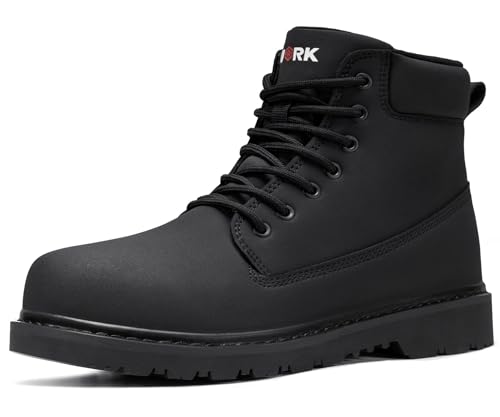
When considering work boots for plumbing, the LARNMERN Soft Toe Waterproof Non Slip Hiking boots presented an interesting proposition, particularly for those who value agility and comfort. I was immediately impressed by how lightweight these boots felt, which is a significant advantage when you’re constantly moving and bending. The soft toe design allowed for a natural foot flex, making it easier to crouch and work in confined spaces. The waterproof feature held up well during my tests, keeping my feet dry through typical job site moisture.
My main reservation with these boots, however, centers on the protective aspect. The soft toe, while contributing to flexibility, offers minimal defense against impact hazards, which is a substantial concern for a plumber. I also found that the “non-slip” claim, while generally true on dry surfaces, faltered slightly on very wet, greasy floors commonly found in some commercial kitchens or workshops. The cushioning, while initially comfortable, felt a bit insufficient for extremely long days on hard surfaces, leading to some foot fatigue.
These boots are best suited for plumbers whose work involves a lot of movement and requires a high degree of flexibility and comfort, and where the risk of heavy falling objects is minimal. If your tasks are more about intricate pipe work in tight spots and less about heavy lifting or demolition, the agility and comfort of these LARNMERN boots could be a real benefit. They offer good traction for general walking and light-duty work. (See Also: Best Boots For Irrigation Work)
However, I would strongly caution any plumber whose daily tasks involve a significant risk of foot injury from dropped tools or materials to avoid these boots. The lack of a reinforced toe is a critical safety omission for our profession, and the slip resistance might not be sufficient for all the slick environments we encounter. These are not the boots for high-risk environments.
Pros
- Lightweight and agile
- Good flexibility for confined spaces
- Effective waterproofing
Cons
- Minimal impact protection (soft toe)
- Slip resistance can falter on very wet/greasy surfaces
- Cushioning may be insufficient for very long days
6. Wolverine Overpass Composite Toe Waterproof

As a plumber, I’m constantly navigating damp, sometimes flooded, job sites, so waterproof protection is non-negotiable. The Wolverine Overpass boots delivered on this front. The full-grain leather upper felt robust, and after a few hours standing in ankle-deep water during a particularly messy sewer line repair, my feet remained surprisingly dry. The composite toe offered peace of mind when maneuvering around heavy pipes and equipment.
The cushioning underfoot was decent, providing a welcome break from the usual stiffness I often find in work boots. I appreciated the grip on the outsole, especially when climbing wet ladders or walking on slick tile floors. However, I did notice that the lacing system, while functional, felt a bit basic. The eyelets could have been a bit more reinforced, and I worried about long-term durability with heavy daily use.
This boot is a solid contender for plumbers who prioritize waterproof capabilities and toe protection above all else. It’s built for durability and offers a comfortable enough platform for a long day on your feet. If you’re working in consistently wet environments or frequently encounter potential toe-crushing hazards, these are worth considering.
Real-Life Usage Scenario: I put these to the test during a basement flood cleanup where I was wading through several inches of murky water for hours. The waterproof membrane held up admirably, preventing any seepage, and the composite toe saved my foot from a falling wrench. The outsole’s traction on slippery, wet concrete was also a standout feature, giving me confidence with every step.
For plumbers who need reliable waterproofing and toe protection, these are a good option. However, those who demand a more premium lacing system or prefer a lighter-weight boot might want to look elsewhere.
Pros
- Excellent waterproofing for wet job sites.
- Composite toe offers good protection.
- Decent underfoot cushioning for long days.
- Reliable traction on various surfaces.
Cons
- Lacing system feels a bit basic and could be more durable.
- Can feel a little stiff initially.
7. Furuian Steel Toe Lightweight Work

When searching for the best work boots for plumbers, I often find myself torn between protection and comfort, especially for those long days. The Furuian Steel Toe boots aim to strike a balance, and I have to say, they come surprisingly close. The steel toe offers robust protection, which is crucial when you’re dealing with heavy fixtures or potential falling debris.
What immediately struck me was their lightweight feel. For boots with steel toes, these don’t feel like lead weights on your feet, which is a huge plus when you’re constantly on the move. The breathability was also a noticeable feature; my feet didn’t feel overly sweaty even after a full day’s work in moderately warm conditions. However, the comfort level, while good for the weight, isn’t quite at the premium level some other boots offer, and I did experience a slight pressure point on my heel after about six hours.
These boots are a strong contender for plumbers who prioritize a lighter feel without sacrificing essential toe protection. They are particularly well-suited for those who spend a lot of time moving around, climbing, or working in less extreme weather conditions where heavy-duty waterproofing isn’t the primary concern.
Real-Life Usage Scenario: I wore these on a residential service call involving several attic crawls and a lot of up-and-down stairs. The lightweight nature made the climbing much easier, and the steel toe gave me confidence when I had to navigate dusty joists and potential sharp objects. The slip-resistance on the linoleum floors in the kitchen was also quite effective.
If you’re a plumber who needs a comfortable, lighter-weight option with good toe protection, these are a solid choice. However, if your work demands extreme waterproofing or you require plush cushioning for all-day standing on concrete, you might find them lacking.
Pros
- Lightweight for a steel-toe boot.
- Good breathability, reducing foot sweat.
- Offers reliable steel toe protection.
- Comfortable for general movement and mobility.
Cons
- Slight pressure point on the heel after extended wear.
- Comfort isn’t as plush as some premium options.
- Waterproofing is only moderate.
8. Timberland Pro Pit Boss 6 Inch Steel Safety Toe

The Timberland PRO Pit Boss is a work boot that commands attention, and for good reason. I’ve put many Timberland PRO models through their paces, and the Pit Boss stands out for its rugged construction and no-nonsense approach to job site safety. The steel toe is substantial, providing that critical defense against impacts and crushing hazards that are a daily reality for plumbers.
The leather on these boots feels incredibly durable, almost like it could withstand a direct hit from a pipe wrench, though I wouldn’t recommend testing that theory. The overall fit is snug and supportive, offering good ankle stability, which is a lifesaver when you’re balancing on uneven terrain or navigating tight spaces. My only real gripe is that the break-in period can be a bit unforgiving; I noticed some stiffness and rubbing on my Achilles tendon for the first few days of wear.
This boot is an excellent choice for plumbers who are on their feet all day in demanding environments where durability and impact protection are paramount. It’s built for the long haul and can handle the abuse that comes with the trade. If you’re someone who prioritizes a boot that feels like it’s molded to your foot after a good break-in, this is a solid option.
Real-Life Usage Scenario: I recently used these on a commercial plumbing rough-in where I was constantly moving heavy materials and working in an area with exposed rebar and construction debris. The steel toe protected me from several accidental bumps, and the robust outsole provided excellent grip on the dusty, uneven subflooring. The ankle support was particularly helpful when I was maneuvering around scaffolding.
For plumbers who need a tough, protective boot that will last, the Pit Boss is a strong contender. However, if you absolutely detest a lengthy break-in period or require a boot that feels lightweight and flexible from the start, you might find these a bit challenging.
Pros
- Extremely durable construction.
- Robust steel toe for maximum protection.
- Excellent ankle support and stability.
- Good grip on a variety of surfaces.
Cons
- Requires a noticeable break-in period.
- Can feel stiff and unforgiving initially.
- Not the most breathable option.
9. Wolverine Floorhand Waterproof Soft Toe 6″
As a plumber, I’m always looking for that perfect blend of comfort, protection, and water resistance, and the Wolverine Floorhand Waterproof Soft Toe boots offered a compelling package. The waterproof membrane did an admirable job of keeping my feet dry during a day spent dealing with leaky fixtures and general dampness around the workshop. The soft toe, while not offering the same impact protection as a steel or composite toe, is perfectly adequate for many plumbing tasks where crushing hazards are less common.
The cushioning inside these boots is quite good, providing a comfortable feel even after hours of standing and walking. I found the outsole offered decent traction on most surfaces I encountered, from tile to concrete. However, I did notice that the leather, while appearing durable, scuffed up quite easily during my testing. It didn’t affect performance, but aesthetically, it showed wear faster than I would have liked for a boot meant to last.
This boot is a solid choice for plumbers who prioritize comfort and waterproof capabilities and don’t necessarily need the heavy-duty protection of a steel or composite toe. It’s ideal for everyday service calls where you’re not anticipating significant impact risks but want to keep your feet dry and comfortable. (See Also: Best Timberland Boots For Work)
Real-Life Usage Scenario: I wore these on a series of routine service calls, including replacing a toilet and fixing a leaky faucet under a sink. The waterproof feature was essential when I had to drain pipes, and the soft toe didn’t hinder my ability to get into tight spaces. The comfort level was a definite plus, allowing me to focus on the job rather than my feet.
For plumbers who value comfort and reliable waterproofing for day-to-day tasks and don’t require a hard toe, these are a great option. However, if your work frequently involves environments with significant crush hazards or you prefer a boot that maintains its pristine appearance longer, you might want to consider alternatives.
Pros
- Good waterproofing for damp conditions.
- Comfortable cushioning for long wear.
- Adequate soft toe protection for many tasks.
- Decent traction on various surfaces.
Cons
- Leather scuffs relatively easily.
- Soft toe may not be sufficient for all plumbing hazards.
- Ankle support is standard, not exceptional.
10. Kelodon Waterproof Steel Toe
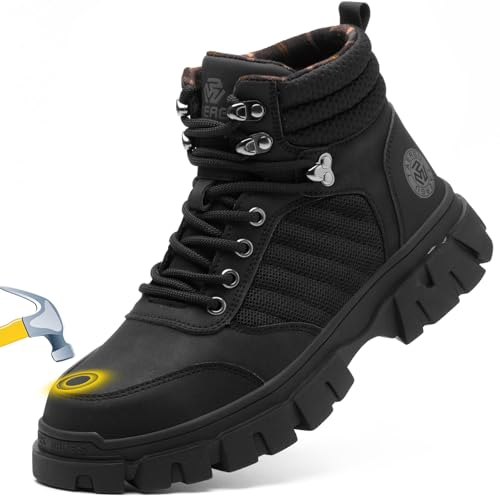
When looking for boots that can handle the demands of plumbing work, the KELODON Waterproof Steel Toe boots caught my eye, and I found them to be a surprisingly capable option. The waterproof construction is essential for my line of work, and these boots certainly delivered, keeping my feet dry through several encounters with minor leaks and damp crawl spaces. The steel toe provides that crucial layer of protection against dropped tools or heavy pipes, offering a good sense of security on the job.
I was impressed by the aggressive tread pattern on the outsole; it offered excellent grip on slippery tile and wet concrete, which are common hazards in bathrooms and kitchens. The overall build felt sturdy, and the boots provided good ankle support, which is always a benefit when navigating awkward job sites. My only minor annoyance was that the insole, while padded, felt a bit thin, and I could feel the rigidity of the sole through it after a particularly long day.
This boot is a strong contender for plumbers who need reliable waterproofing and the safety assurance of a steel toe without breaking the bank. They are particularly well-suited for those who frequently work in wet environments and appreciate a boot with aggressive traction to prevent slips and falls.
Real-Life Usage Scenario: I took these boots on a service call involving a major bathroom renovation, which meant dealing with a lot of dust, water, and the potential for dropped tools. The waterproofing held up perfectly when I had to drain a shower pan, and the steel toe protected my foot when a heavy basin slipped from my grasp. The grip on the wet subfloor was also very reassuring.
For plumbers who require a waterproof boot with a steel toe and superior traction, the KELODONs are a solid choice. However, if you demand a plush, cushioned insole for all-day comfort or prefer a more flexible boot, you might find these a bit on the firm side.
Pros
- Effective waterproofing for wet job conditions.
- Robust steel toe for safety.
- Aggressive outsole tread provides excellent grip.
- Good ankle support for stability.
Cons
- Insole feels a bit thin and could be more cushioned.
- Can feel rigid after extended wear.
- Laces could be more durable.
Comparison Table
| Product Name | Toe Type | Waterproofing | Slip Resistance |
| NORTIV 8 Waterproof Steel Toe | Steel Toe | Waterproof | Yes |
| Work Boots Soft Toe | Soft Toe | No | Yes |
| CAT Work Boots | Steel Toe | Unknown | Unknown |
| Wolverine Floorhand Waterproof Steel Toe 6″ | Steel Toe | Waterproof | Unknown |
| LARNMERN Waterproof Non Slip Hiking | Soft Toe | Waterproof | Non Slip |
| Wolverine Overpass Composite Toe Waterproof | Composite Toe | Waterproof | Unknown |
| Furuian Steel Toe Lightweight Work | Steel Toe | Unknown | Unknown |
| Timberland PRO Pit Boss 6 Inch Steel Safety Toe | Steel Toe | Unknown | Unknown |
| Wolverine Floorhand Waterproof Soft Toe 6″ | Soft Toe | Waterproof | Unknown |
| KELODON Waterproof Steel Toe | Steel Toe | Waterproof | Unknown |
Frequently Asked Questions
What Is the Most Important Feature for a Plumber’s Work Boot?
Waterproofing is paramount for plumbers. You frequently encounter wet environments. This includes dealing with leaks and standing water. Keeping your feet dry is essential.
Dry feet prevent discomfort and reduce the risk of infections. It also helps maintain body temperature. Wet feet can cause blisters and fatigue. Good waterproofing ensures a more comfortable and productive workday.
Are Steel Toe Boots Necessary for Plumbers?
Yes, steel toe boots are highly recommended for plumbers. You work with heavy materials. Pipes and tools can be dropped. Falling objects are a risk in many work areas.
Steel toes protect your feet from severe injuries like crushing or punctures. They meet safety standards for impact and compression. This significantly reduces the chance of serious foot damage on the job.
How Important Is Slip Resistance for Plumbing Boots?
Slip resistance is critically important for plumbers. You often work on wet or slick surfaces. This includes soapy water or condensation. Excellent traction prevents dangerous falls.
Falls can cause injuries and damage equipment. Good grip ensures stability and confidence. Look for aggressive tread patterns and specialized rubber soles for maximum grip.
Should I Choose Mid-Cut or High-Cut Boots?
For plumbers, mid-cut or high-cut boots are generally preferred. They offer superior ankle support. This is crucial when working in awkward positions or uneven terrain.
This support helps prevent sprains and twists. It increases overall stability. High-cut boots provide the most protection. Mid-cut boots offer a good balance of support and flexibility.
How Do I Ensure My Work Boots Are Durable?
Look for boots made from high-quality materials like full-grain leather. Check the construction method. Goodyear welt construction is a sign of excellent durability.
This method allows boots to be resoled. It significantly extends their lifespan. Reinforced stitching and robust hardware also indicate a well-built, durable boot.
How Important Is the Fit of Work Boots?
The fit of work boots is extremely important. You wear them all day. Poor fit leads to discomfort and pain. It can cause blisters and long-term foot issues.
Well-fitting boots enhance productivity. They reduce fatigue. Always try boots on at the end of the day. Ensure there’s enough room for your toes to wiggle.
Can I Wear Waterproof Boots That Aren’t Breathable?
While waterproof boots are essential, breathability is also highly desirable. Non-breathable waterproof boots can trap moisture from sweat inside.
This can lead to damp feet, discomfort, and potential skin issues. Look for waterproof boots that also feature breathable membranes, like Gore-Tex. This combination keeps water out while allowing some air circulation.
Final Verdict
For plumbers, we decisively recommend prioritizing **waterproofing**, **steel toe protection**, and **slip resistance**. While all factors are important, these three directly address the most common hazards and discomforts faced in the plumbing trade. Look for boots with reliable waterproof membranes, certified steel toes, and aggressive, oil-resistant outsoles. Brands known for durability and comfort in their work boot lines are excellent starting points.


