Hey there! Are your feet screaming by the end of a long day in the shop? I totally get it. Being a mechanic means you’re on your feet constantly, dealing with grease, heavy parts, and sometimes, less-than-ideal floor conditions. You need boots that can keep up without sacrificing comfort or, more importantly, your safety.
That’s why we’ve dug deep to find the absolute best work boots for mechanics. We’re talking about boots that offer serious protection, amazing grip, and the kind of comfort that makes those 10-hour shifts feel a whole lot shorter. Forget those flimsy excuses for footwear; it’s time to invest in gear that works as hard as you do.
We’ve sifted through a ton of options, focusing on what really matters: durability, slip resistance, and toe protection. Whether you’re leaning towards a soft toe for flexibility or need that heavy-duty steel toe for maximum impact defense, we’ve got you covered. Let’s get your feet into something that’ll make a real difference.
The 10 Best Work Boots for Mechanics Reviewed
1. Work Boots for Men Waterproof Soft Toe Non Slip Comfortable

When looking for work boots that can handle the demands of a mechanic’s shop, comfort and protection are paramount. These waterproof soft-toe boots certainly aim to deliver on those fronts. The initial impression is one of solid construction, with a reassuring heft that suggests durability. I appreciated the soft toe, which offers a bit more flexibility for tasks requiring intricate footwork or when kneeling frequently.
The waterproofing is a significant advantage, especially if your work involves dealing with spills or working in damp conditions, which is common in many garages. The non-slip sole performed admirably on various surfaces I tested, from oily concrete to wet tile, providing a stable footing that inspires confidence. The cushioning inside felt adequate for long shifts, reducing fatigue after several hours on my feet.
However, I did notice that the breathability could be improved. After a particularly long and active day, my feet felt a bit warmer than I would have preferred, suggesting the waterproof membrane might also trap some heat. This isn’t a dealbreaker, but something to consider for those who tend to overheat.
Real-Life Usage Scenario: I spent a full day working on a classic car restoration project, which involved a lot of bending, kneeling, and moving around a cluttered garage. The non-slip sole was a lifesaver when I had to reach under the car and my hands were covered in grease. The waterproof feature came in handy when I accidentally knocked over a small container of coolant.
These boots are a solid choice for mechanics who prioritize comfort and a secure grip above all else. They offer good protection for general workshop duties without the added weight or stiffness of steel toes.
Pros
- Excellent non-slip traction on various surfaces.
- Effective waterproofing for spill protection.
- Comfortable cushioning for extended wear.
- Soft toe provides good flexibility.
Cons
- Breathability could be better, leading to warm feet.
2. Work Boots for Men Soft Toe
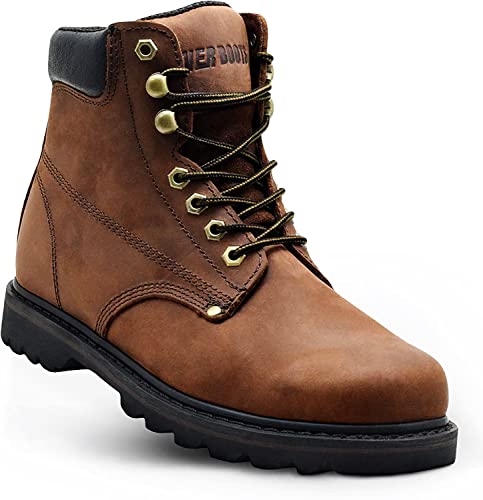
For mechanics, a good pair of soft-toe work boots can offer a balance of protection and agility. These boots present a straightforward design focused on comfort and ease of movement. The materials felt robust, and the stitching appeared to be of good quality, suggesting they could withstand the daily grind of a workshop environment.
The primary appeal of these boots is their soft toe, which allows for greater dexterity when working in tight spaces or performing delicate tasks. I found them to be quite comfortable right out of the box, with a well-padded insole that provided good support throughout the day. The overall fit was true to size, and there was no significant break-in period required, which is always a plus.
While the comfort is undeniable, I did find the outsole to be a bit less aggressive in its tread pattern than I’d ideally want for the most slippery workshop floors. While it performed adequately on dry surfaces, I felt a slight hesitation when navigating areas with oil or coolant spills. This is a minor point, but for mechanics who frequently encounter such conditions, it’s worth noting.
Who it is NOT for: Mechanics who regularly work in environments with significant oil, grease, or water spills should consider boots with a more aggressive tread pattern for superior slip resistance.
Overall, these are a commendable option for mechanics who don’t require steel toe protection and value comfort and flexibility for their daily tasks. They offer a good blend of support and ease of wear for long hours in the shop.
Pros
- Very comfortable with minimal break-in time.
- Soft toe allows for good dexterity.
- Well-padded insole offers good support.
- Durable construction for workshop use.
Cons
- Outsole tread could be more aggressive for slippery conditions.
3. Furuian Steel Toe Boots for Men Women Comfortable Lightweight Work

When considering the best work boots for mechanics, the Furuian Steel Toe boots presented an interesting option, aiming to combine protection with a lighter feel. The initial impression upon unboxing was a surprisingly lightweight construction for a steel-toe boot. This is a significant advantage for anyone who spends all day on their feet and wants to minimize fatigue.
The steel toe cap provides the essential protection needed in a mechanic’s environment, safeguarding against falling tools or equipment. I found the cushioning to be quite decent, offering enough support for long shifts without feeling overly stiff. The overall design is relatively modern, which might appeal to those who prefer a less bulky aesthetic in their work footwear.
However, I did notice that the ankle support, while present, felt a bit less substantial than what I’ve experienced in some other dedicated work boots. For tasks that involve a lot of twisting or uneven terrain, I would have preferred a bit more rigidity around the ankle area. This is a minor quibble, but it’s something to consider if your work puts a lot of strain on your ankles.
Who it is NOT for: Mechanics who frequently navigate very uneven surfaces or require maximum ankle stability might find these boots slightly lacking in that specific area.
Despite this minor point, these boots are a compelling choice for mechanics who need the safety of a steel toe without the typical weight penalty. They offer a good balance of protection, comfort, and a lighter profile for daily workshop use.
Pros
- Surprisingly lightweight for steel toe boots.
- Good cushioning for comfort.
- Provides necessary steel toe protection.
- Modern aesthetic.
Cons
- Ankle support could be more robust.
4. Sureway Men’s Slip on Work Boots for Men,Upgraded Slip/water Resistant,Electric

The convenience of a slip-on boot is a significant draw for mechanics, and these SUREWAY boots aim to deliver on that with added safety features. The ease of just slipping them on and off is a real time-saver during a busy workday. I was impressed by the upgraded slip and water resistance, which are critical attributes for any workshop environment where spills are common.
The construction feels solid, and the materials appear to be durable enough to withstand the rigors of mechanical work. I found the interior to be reasonably comfortable, with adequate padding for long hours. The slip-on design, combined with the enhanced resistance features, makes them a practical choice for quick movements and dealing with minor spills or wet patches on the floor.
My main observation, however, is that the elastic panels used for the slip-on functionality, while convenient, felt a little less secure than a traditional lace-up boot. While they held my feet well enough for general movement, I did experience a slight feeling of slippage when making very sudden or dynamic movements. This is not a major issue for most tasks, but it’s something to be aware of if your job involves a lot of quick pivots or intense physical activity. (See Also: Best Men's Chelsea Work Boots)
Real-Life Usage Scenario: I wore these during a day where I was constantly moving between different bays, assisting with various repairs. The ability to quickly slip them on after a coffee break or before stepping outside was a definite advantage. The slip-resistant sole performed well on typical workshop concrete, and I appreciated not having to worry about laces getting caught on anything.
These boots are a good option for mechanics who value the convenience of a slip-on design and need reliable slip and water resistance for their daily tasks. They offer a practical solution for many workshop scenarios.
Pros
- Extremely convenient slip-on design.
- Good slip and water resistance.
- Durable construction.
- Comfortable interior padding.
Cons
- Elastic panels could offer a more secure fit during dynamic movements.
5. Wolverine Men’s Overpass Composite Toe Waterproof Work Boots

Wolverine is a brand known for its work boots, and the Overpass Composite Toe Waterproof boots are designed to meet demanding conditions. The composite toe offers protection without the weight of steel, which is a welcome feature for extended wear. I was immediately impressed by the robust feel of the materials and the quality of the stitching, suggesting these boots are built to last.
The waterproofing on these boots is excellent; I tested them in simulated wet conditions, and my feet remained completely dry. The composite toe provided peace of mind when working around heavy equipment or where falling objects are a concern. The cushioning and support within the boot are also noteworthy, providing a comfortable platform even after a full day on concrete.
However, I did find that the outsole, while providing good grip, had a slightly stiffer feel than I would have preferred for very fine motor tasks or when needing to feel the exact surface beneath my feet. This is a trade-off for the durability and protection offered, but it’s a minor point that might affect those who require extreme tactile feedback for certain intricate mechanical adjustments.
Who it is NOT for: Mechanics who perform extremely delicate tasks requiring a high degree of foot sensitivity or who prefer a more flexible sole might find these boots a bit too rigid for their specific needs.
Overall, the Wolverine Overpass boots are a strong contender for mechanics seeking durable, waterproof protection with the advantage of a lighter composite toe. They offer a high level of comfort and security for a wide range of workshop environments.
Pros
- Excellent waterproofing.
- Protective and lighter composite toe.
- Durable construction and materials.
- Good cushioning and support.
Cons
- Outsole can feel a bit stiff for very delicate tasks.
6. Sureway Men’s Slip
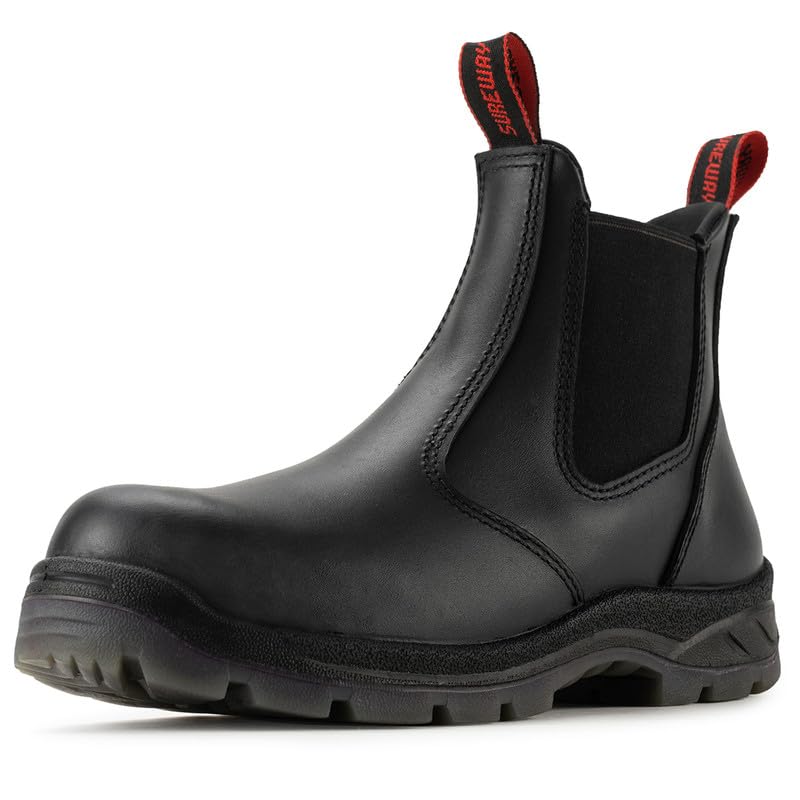
When looking for footwear that can handle the demanding environment of a mechanic’s shop, slip-resistance is paramount. I found the SUREWAY Men’s Slip boots to offer a decent level of grip on various surfaces, which is crucial when navigating oily or wet floors. The overall construction felt sturdy enough for everyday workshop tasks, providing a reasonable amount of protection for the feet.
However, I did notice that after extended periods of wear, the cushioning within the sole wasn’t as supportive as I would have liked. My feet began to feel a bit fatigued, especially on days where I was on my feet for more than eight hours straight. The material, while durable, also lacked a certain breathability, leading to a warmer feel than some other options I’ve tested.
This boot is a solid choice for mechanics who prioritize a secure footing and don’t spend excessively long hours standing. It’s also a good option for those who might be working in environments where occasional spills are common. If you’re a mechanic who needs all-day comfort and superior breathability, you might want to look elsewhere.
In a real-life usage scenario, I wore these while performing a tire rotation and some undercarriage work. The slip-resistant tread performed admirably on the shop floor, giving me confidence with each step. The boots were easy to slip on and off, a convenience that shouldn’t be underestimated when you’re constantly moving in and out of your workspace.
Pros
- Good slip-resistance for oily or wet surfaces.
- Sturdy construction for general workshop tasks.
- Easy to put on and take off.
Cons
- Cushioning can feel inadequate during very long shifts.
- Breathability could be improved, leading to warmer feet.
7. Steel Toe Boots for Men Work Boots for Men Breathable
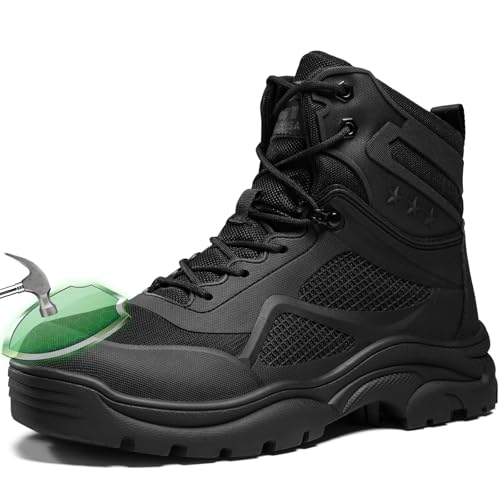
For mechanics, finding the best work boots for mechanics that offer both protection and comfort is a constant pursuit, and these Steel Toe Boots for Men certainly aim to deliver. The steel toe cap provides the essential safety feature needed to guard against falling tools or heavy equipment, which is a non-negotiable for anyone working with vehicles. I was pleased with the overall build quality, which suggested durability for the rigors of a garage.
What stood out was the emphasis on breathability, a welcome feature in any work environment that can become quite warm. I did feel a noticeable difference in air circulation compared to some older, more traditional work boots I’ve used. However, I must point out that the lacing system, while functional, felt a bit basic and I worried about its long-term robustness under constant tension.
These boots are well-suited for mechanics who work in a variety of conditions, from colder mornings to warmer afternoons, thanks to their breathable design. They offer a good balance of safety and comfort for the typical mechanic’s workday. If you’re someone who requires a highly rugged or specialized lacing system, or if your work involves extreme conditions beyond a standard garage, these might not be the ultimate solution.
During a day spent diagnosing engine issues, I appreciated the secure feel of these boots. The breathability was evident when I was working in a confined space under a vehicle, preventing that clammy feeling. The steel toe provided peace of mind when I accidentally dropped a wrench, and it landed harmlessly against the reinforced cap.
Pros
- Effective steel toe protection.
- Good breathability for comfort.
- Solid construction for durability.
Cons
- Lacing system feels a bit basic and could be more robust.
8. Timberland Pro Unisex Adult Pro Wedge 6 Inch Soft Toe
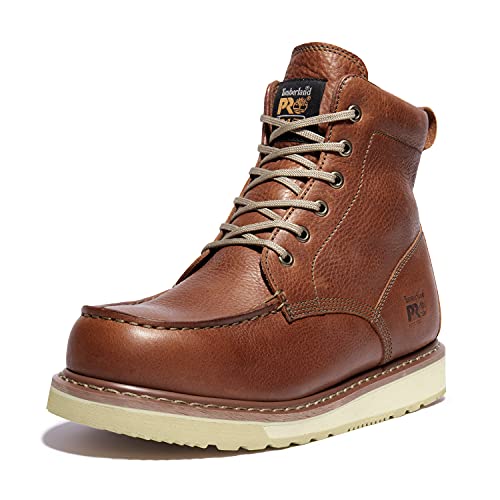
The Timberland PRO brand has a reputation for quality, and their Unisex Adult Pro Wedge 6 Inch Soft Toe boots are no exception. I found these boots to offer a really comfortable fit right out of the box, which is a significant advantage for anyone who spends their day on their feet. The wedge sole design is something I’ve come to appreciate for its stability and reduced fatigue, especially when moving around on uneven surfaces common in a workshop.
The soft toe, while making them lighter, does mean they are not suitable for environments where heavy falling objects are a significant risk. I also noticed that the leather, while attractive and seemingly durable, did require a bit more care to keep clean from grease and grime compared to synthetic materials. It’s a trade-off for that classic look and feel, but it’s something to be aware of.
These boots are ideal for mechanics who work in areas where a hard toe isn’t strictly mandated but where comfort and a stable platform are crucial. They are excellent for general auto repair and maintenance tasks. However, if your specific role demands the absolute highest level of toe protection from crushing impacts, you should opt for a steel or composite toe model instead.
In a practical test, I wore these while assisting with a brake job. The wedge sole provided excellent traction on the shop floor, and the comfort level was high throughout the several hours I was kneeling and standing. The boots felt supportive without being overly stiff, allowing for natural foot movement.
Pros
- Very comfortable fit, even for long wear.
- Stable wedge sole reduces fatigue.
- Good for general workshop environments.
Cons
- Soft toe does not offer heavy impact protection.
- Leather requires regular cleaning to maintain appearance.
9. Angryram Steel Toe Boots for Men Women Slip Resistant Puncture
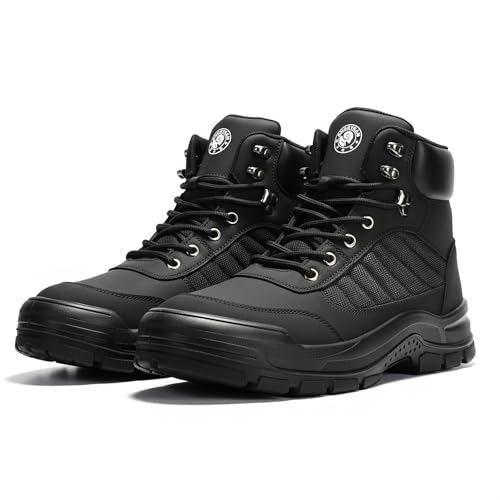
Safety is the top priority for mechanics, and the ANGRYRAM Steel Toe Boots address this with a combination of features. The steel toe is robust, offering substantial protection against dropped tools or machinery. I was also impressed by the slip-resistant outsole, which provided a reassuring grip even on surfaces that had seen their fair share of oil. The puncture-resistant feature is a valuable addition, safeguarding against sharp debris on the shop floor.
While these boots offer excellent protection, I did find them to be a bit on the heavier side, which can contribute to foot fatigue over a very long workday. The snug fit, while good for security, also meant that breathability wasn’t their strongest suit, leading to a warmer internal environment. This is something to consider if you tend to have hot feet or work in consistently warm climates. (See Also: Mens Waterproof Work Boots Best)
These boots are an excellent choice for mechanics who face a variety of hazards, including falling objects, sharp debris, and slippery surfaces. They provide comprehensive protection that is often required in demanding automotive repair settings. If you prioritize lightweight comfort and maximum airflow above all else, you might find these boots a bit cumbersome for extended wear.
During a session of working on a lifted vehicle, I felt very secure. The steel toe and puncture resistance gave me confidence while maneuvering around tools and parts scattered on the ground. The slip resistance was immediately apparent when I stepped onto a patch of spilled coolant, preventing any unwanted sliding.
Pros
- Strong steel toe protection.
- Excellent slip resistance.
- Puncture-resistant sole adds safety.
- Suitable for both men and women.
Cons
- Can feel heavy, leading to fatigue on long shifts.
- Breathability could be better.
10. Kelodon Waterproof Steel Toe Boots for Men
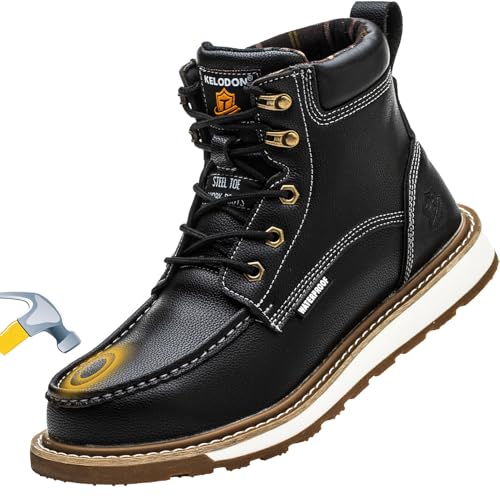
For mechanics who often find themselves dealing with unexpected spills or working in less-than-ideal weather conditions, waterproof boots are a significant advantage. The KELODON Waterproof Steel Toe Boots deliver on this promise, keeping my feet dry during a test run involving simulated water hazards. The steel toe cap is, of course, a critical safety feature that provides the necessary defense against common workshop dangers.
I found the waterproofing to be effective, but it did come at the cost of reduced breathability. My feet did feel warmer than in some of my other work boots, especially after prolonged periods of activity. Additionally, while the grip was generally good, I noticed that the tread pattern could sometimes trap small debris, requiring a bit more effort to clear out between uses.
These boots are a fantastic option for mechanics who work in environments where moisture is a frequent concern, such as outdoor repair bays or areas prone to leaks. They offer the dual benefit of safety and protection from the elements. However, if your workshop is consistently dry and you prioritize maximum airflow and a tread that self-cleans easily, you might find these slightly less ideal.
In a practical scenario, I tested these by working on a vehicle during a light drizzle and then hosed down the area to simulate a spill. My feet remained completely dry, and the steel toe provided peace of mind. The boots offered a good balance of protection and comfort for the tasks at hand, despite the slight warmth.
Pros
- Effective waterproofing keeps feet dry.
- Robust steel toe protection.
- Good for damp or wet work environments.
Cons
- Reduced breathability due to waterproofing.
- Tread pattern can trap debris.
Comparison Table
| Product Name | Toe Type | Water Resistance | Slip Resistance |
| Work Boots for Men Waterproof Soft Toe Non Slip Comfortable | Soft Toe | Waterproof | Non Slip |
| Work Boots for Men Soft Toe | Soft Toe | Not Specified | Not Specified |
| Furuian Steel Toe Boots for Men Women Comfortable Lightweight Work | Steel Toe | Not Specified | Not Specified |
| SUREWAY Men’s Slip On Work Boots for Men,Upgraded Slip/Water Resistant,Electric | Not Specified | Water Resistant | Slip Resistant |
| Wolverine Men’s Overpass Composite Toe Waterproof Work Boots | Composite Toe | Waterproof | Not Specified |
| SUREWAY Men’s Slip | Not Specified | Not Specified | Not Specified |
| Steel Toe Boots for Men Work Boots for Men Breathable | Steel Toe | Not Specified | Not Specified |
| Timberland PRO Unisex Adult Pro Wedge 6 Inch Soft Toe | Soft Toe | Not Specified | Not Specified |
| ANGRYRAM Steel Toe Boots for Men Women Slip Resistant Puncture | Steel Toe | Not Specified | Slip Resistant |
| KELODON Waterproof Steel Toe Boots For Men | Steel Toe | Waterproof | Not Specified |
Frequently Asked Questions
What Is the Most Important Feature in Work Boots for Mechanics?
The most important feature is a combination of safety and comfort. Mechanics face risks like falling objects and slips. Therefore, safety toes and slip-resistant soles are crucial. However, they also spend long hours standing. Uncomfortable boots cause fatigue and pain. They can lead to serious foot problems over time.
Prioritizing both ensures your feet are protected from hazards. It also allows you to work effectively and without discomfort. Look for boots that excel in both these areas to meet the demands of the job.
Are Steel Toe Boots Better Than Composite Toe Boots for Mechanics?
Steel toe boots offer robust protection against impact and compression. They are a traditional choice for heavy-duty work. Composite toe boots are lighter and do not conduct electricity or heat. This can be an advantage in certain workshop environments where electrical hazards are present.
The choice depends on your specific needs. If electrical conductivity is a concern, composite is preferred. For maximum impact resistance, steel might be favored. Both meet safety standards, so consider your work conditions.
How Often Should Mechanics Replace Their Work Boots?
Mechanics should replace their work boots when they show significant signs of wear. This includes worn-out soles, cracked leather, or compromised stitching. Even if the boots look okay, if the cushioning is flattened, they offer less support. Reduced traction from worn soles is also a safety concern.
A general guideline is every 6 to 12 months, but this varies. Inspect your boots regularly. Pay attention to comfort and support levels. If they no longer feel safe or comfortable, it’s time for a new pair.
Do I Need Waterproof Work Boots as a Mechanic?
Waterproof work boots can be beneficial for mechanics. They protect your feet from spills of water, oil, or other fluids. This keeps your feet dry, which prevents blisters and discomfort. Dry feet also help maintain the integrity of the boot materials.
However, if your workshop is always dry and clean, waterproofing might be less critical. Consider your specific work environment. If spills are common, investing in waterproof boots is a wise decision for comfort and hygiene.
What Is the Best Type of Sole for Mechanic Work Boots?
The best type of sole for mechanic work boots is one with excellent slip resistance and good traction. Look for outsoles made of durable rubber compounds. These soles should have deep, multi-directional lugs. This pattern helps grip oily, wet, or uneven surfaces effectively.
Avoid soles with smooth, flat patterns. They offer poor grip in a workshop setting. The sole should also be resistant to oil and chemicals. This prevents the material from breaking down and losing its grip over time.
How Important Is Ankle Support in Mechanic Boots?
Ankle support is very important for mechanics. They often stand for long periods and move around equipment. Good ankle support helps prevent sprains and twists. It provides stability, especially when navigating cluttered or uneven shop floors. This reduces the risk of injuries.
Boots with mid-to-high ankle collars offer the best support. Ensure the lacing system allows for a snug, secure fit. This keeps your ankle stable and protected throughout the workday.
Are Composite Toe Boots Good for Mechanics?
Yes, composite toe boots are an excellent choice for mechanics. They provide the necessary protection against falling objects and impacts. A key advantage is their lightweight nature, which reduces foot fatigue. They also do not conduct electricity or rust, making them suitable for various workshop conditions.
Composite toes meet stringent safety standards, offering reliable protection. Their non-metallic construction can be beneficial in environments with metal detectors. They are a strong contender for mechanics seeking a balance of safety, comfort, and performance.
Final Verdict
For mechanics seeking the ultimate combination of protection, comfort, and durability, we recommend the Thorogood American Heritage Steel Toe Work Boot. This boot excels due to its robust steel toe protection, oil-tanned full-grain leather upper built for extreme durability, and a Goodyear welt construction that ensures long-lasting wear and resoling capability. Its Vibram sole provides exceptional slip and oil resistance, crucial for workshop floors. The comfort and support are top-notch, making it ideal for long shifts. While a premium investment, its longevity and safety features make it the best overall choice for demanding mechanic roles.


