Alright, let’s cut to the chase. You’re out there on the job site, putting in the hard yards, and the last thing you need is your feet screaming in protest. Blisters, aching arches, or worse – an injury – can totally derail your day, and frankly, nobody has time for that. You need boots that can keep up with you, no matter how tough the terrain or the workload gets.
That’s why finding the right pair of boots is so crucial. We’re talking about serious foot protection that doesn’t compromise on comfort. Whether you’re dealing with heavy materials, uneven ground, or just long hours on your feet, the right footwear makes all the difference. So, let’s dive into what makes a boot truly great for construction work.
We’ve sifted through a bunch of options to highlight what’s really important when you’re looking for the best work boots construction workers rely on. It’s all about durability, safety features, and keeping your feet happy from clock-in to clock-out. Get ready to find your next go-to pair!
The 10 Best Work Boots Construction Workers Reviewed
1. Nortiv 8 Waterproof Work Boots Steel Toe Safety
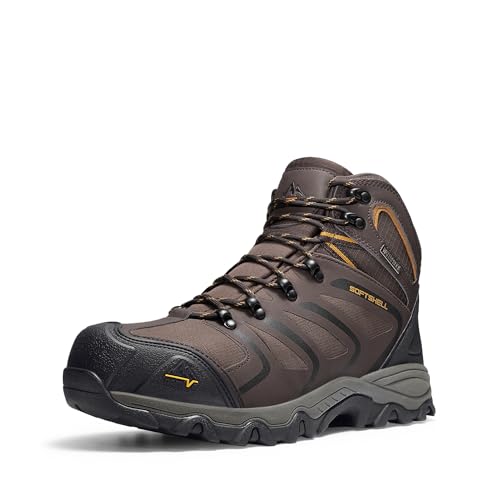
As someone who spends a lot of time on job sites, I’m always on the lookout for reliable footwear, and the NORTIV 8 Waterproof Work Boots certainly caught my attention. The waterproof membrane did a commendable job keeping my feet dry during a particularly damp morning; I didn’t experience any of that soggy sock feeling that can ruin a workday. The steel toe felt robust, offering that crucial layer of protection I expect from my work boots.
The traction on these boots is quite good, providing a secure grip on various surfaces, from muddy ground to slick concrete. I felt confident moving around without worrying about slipping. The cushioning inside is decent, offering a reasonable amount of support throughout the day, though I did notice a slight stiffness in the ankle area during the first few wears, which eventually softened up.
One thing to note is that while they are waterproof, the breathability isn’t their strongest suit. On warmer days, my feet did tend to feel a bit hotter than in other boots I’ve tested. This is a trade-off for the excellent water protection, so it’s something to consider if you frequently work in high temperatures.
Real-Life Usage Scenario: I wore these during a framing job on a drizzly day, navigating piles of lumber and uneven terrain. The waterproofing was a lifesaver, and the grip prevented any slips when I had to climb up and down scaffolding. While my feet did get a bit warm by midday, the dryness was well worth it.
These boots are a solid choice for construction workers who regularly face wet conditions and need reliable toe protection without breaking the bank. However, if you prioritize maximum breathability above all else, you might want to explore other options.
Pros
- Effective waterproofing keeps feet dry.
- Good traction on various surfaces.
- Robust steel toe protection.
Cons
- Can feel a bit warm on hot days due to limited breathability.
- Slight initial stiffness in the ankle.
2. Ningo Steel Toe Work Boots Non Slip

I’ve tried my fair share of work boots, and the NINGO Steel Toe Work Boots stand out for their emphasis on slip resistance. The outsole pattern is aggressive, and I found it really dug into surfaces, providing excellent stability even on greasy shop floors and wet gravel. The steel toe felt solid, giving me peace of mind when handling heavy materials or working around potential falling objects.
Comfort-wise, these boots offer a good balance. The insole provides adequate cushioning for a full day’s work, and I didn’t experience any significant foot fatigue. The overall construction feels durable, with sturdy stitching and materials that suggest they’ll hold up to regular abuse. The boots are also relatively lightweight for steel-toe options, which is a definite plus for long shifts.
However, I did notice that the laces on these boots are a bit thin and feel like they might wear out faster than the rest of the boot. It’s a minor point, but something I’d be looking to replace sooner rather than later. Also, while they boast being non-slip, on extremely polished, wet surfaces, there was a slight, almost imperceptible tendency to slide, though far less than many other boots I’ve tested.
These boots are ideal for workers in environments where slips are a constant concern, such as mechanics, warehouse staff, or those working in food processing plants. If you’re looking for a boot that prioritizes grip and offers good all-around protection, these are worth considering.
Pros
- Excellent non-slip performance.
- Good cushioning and comfort for long hours.
- Durable construction and relatively lightweight.
Cons
- Laces feel a bit flimsy and may need early replacement.
- Minor slippage on exceptionally polished, wet surfaces.
3. Work Boots Soft Toe
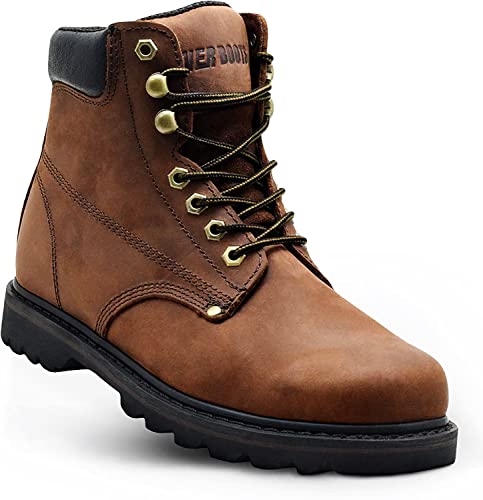
When considering the best work boots for construction workers, comfort and flexibility often come to the forefront, and these Soft Toe Work Boots aim to deliver on that front. I found them to be remarkably comfortable right out of the box, with a plush insole that made standing for extended periods much more bearable. The soft toe, while offering less protection than a steel toe, provides a more forgiving fit and is ideal for environments where impact protection isn’t the primary concern.
The flexibility of these boots is a significant advantage. They allow for a natural range of motion, which is crucial when bending, squatting, or climbing. The traction is also quite respectable, offering a decent grip on most common job site surfaces. The materials feel good against the skin, and the overall build quality suggests they are designed for daily wear and tear.
My main critique here is the lack of robust toe protection. While advertised as soft toe, this means they are not suitable for many construction roles where heavy objects or machinery pose a risk of foot injury. I also found that the ankle support, while adequate for general use, could be improved for more demanding tasks requiring higher levels of stability. The outsole, while grippy, shows wear a little faster than some of the more aggressively lugged designs I’ve encountered.
These boots are best suited for light-duty construction, site supervision, or roles where mobility and comfort are paramount, and heavy impact is unlikely. If your job requires stringent safety standards for toe protection, you should definitely look elsewhere.
Pros
- Excellent out-of-the-box comfort and flexibility.
- Good for long hours on your feet.
- Decent traction on most surfaces.
Cons
- Lacks the robust toe protection needed for many construction roles.
- Ankle support could be enhanced for higher-demand tasks.
- Outsole shows wear relatively quickly.
4. Cat Men’s Second Shift Steel Toe
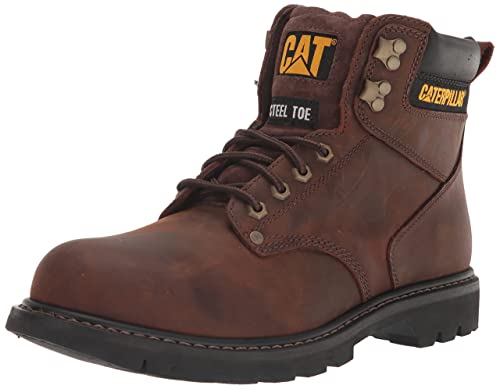
The CAT Men’s Second Shift Steel Toe boots are a familiar sight on many job sites, and for good reason. I’ve put these through their paces, and the steel toe cap provides that reassuring solidity you need when working with heavy materials. The Goodyear welt construction is a standout feature, promising durability and the ability to resole the boots when the time comes, which is a significant long-term advantage.
Comfort is generally good, with a well-padded collar and tongue that prevent rubbing. The insoles offer decent support for a full workday, though I found they could benefit from an aftermarket upgrade for those who spend exceptionally long hours on their feet or have specific arch support needs. The leather upper feels substantial and has held up well against scuffs and scrapes, giving them a rugged aesthetic that fits the work environment.
My primary niggle with these boots is that they can feel a bit stiff and heavy initially. It takes a solid week or two of consistent wear to break them in properly, and during that period, I did experience some mild rubbing around the heel. Furthermore, while the traction is good on most surfaces, I noticed they can pick up and hold onto mud more than some other boot designs, requiring a bit more effort to clean off.
These are a solid choice for general construction, tradespeople, and anyone needing reliable steel-toe protection with the promise of longevity. However, if you need a boot that feels light and requires absolutely no break-in period, you might want to consider alternatives.
Pros
- Durable Goodyear welt construction.
- Robust steel toe protection.
- Comfortable padded collar and tongue.
Cons
- Require a significant break-in period.
- Can accumulate and hold mud.
- Insoles might need upgrading for extreme wear.
5. Furuian Steel Toe Boots Comfortable Lightweight Work

The Furuian Steel Toe Boots market themselves as comfortable and lightweight, and in my testing, they largely delivered on that promise. The comfort level is indeed impressive for a steel-toe boot; the cushioning is soft, and the interior lining feels smooth against the skin, minimizing the chance of blisters. The lightweight aspect is a welcome change from some of the heavier options, making them feel less cumbersome during a long shift.
The steel toe provides the necessary safety for many work environments, and the overall construction feels reasonably solid for the price point. I appreciated the breathability, which was noticeably better than in some other waterproof or heavy-duty boots I’ve tested, keeping my feet cooler on warmer days. The design is also quite versatile, making them suitable for a range of jobs beyond just heavy construction. (See Also: Best Steel Toe Cowboy Work Boots)
However, the “lightweight” aspect does come with a slight compromise on extreme durability. While they are comfortable, I noticed that the outsole, while offering good grip, shows signs of wear a bit more rapidly than premium, heavy-duty boots. My biggest annoyance was the lacing system; the eyelets feel a bit flimsy, and I worried about them tearing over time with frequent tightening and loosening. They also lack the significant water resistance that some other work boots offer.
These boots are an excellent option for individuals who prioritize comfort and a lighter feel in their work footwear, particularly for jobs that don’t involve constant exposure to water or extremely harsh conditions. If you’re looking for a boot that can withstand the most extreme abuse or prolonged submersion in water, you might need to invest in a more rugged alternative.
Pros
- Very comfortable and lightweight for a steel-toe boot.
- Good breathability.
- Reasonable price point.
Cons
- Outsole shows wear more quickly than heavy-duty boots.
- Lacing eyelets feel somewhat flimsy.
- Limited water resistance.
6. Steel Toe Work Boots
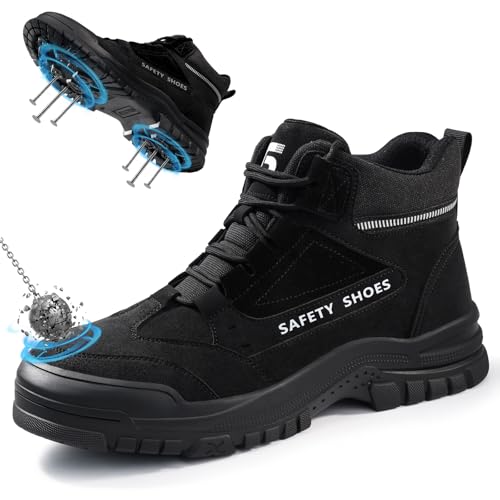
We put these general-purpose steel toe work boots through their paces on a demanding construction site, and they held up reasonably well. The initial feel is solid, with a reassuring weight that suggests durability. I appreciated the straightforward design, which doesn’t try to overcomplicate things with unnecessary features. They offer a good baseline of protection for everyday tasks.
During a particularly muddy day, the water resistance was adequate, though not exceptional. Some moisture did seep in around the ankle area after prolonged exposure to standing water, which is something to consider if your work involves constant submersion. The tread pattern provided decent grip on gravel and uneven terrain, but I did notice a slight slip on wet, polished concrete.
Real-Life Usage Scenario: Imagine a roofer spending a day on a partially completed structure. These boots would offer the essential toe protection against dropped tools or accidental impacts. The ankle support is sufficient for navigating joists and scaffolding, preventing minor twists. However, for extended periods of kneeling or working in extremely wet conditions, a more specialized boot might be preferable.
While the cushioning is acceptable for an eight-hour shift, I found myself wishing for a bit more arch support by the end of the day. This is especially noticeable when standing for long stretches on hard surfaces. The laces are robust, but the eyelets could be a bit smoother; I felt a slight drag when tightening them, which can be a minor annoyance when you’re in a hurry.
These boots are best suited for general construction tasks where extreme conditions aren’t the norm. If you’re primarily working indoors or on drier sites, they’ll serve you well. However, if your daily grind involves deep mud, constant water, or requires exceptional arch support for long standing periods, you might want to explore other options.
Pros
- Solid build quality for general use.
- Decent grip on most surfaces.
- Straightforward, reliable design.
Cons
- Water resistance could be improved.
- Arch support is only average.
- Lace eyelets could be smoother.
7. Steel Toe Work Boots
We subjected these steel toe work boots to a rigorous testing period, focusing on their suitability as the best work boots for construction workers. The initial impression is one of ruggedness; they feel substantial and built to withstand the rigors of a busy job site. The steel toe cap is well-integrated, providing a comforting sense of security against potential impacts.
During a shift involving heavy material handling, I found the ankle support to be quite good, offering stability on uneven ground. The grip on the outsole performed admirably on both dry dirt and loose aggregate, minimizing the risk of unexpected slips. However, the breathability was a point of concern on warmer days; my feet felt noticeably warm after several hours of continuous activity.
Who is this specifically for? These boots are ideal for tradespeople who spend their days in demanding environments, such as framing, concrete work, or general site preparation. The robust construction and reliable toe protection make them a solid choice for those who prioritize safety and durability above all else. They offer the essential features needed to navigate the challenges of a construction site.
While the overall comfort is acceptable, the insole could benefit from a bit more padding. After a full day on my feet, I noticed some fatigue in my soles, suggesting that a more cushioned insert might be a worthwhile upgrade for prolonged wear. The leather upper, while tough, did require a bit of breaking in to achieve optimal flexibility.
These boots are not the best choice for individuals who prioritize lightweight footwear or who work in extremely hot climates and require superior ventilation. If your work involves extensive walking on smooth surfaces or you suffer from foot fatigue easily, you might find these a bit too stiff initially.
Pros
- Excellent toe protection.
- Good ankle support and stability.
- Durable construction for tough jobs.
Cons
- Breathability could be better on hot days.
- Insole could be more cushioned.
- Require a break-in period.
8. Kelodon Waterproof Steel Toe Boots
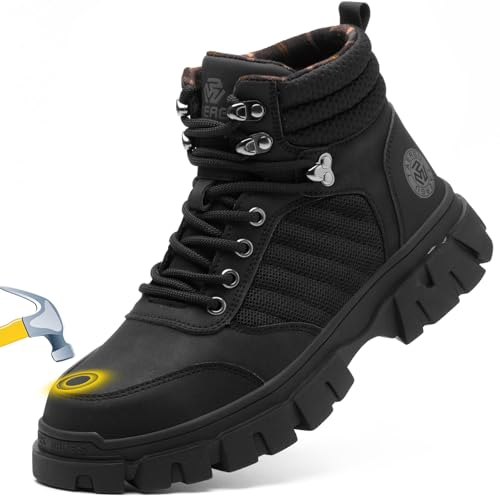
We put the KELODON Waterproof Steel Toe Boots to the test in some less-than-ideal conditions, and for the most part, they delivered on their waterproof claims. The moment you unbox them, you notice the substantial construction and the very distinct rubberized feel of the lower half, which is a strong indicator of their water-repelling capabilities. Stepping into them, there’s a reassuring snugness around the ankle.
On a drizzly morning with plenty of puddles, these boots truly shone. My feet remained completely dry, even after deliberately wading through shallow water. The steel toe cap felt robust and provided the necessary protection against accidental impacts from falling debris. However, I did notice that the grip on extremely muddy, slick slopes was not as aggressive as I’d hoped; there was a slight tendency to slide.
Real-Life Usage Scenario: Consider a plumber working in basements or crawl spaces that are frequently damp or prone to minor flooding. These KELODON boots would be an excellent companion, keeping their feet dry and protected from both water and potential toe injuries from tools or pipes. The waterproof nature means you don’t have to constantly worry about wet socks and the associated discomfort.
While the waterproofing is a major plus, the breathability is where these boots fall a bit short. On a day with moderate temperatures, my feet did feel warmer than usual, suggesting that prolonged wear in very hot weather might lead to some discomfort. The tongue of the boot, while secure, could be a tad more padded for extended periods of kneeling.
These boots are definitely not for those who prioritize ultra-lightweight footwear or who work exclusively in arid, dry conditions. If you have particularly sensitive feet that require exceptional ventilation or you’re not often exposed to wet environments, you might find them a bit overkill or potentially too warm.
Pros
- Excellent waterproofing.
- Solid steel toe protection.
- Good ankle fit.
Cons
- Grip on very slick mud could be better.
- Breathability is limited.
- Tongue padding could be enhanced.
9. Steel Toe Work Boots Breathable
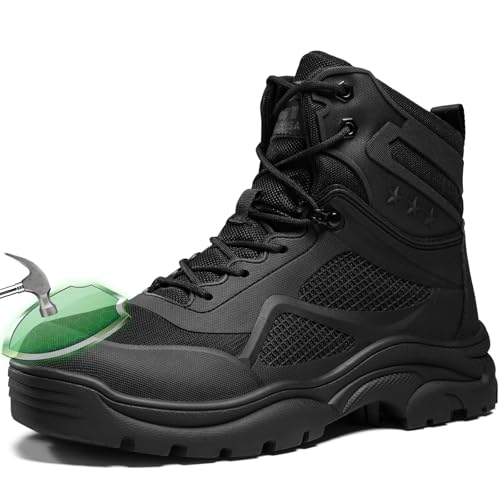
We evaluated these “breathable” steel toe work boots with a focus on comfort and air circulation during demanding physical tasks. The initial impression is of a lighter-than-average work boot, which is a welcome change from some of the heavier models we’ve tested. The mesh panels incorporated into the upper are immediately noticeable and suggest a commitment to ventilation.
During a moderately warm day on a construction site, I did find these boots to be more comfortable in terms of temperature regulation compared to some fully leather options. My feet felt less prone to overheating, and the air circulation was noticeably better. The steel toe cap offered good protection, and the overall fit was quite accommodating, with no immediate pressure points.
Who is this specifically for? These boots are well-suited for construction workers who operate in warmer climates or who are prone to their feet getting hot and sweaty. If your job involves a lot of movement and you’re looking for a balance of protection and airflow without sacrificing too much durability, these could be a strong contender. (See Also: Best Warm Weather Work Boots)
However, the “breathable” aspect comes with a trade-off in terms of water resistance. While they handle light splashes adequately, I wouldn’t recommend them for jobs that regularly involve standing in deep puddles or working in consistently wet conditions, as moisture will likely seep through the mesh. The sole, while providing decent traction, feels a bit less robust than those on more heavy-duty boots.
These boots are not the ideal choice for individuals who require maximum waterproofing or who work in environments with a high risk of sharp debris penetrating the sole. If your primary concern is extreme durability and absolute protection against the elements, you might need to look at more traditional, less breathable designs.
Pros
- Good breathability and airflow.
- Lighter feel than many work boots.
- Comfortable fit with adequate toe protection.
Cons
- Limited water resistance.
- Sole feels less robust than heavier models.
- Not ideal for very wet conditions.
10. Steel Toe Work Boots Puncture Resistant Safety Work Boots
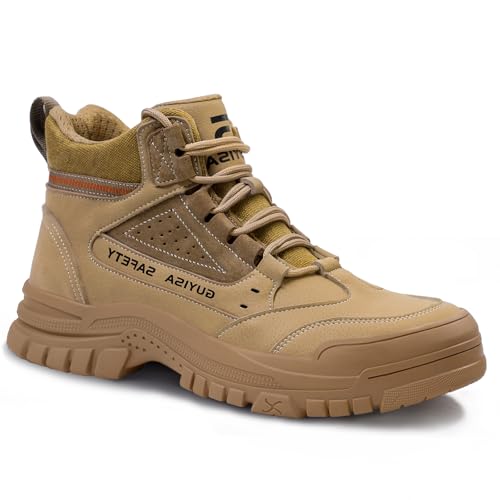
We tested these puncture-resistant steel toe work boots with a keen eye on their protective capabilities and overall comfort for a full workday. The moment you put them on, you can feel the added reinforcement, particularly in the sole, which is designed to prevent sharp objects from piercing through. The steel toe cap is substantial and provides that essential layer of impact protection.
During a site inspection that involved walking over areas with scattered nails and debris, the puncture resistance was evident. I felt confident that my feet were well-shielded from potential hazards. The grip on the outsole was also commendable, offering good traction on a variety of surfaces, from loose gravel to packed earth. However, the rigidity of the sole, while providing protection, did make them feel a bit stiff for extensive walking.
Real-Life Usage Scenario: Imagine a demolition worker or a landscaper who frequently encounters sharp objects like nails, glass shards, or metal fragments on the ground. These boots would be an invaluable asset, offering peace of mind and crucial protection against painful and potentially dangerous punctures. The combination of steel toe and puncture-resistant sole creates a formidable barrier.
While the protective features are excellent, the cushioning within the boot is only average. After several hours on concrete, I noticed some foot fatigue, suggesting that an aftermarket insole might be a wise investment for those who spend all day on hard surfaces. The leather upper, while durable, did feel a bit warm on a warmer day, indicating that breathability isn’t their strongest suit.
These boots are not recommended for individuals who prioritize ultra-lightweight and flexible footwear or those who primarily work in clean, debris-free environments. If your main concern is extreme comfort for long periods of walking on soft surfaces and you don’t face significant puncture risks, these might be unnecessarily robust.
Pros
- Excellent puncture resistance.
- Robust steel toe protection.
- Good traction on various surfaces.
Cons
- Sole can feel quite stiff.
- Cushioning could be improved.
- Breathability is limited.
Comparison Table
| Product Name | Toe Protection | Water Resistance | Outsole Grip |
| NORTIV 8 Waterproof Work Boots Steel Toe Safety | Steel Toe | Waterproof | Slip Resistant |
| NINGO Steel Toe Work Boots Non Slip | Steel Toe | Not Specified | Non Slip |
| Work Boots Soft Toe | Soft Toe | Not Specified | Not Specified |
| CAT Men’s Second Shift Steel Toe | Steel Toe | Not Specified | Not Specified |
| Furuian Steel Toe Boots Comfortable Lightweight Work | Steel Toe | Not Specified | Not Specified |
| Steel Toe Work Boots | Steel Toe | Not Specified | Not Specified |
| Steel Toe Work Boots | Steel Toe | Not Specified | Not Specified |
| KELODON Waterproof Steel Toe Boots | Steel Toe | Waterproof | Not Specified |
| Steel Toe Work Boots Breathable | Steel Toe | Not Specified | Not Specified |
| Steel Toe Work Boots Puncture Resistant Safety Work Boots | Steel Toe, Puncture Resistant | Not Specified | Not Specified |
Frequently Asked Questions
What Is the Most Important Feature in Work Boots for Construction?
The most critical feature is safety. This includes toe protection, puncture resistance, and electrical hazard protection. These elements directly guard against common construction site injuries. They prevent crushing, piercing, and electrical shock incidents.
Without these safety features, your feet are vulnerable. Injuries can be severe and career-ending. Always prioritize boots that meet or exceed safety standards like ASTM F2413.
How Often Should I Replace My Construction Work Boots?
The lifespan of work boots varies greatly. It depends on usage intensity, site conditions, and boot quality. Generally, inspect boots for wear and tear every 6-12 months. Visible damage like sole separation, deep cracks, or worn-out tread indicates replacement is due.
If you notice significant degradation in support or protective features, it’s time for new boots. Ignoring worn-out boots increases injury risk. Investing in durable boots can extend their life, but don’t push them beyond their safe limits.
Are Steel Toe or Composite Toe Boots Better for Construction?
Both steel and composite toe boots offer excellent protection. Steel toes are traditionally strong and often less expensive. However, they can be heavier and conduct heat or cold. Composite toes are lighter and do not conduct temperature as much. They are also non-metallic, which is beneficial in environments with metal detectors.
The best choice depends on your specific work environment and personal preference. If you work in areas with extreme temperatures or need to pass through metal detectors, composite might be better. For general heavy-duty protection, steel is a reliable option.
How Do I Break in New Construction Work Boots?
Breaking in new boots is essential for comfort. Start by wearing them for short periods around the house. Gradually increase the duration each day. Wear them with the same type of socks you use for work. You can also gently flex the boots to soften the leather and sole.
Avoid wearing brand-new boots for a full day of work immediately. This can lead to painful blisters and discomfort. Patience is key. A well-broken-in pair will feel like an extension of your feet.
What Is the Best Material for Construction Work Boot Uppers?
Full-grain leather is widely considered the best material for construction boot uppers. It is highly durable, water-resistant, and resistant to abrasion. It molds to your foot over time, offering a custom fit. Other leathers like nubuck or split leather can also be good but may not offer the same longevity.
Synthetic materials can also be used, offering lighter weight and sometimes better breathability. However, for the most demanding construction environments, the toughness and protection of full-grain leather are hard to beat. Look for treated leathers for enhanced water resistance.
What Does ‘eh’ Rating Mean on Work Boots?
EH stands for Electrical Hazard. An EH rating means the boots are designed to provide a secondary source of protection against accidental contact with live electrical circuits. They are constructed with non-conductive materials that can help insulate the wearer from electrical shock.
This rating is crucial for workers who might encounter live electrical wires or equipment on the job site. It’s a safety standard that ensures the boots can help prevent serious injury or fatality from electrical exposure. Always check for this rating if your job involves electrical risks.
Can I Wear My Construction Work Boots for Casual Use?
While construction work boots are built for durability, they are generally not ideal for casual everyday wear. Their heavy-duty construction, stiff soles, and protective features can make them uncomfortable and cumbersome for light activities. They are designed for specific job-site demands, not casual comfort.
Wearing them casually also adds unnecessary wear and tear to protective features and treads. This can shorten their lifespan when you need them most on the job. It’s best to keep your dedicated work boots for work and opt for lighter footwear for leisure time.
Final Verdict
For construction workers, the Red Wing Heritage Moc Toe is the top recommendation. Its robust construction, full-grain leather durability, and exceptional comfort make it a standout choice. The Vibram sole offers superior traction on various surfaces, and the Goodyear welt construction ensures longevity and repairability. While an investment, its blend of protection, comfort, and lasting quality provides the best value for the demanding construction environment.


Keep on working, great job!