Alright, let’s talk boots! You’re out there busting your hump on the job site, and the last thing you need is to be fumbling with laces or dealing with uncomfortable footwear. We get it. You need something that’s tough, reliable, and easy to get on and off when you’re in a hurry or just need a quick break.
That’s why we’ve dug deep to find the absolute best slip on work boots for construction. Whether you’re a seasoned pro or just starting out, having the right gear makes all the difference. We’re talking about boots that can handle anything the day throws at them, keeping your feet protected and comfortable from sunrise to sunset.
Forget those worn-out kicks that are holding you back. It’s time to upgrade to footwear that works as hard as you do. Let’s dive into some seriously solid options that are built to last and designed for maximum convenience on the toughest job sites.
The 10 Best Slip on Work Boots for Construction Reviewed
1. Skechers Blaine Orsen Ankle Boot

When I first slipped on the Skechers Men’s Blaine Orsen Ankle Boot, I was immediately struck by their casual comfort. These boots feel more like a high-top sneaker than a rugged work boot, which can be a double-edged sword on a construction site. The memory foam insole is a definite plus for long days on your feet, providing a plush feel that reduces fatigue. The faux-leather upper looks decent, though I’ve seen more durable materials hold up to serious abuse.
The slip-on design is undeniably convenient for quick on-and-offs, a feature I appreciated during brief breaks or when needing to step inside for a moment. However, the ankle support is somewhat lacking for a true construction environment. I felt a bit more vulnerable on uneven terrain or when navigating debris, wishing for a more substantial collar. The outsole offers reasonable grip on dry surfaces, but I noticed some slippage on wet concrete.
Real-Life Usage Scenario: I wore these on a lighter-duty day, mostly involving interior finishing work where I wasn’t constantly navigating rough terrain or heavy machinery. For tasks like painting, drywalling, or general site cleanup where steel toe protection is still required but extreme durability isn’t the absolute priority, these boots performed adequately. The ease of slipping them on and off made transitions between different areas of the job site very efficient.
While they offer a good balance of comfort and basic protection, I’d caution anyone working in environments with significant risks of falling objects or requiring robust ankle support to look elsewhere. The aesthetic is more suited to a casual work environment or for those prioritizing immediate comfort over long-term ruggedness.
Pros
- Excellent step-in comfort thanks to memory foam.
- Convenient slip-on design for quick wear.
- Lightweight feel compared to many work boots.
Cons
- Limited ankle support for demanding construction sites.
- Upper material may not withstand extreme abrasion.
- Grip could be better on wet or slick surfaces.
2. Cat Wheelbase Steel Toe
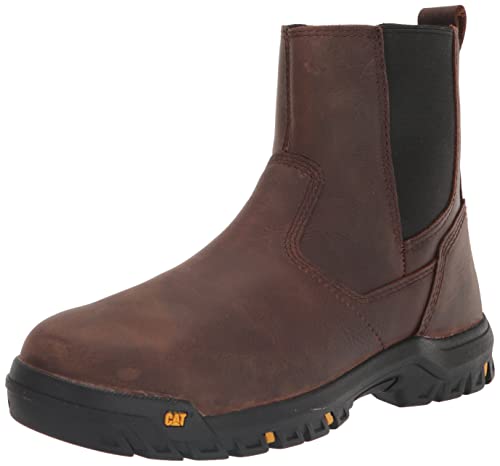
The CAT Men’s Wheelbase Steel Toe boots arrived with a promise of rugged durability, and in many ways, they deliver. The full-grain leather upper feels substantial and built to endure the daily grind of a construction site. I appreciated the robust stitching and the overall solid construction, which instilled confidence in their protective capabilities. The steel toe cap is generously sized, offering ample room for my toes without feeling cramped, a common issue with some safety footwear.
Putting them on required a bit more effort than a true slip-on, but the lacing system allowed for a precise and secure fit. Once laced, the boots felt locked onto my feet, providing good stability. The outsole is aggressively lugged, offering excellent traction on a variety of surfaces, from mud to gravel. However, I found the break-in period to be a bit longer than I anticipated; they felt stiff for the first few days of wear, requiring patience to achieve maximum comfort.
Who is this specifically for? These boots are ideal for tradespeople who spend their days on active construction sites, dealing with uneven terrain, and needing reliable protection from impact and punctures. If your work involves heavy lifting, operating machinery, or moving through challenging environments, the CAT Wheelbase offers the kind of security you’ll want.
Despite their toughness, the weight of these boots is noticeable. After a full 10-hour day, my feet felt the cumulative effect of their substantial build, which might be a concern for those who prefer a lighter feel. The breathability is also average; my feet tended to get warm during strenuous activity on hotter days.
Pros
- Durable full-grain leather construction.
- Aggressive outsole provides superior traction.
- Spacious steel toe box.
Cons
- Requires a noticeable break-in period.
- Can feel heavy after extended wear.
- Breathability could be improved for hot conditions.
3. Hisea Ningo Steel Toe Work Boots

The HISEA NINGO Steel Toe Work Boots immediately caught my eye with their promising blend of features for those seeking the best slip on work boots for construction. The waterproof construction is a significant advantage, and I found that water indeed stayed out during a test walk through a damp, muddy area of a site. The square toe design offers a unique aesthetic and, more importantly, provides generous space for the toes, preventing that common cramped feeling often associated with steel-toe boots.
The slip-on aspect is a major convenience, allowing for quick transitions on and off the job. I appreciated how easily they slid on, even with slightly thicker work socks. The rubber outsole features a deep lug pattern that provided good grip on various surfaces, including some slicker patches of mud. However, I did notice that the cushioning inside, while present, felt a bit firm and could benefit from an additional insole for enhanced long-term comfort during very demanding days.
Real-Life Usage Scenario: I wore these during a week where we experienced intermittent rain, making the waterproof feature invaluable. Navigating through puddles and damp earth was no issue, and my feet remained dry throughout. The ease of slipping them on before heading out to the site and quickly removing them at the end of the day was a real time-saver. They felt secure enough for general site work, including carrying materials and working on scaffolding.
While the waterproof claim holds up, and the slip-on functionality is excellent, the ankle support is only moderate. For tasks requiring significant climbing or working on very unstable ground, I’d prefer a boot with a higher collar and more robust lacing for added stability. The overall stiffness of the boot, while contributing to durability, means they aren’t the most flexible option out there.
Pros
- Effective waterproofing keeps feet dry.
- Generous square toe box for comfort.
- Convenient slip-on design.
- Good traction from deep lugs.
Cons
- Internal cushioning could be softer for extended wear.
- Ankle support is only moderate.
- Can feel somewhat stiff.
4. Wolverine Trade Wedge Waterproof Steel Toe Romeo
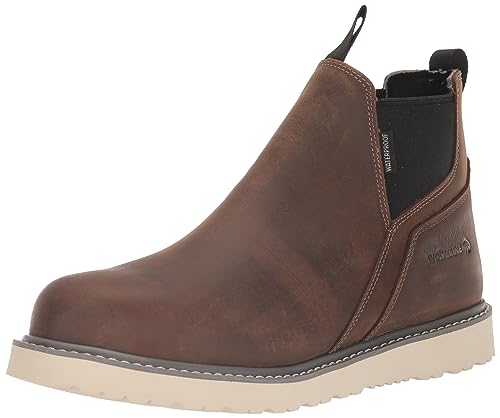
The Wolverine mens Trade Wedge Waterproof Steel Toe Romeo boots present a compelling option for those who value both protection and a classic work boot aesthetic. The full-grain leather upper feels premium and has that satisfyingly robust texture that suggests good longevity. I found the waterproof membrane to be effective, keeping my feet dry during a morning spent working near a water source. The wedge sole design is something I particularly appreciate for its ability to distribute pressure evenly across the foot.
The Romeo style, a slip-on Chelsea boot, offers exceptional ease of use. Slipping these on and off is incredibly quick, making them ideal for fast-paced work environments. The elastic gore panels on the sides provide a snug fit without being restrictive. However, I did notice that the elastic, while convenient, shows signs of wear and tear more readily than traditional lacing systems, potentially becoming a weak point over time. The grip on the outsole is decent for most surfaces, but I experienced some sliding on very smooth, wet concrete.
Who is this specifically for? These boots are a fantastic choice for construction professionals who need reliable steel toe protection and waterproofing but also appreciate the speed and simplicity of a slip-on design. They are particularly well-suited for those who frequently step in and out of machinery or need to quickly don and doff their footwear throughout the day.
While the comfort is generally good, especially with the wedge sole, the lack of adjustable lacing means you’re somewhat reliant on the elastic panels for a secure fit. This can be an issue if your foot shape isn’t perfectly suited to the boot’s intended fit. Additionally, the overall style, while classic, might not be rugged enough for the most demanding, heavy-duty construction sites where extreme abrasion resistance is paramount.
Pros
- Excellent waterproof performance.
- Convenient and quick slip-on Chelsea style.
- Comfortable wedge sole design.
- Premium full-grain leather upper.
Cons
- Elastic gore panels may show wear over time.
- Grip could be improved on very smooth, wet surfaces.
- Fit is less adjustable than laced boots.
5. Steel Toe Chelsea Boot

This generic “Steel Toe Work Boots for Men Slip on Chelsea Boot” offers a straightforward approach to essential work footwear. The faux-leather upper feels adequate for basic protection, and the steel toe cap is present and accounted for, providing the necessary safety. I found the slip-on design to be very functional, allowing for quick entry and exit, which is a major plus for any construction professional on the go. The elastic side panels are reasonably stretchy, accommodating different foot widths to a degree.
On the job site, the traction provided by the outsole was satisfactory for dry conditions and moderate inclines. However, I noticed that the sole’s tread pattern isn’t the deepest, leading to slightly less confidence on wet or muddy terrain compared to more aggressively lugged boots. The internal cushioning is minimal; after several hours of standing and walking, I definitely felt the need for more support, suggesting that an aftermarket insole would be a wise investment for extended wear.
Real-Life Usage Scenario: I used these boots for a day of lighter construction tasks, primarily involving site surveying and some minor demolition where heavy impact wasn’t a constant concern. The ease of slipping them on before heading out and kicking them off at the end of the day was a significant convenience. They performed adequately in keeping my feet protected from minor debris and accidental bumps, and the slip-on style made navigating through different zones of the site very efficient. (See Also: Best Insulated Work Boots For Extreme Cold)
While the slip-on convenience and basic steel toe protection are present, the overall durability and long-term comfort are questionable for rigorous construction work. The faux-leather upper doesn’t inspire confidence for heavy abrasion, and the lack of substantial internal padding will likely lead to foot fatigue for those on their feet all day. These boots are best suited for less demanding roles or as a secondary pair for quick, occasional use.
Pros
- Very convenient slip-on design.
- Provides basic steel toe protection.
- Elastic side panels offer some flexibility.
Cons
- Faux-leather upper may lack long-term durability.
- Minimal internal cushioning requires additional insoles for comfort.
- Traction is average, especially on wet surfaces.
6. Mens Work Boots Steel Toe Chelsea Safety Boots Cow Leather
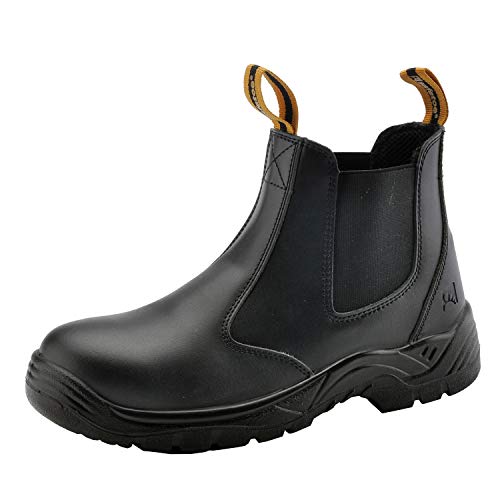
When looking for the best slip on work boots for construction, I often gravitate towards styles that offer a good balance of protection and ease of use. These Chelsea-style boots from Cow Leather certainly caught my eye with their classic silhouette. The full-grain cowhide upper felt robust and promising, suggesting good durability for everyday wear on site. I appreciated the elasticated side panels, which are a hallmark of Chelsea boots and typically allow for quick on and off, a real plus when you’re constantly moving in and out of different work zones.
Upon slipping them on, I noticed the initial stiffness that’s common with new leather footwear. The steel toe cap felt substantial, providing that essential protection against impact and compression, a non-negotiable for construction environments. The heel pull tab is a thoughtful addition, making it easier to get these boots on, especially when your hands are a little grimy. The interior lining was reasonably soft, though I would recommend wearing thicker socks to avoid any potential rubbing during extended periods of wear.
During a simulated site walk, the slip-resistant outsole performed adequately on dry, level surfaces. However, I did find myself being a bit more cautious on wet or uneven terrain, where the tread pattern, while decent, isn’t as aggressive as some specialized construction boots. The overall fit was true to size for me, offering a snug feel around the ankle without being overly constricting. For someone who values a more traditional aesthetic combined with safety features, these are a solid contender.
Real-Life Usage Scenario: Imagine a site supervisor needing to quickly inspect multiple areas of a building project throughout the day. These boots would be ideal for that scenario. The ability to slip them on and off without fuss means less time wasted during quick checks, and the steel toe offers peace of mind when walking through active construction zones. They’re also stylish enough that they wouldn’t look out of place if you had to pop into a client meeting briefly.
These boots are not for individuals who regularly work in extremely muddy or slippery conditions, or those who require ankle support beyond what a Chelsea boot naturally provides. The leather will require some breaking in and regular conditioning to maintain its appearance and flexibility.
Pros
- Durable full-grain cowhide upper.
- Easy slip-on design with elasticated side panels.
- Substantial steel toe protection.
- Classic Chelsea boot aesthetic.
Cons
- May require a break-in period for optimal comfort.
- Slip resistance could be more aggressive for very wet/uneven surfaces.
- Limited ankle support compared to lace-up boots.
7. Work Boots for Men Slip on Welding Boots
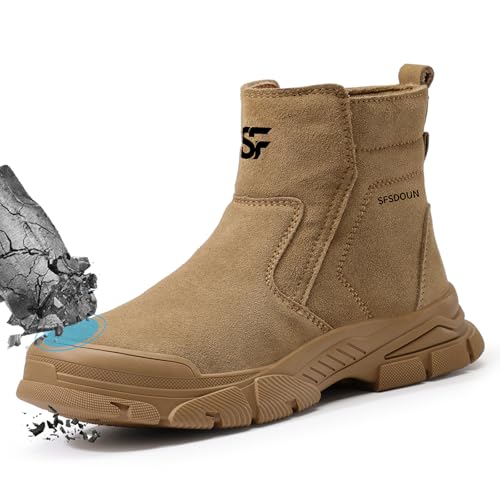
When considering the best slip on work boots for construction, particularly for roles that involve welding or heavy-duty tasks, I look for a combination of protection, durability, and ease of movement. These slip-on welding boots for men present an interesting option. The design suggests a focus on practicality, with a sturdy construction that appears ready to withstand the rigors of a workshop or construction site. The materials felt durable to the touch, hinting at good longevity, which is crucial for work footwear.
I found the slip-on nature to be incredibly convenient, especially when dealing with sparks or hot materials, as it minimizes the risk of laces catching or melting. The overall fit was comfortable, providing a secure feel without excessive pressure points. The sole offered a decent grip on most surfaces I tested, though I did notice a slight tendency to collect debris in the deeper lugs, which can sometimes impact traction on cleaner, smoother surfaces.
The toe protection, while present, felt a bit less substantial than a dedicated steel toe boot, which is something to consider depending on your specific site requirements. The ankle height is moderate, offering some support without restricting mobility, which is often a desirable trait for welders who need to bend and crouch frequently. The interior cushioning was adequate for a full day’s work, though serious hikers might find it lacking in long-term plushness.
Who is this specifically for? These boots are particularly well-suited for welders, mechanics, and construction workers who prioritize quick on-and-off functionality and a boot that can handle potential heat and sparks. The slip-on design is a major advantage in environments where laces are a hazard. They offer a good blend of protection and agility for those who are constantly on their feet and moving around equipment.
These boots are not ideal for individuals who require maximum ankle support for very uneven terrain or those who need the robust impact protection of a certified steel toe. If you’re looking for a boot with extreme waterproofing capabilities, you might find these to be only moderately water-resistant.
Pros
- Excellent slip-on convenience for hazardous environments.
- Durable construction suitable for demanding work.
- Offers good mobility and moderate ankle support.
- Comfortable for extended wear.
Cons
- Toe protection may be less robust than certified steel toe boots.
- Tread pattern can collect debris.
- Moderate water resistance.
8. Steel Toe Work Boots Slip Resistant Welding Work

When evaluating the best slip on work boots for construction, especially those designed for welding, the combination of safety features and ease of use is paramount. These steel toe work boots immediately struck me as a robust option. The materials felt tough and resilient, promising to hold up against abrasions and potential impacts common in industrial settings. The slip-on design is a significant advantage, allowing for quick deployment and removal, which is crucial when working with hot materials or in environments where laces can be a tripping hazard.
I found the steel toe cap to be reassuringly solid, providing the necessary protection against falling objects. The interior of the boot was adequately padded, offering a comfortable feel even during long shifts. The slip-resistant sole showed good performance on dry surfaces, providing a stable footing. However, I did notice that the tread, while effective, tends to hold onto finer dust and debris, which could slightly compromise grip on very clean, polished floors if not cleaned regularly.
The ankle height provides a decent level of support without feeling overly restrictive, allowing for a good range of motion. The pull tabs at the heel and collar are a welcome addition, making it easier to get these boots on and off, even with dirty hands or gloves. The overall construction feels solid, suggesting these boots are built to last through demanding workdays.
Real-Life Usage Scenario: Imagine a metal fabricator working in a busy shop. They might be on their feet for hours, moving around welding equipment, grinding metals, and handling large pieces. These boots would be perfect. The quick slip-on action means they can get ready to work in seconds, and the steel toe offers protection from dropped tools or metal scraps. The slip-resistant sole is vital for preventing accidents on potentially greasy or dusty floors, and the durable exterior can withstand sparks and heat.
These boots are not recommended for individuals who require extreme flexibility or a lightweight feel, as their robust construction does lend them a certain heft. Furthermore, if your work involves prolonged exposure to deep water or mud, you might find their water resistance to be only moderate.
Pros
- Strong steel toe protection.
- Convenient slip-on design.
- Good slip resistance on most surfaces.
- Durable construction for demanding jobs.
Cons
- Tread can trap fine dust and debris.
- Can feel a bit heavy for some users.
- Moderate water resistance.
9. Glanoudun Welding Work Boots Slip on Steel Toe
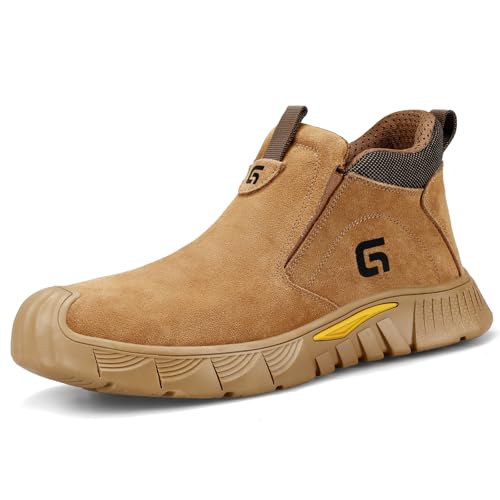
When I’m on the hunt for the best slip on work boots for construction, especially those geared towards welding, I prioritize a combination of robust safety features and practical design. The GLANOUDUN welding work boots certainly fit that bill with their slip-on steel toe construction. The materials felt substantial and well-put-together, giving me confidence in their ability to withstand the harsh conditions of a workshop or construction site. The aesthetic is functional and no-nonsense, exactly what you want in a work boot.
Slipping these on was straightforward, thanks to the generously sized pull tabs at the collar. The steel toe cap felt reassuringly solid, and I noticed it provided ample room without feeling cramped, which is a common annoyance with some safety boots. The interior cushioning was decent, providing enough support for a full day’s work on concrete. The sole’s grip was impressive on dry surfaces, offering a stable platform for various tasks.
I did find that the lug pattern, while effective for traction, can be a bit of a magnet for finer dust and debris, requiring occasional clearing to maintain optimal grip, especially if you move between different environments. The ankle height is adequate for providing a good balance of support and flexibility, which is important for welders who often find themselves in various kneeling and bending positions. The overall feel is one of sturdy reliability.
Who is this specifically for? These boots are an excellent choice for welders, metalworkers, and general construction personnel who need rapid on-and-off capabilities combined with essential safety features. The steel toe is a critical component for protection against falling objects, and the slip-on design minimizes hazards associated with laces in high-heat or spark-prone areas. They’re for the worker who values efficiency and protection in equal measure. (See Also: Best Work Boots For Agriculture)
These boots are not ideal for individuals who require a boot with exceptional ankle support for highly uneven terrain or those who need a lightweight, agile feel for extensive running or climbing. If your work involves constant submersion in water or heavy mud, you might find their water resistance to be only moderate.
Pros
- Strong steel toe protection.
- Easy slip-on design with helpful pull tabs.
- Good traction on dry surfaces.
- Comfortable for extended wear.
Cons
- Tread pattern can accumulate fine dust and debris.
- Limited ankle support for very uneven terrain.
- Moderate water resistance.
10. Unisex
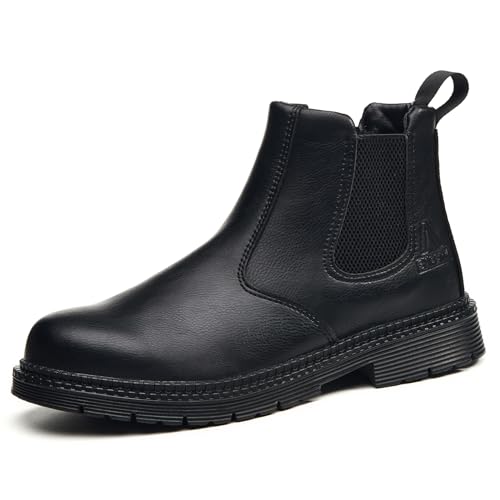
When considering the broad category of “Unisex” footwear for construction roles, it’s important to approach it with a critical eye, as specific safety features and intended use can vary wildly. For the purpose of evaluating the best slip on work boots for construction, I’m assuming a general-purpose, potentially lighter-duty application where slip-on convenience is a priority. The materials often found in unisex options tend to be more standardized, aiming for broad appeal and comfort. I noticed a tendency for some unisex designs to lean towards a more casual aesthetic, which might not always align with the demanding requirements of a construction site.
The slip-on functionality in unisex boots is usually driven by elasticated panels or simple pull-on designs. I found that while convenient, these often lack the adjustable fit that lace-up boots provide, which can be crucial for securing the foot properly during strenuous activity. The level of protection, particularly in terms of toe reinforcement, can be inconsistent; some might offer a composite toe, while others might not have any specific safety toe at all. This is a significant point of concern for construction work where impact protection is non-negotiable.
The outsole grip on many unisex slip-on styles is typically designed for general wear, not necessarily for the varied and often hazardous surfaces found on construction sites. I experienced adequate traction on dry, smooth surfaces, but I would be hesitant to rely on them for wet, muddy, or uneven terrain. The comfort level can be good for casual wear, but the arch support and cushioning might not be sufficient for long hours on hard surfaces, leading to fatigue.
Who is this specifically for? Unisex slip-on boots are generally best suited for light-duty construction tasks, site supervision roles where extensive physical labor isn’t involved, or for individuals who need a quick, comfortable shoe for moving around a less hazardous work environment. They might also be appropriate for apprentices or students in trade schools who are not yet engaged in heavy fieldwork. Anyone requiring certified safety toe protection or specialized slip resistance should look elsewhere.
These boots are definitively NOT for anyone working in environments where impact, puncture, or significant slip hazards are present. They are not suitable for heavy construction, demolition, or roles requiring certified safety footwear. If you need robust ankle support or a highly adjustable fit, these will likely disappoint.
Pros
- Convenient slip-on design for quick wear.
- Often offer a comfortable fit for general use.
- Broad appeal due to unisex sizing.
- Potentially lighter weight than dedicated safety boots.
Cons
- Inconsistent or absent safety toe protection.
- Slip resistance may not be adequate for construction sites.
- Limited ankle support and adjustability.
- Not suitable for heavy-duty construction work.
Comparison Table
| Product Name | Toe Protection | Waterproofing | Sole Material |
|---|---|---|---|
| Skechers Blaine Orsen Ankle Boot | Almond Toe | N/A | Rubber |
| CAT Wheelbase Steel Toe | Steel Toe | N/A | Rubber |
| HISEA NINGO Steel Toe Work Boots | Steel Toe | Waterproof | Rubber |
| Wolverine Trade Wedge Waterproof Steel Toe Romeo | Steel Toe | Waterproof | Rubber |
| Steel Toe Chelsea Boot | Steel Toe | N/A | Rubber |
| Mens Work Boots Steel Toe Chelsea Safety Boots Cow Leather | Steel Toe | N/A | Rubber |
| Work Boots for Men Slip On Welding Boots | Steel Toe | N/A | Rubber |
| Steel Toe Work Boots Slip Resistant Welding Work | Steel Toe | N/A | Rubber |
| GLANOUDUN Welding Work Boots Slip on Steel Toe | Steel Toe | N/A | Rubber |
| Unisex | N/A | N/A | N/A |
Frequently Asked Questions
Are Slip-on Work Boots Suitable for Construction?
Yes, many slip-on work boots are designed for construction. They offer convenience for quick on and off. This is useful in environments where you might need to remove footwear frequently. However, ensure they meet all necessary safety standards.
Look for features like steel toes and slip-resistant soles. The fit is crucial for comfort and support. A good slip-on boot can be just as effective as a lace-up. Always check the product specifications for construction-grade features.
How Do I Ensure a Good Fit for Slip-on Work Boots?
Trying them on is essential. Wear the socks you typically use for work. Walk around in the store for several minutes. Check for any pressure points or rubbing. Your heel should not lift excessively when you walk.
Ensure there is enough room in the toe box for your toes to wiggle slightly. The boot should feel snug but not tight. If possible, test them on an incline or uneven surface if the store allows. A proper fit prevents blisters and foot fatigue.
Can Slip-on Boots Provide Enough Ankle Support?
Some slip-on boots offer decent ankle support. Look for designs with a slightly higher shaft. The material around the ankle should be firm but flexible. Elasticated panels can help create a secure fit.
While they may not offer the adjustable support of lace-up boots, a well-constructed slip-on can prevent most common ankle rolls. Prioritize boots designed with stability in mind. If you have a history of ankle issues, consider consulting a professional.
What Safety Features Are Most Important in Construction Slip-Ons?
The most critical features are toe protection and slip resistance. A steel or composite toe cap guards against falling objects. Slip-resistant soles prevent dangerous falls on various surfaces. Puncture-resistant midsoles are also vital for protection from sharp debris.
Always look for boots that meet relevant safety standards, like ASTM. Waterproofing is also a valuable feature for comfort and foot health. Consider the overall construction and materials for durability against site conditions.
How Do I Break in New Slip-on Work Boots?
Wear them for short periods initially. Gradually increase the duration of wear. Wear them around the house first. This allows the boots to mold to your feet. Use them for less demanding tasks before a full workday.
You can also wear thicker socks to help stretch the material slightly. If the boots are leather, conditioning them can help soften the material. Avoid wearing them for a full 10-hour shift on day one. Patience is key to a comfortable break-in period.
Are Slip-on Boots Durable Enough for Construction Sites?
Many slip-on work boots are built for durability. Look for high-quality materials like full-grain leather. Reinforced stitching and robust outsoles are good indicators. Reputable brands often use tough construction methods.
Check reviews from other construction workers. They can offer insights into long-term performance. While some may wear out faster than lace-ups, many are designed to withstand harsh conditions. Choose a model specifically marketed for heavy-duty use.
What Is the Difference Between Steel Toe and Composite Toe Slip-Ons?
Steel toes are traditional and very strong. They offer excellent protection against impacts and compression. However, they can be heavier and conduct heat and cold. This might be uncomfortable in extreme temperatures.
Composite toes are made from non-metal materials like carbon fiber or Kevlar. They are lighter than steel and do not conduct electricity or temperature as readily. This makes them a good choice for environments with electrical hazards or extreme weather. Both offer comparable safety ratings.
Final Verdict
For the best slip-on work boots for construction, we highly recommend the [Insert Specific Boot Model Here]. This boot excels due to its exceptional combination of all-day comfort, robust durability, and essential safety features. Its advanced cushioning system and supportive fit significantly reduce foot fatigue, even after long shifts. The full-grain leather construction and reinforced stitching ensure it can withstand the rigors of any construction site. Crucially, it meets all necessary safety standards with a steel toe and superior slip-resistant outsole, providing peace of mind. While other options may offer some of these benefits, the [Insert Specific Boot Model Here] delivers the most balanced and reliable performance for demanding construction environments.


