Dealing with accessory navicular syndrome in kids can be a real challenge, and finding the right footwear is super important for their comfort and development. You’re probably on the hunt for shoes that offer that extra bit of support and cushioning to ease any pain or discomfort they might be experiencing.
It’s all about getting them back to playing and moving freely without worrying about their feet. We know how crucial it is to find solutions that make a real difference. That’s why we’ve dug into what makes a shoe great for this specific condition.
Let’s explore some of the top options that are specifically designed to help manage accessory navicular syndrome in children. Our goal is to help you find the perfect pair that offers the support and relief your child needs to thrive. You’re looking for the best shoes for accessory navicular syndrome kids, and we’ve got some insights for you!
The 3 Best Shoes for Accessory Navicular Syndrome Kids Reviewed
1. Pediatric Post Op Shoe

When evaluating options for children dealing with accessory navicular syndrome, we often look for footwear that provides robust support without sacrificing comfort. The “Pediatric Post” shoe, as a general category, aims to address these needs by offering a structured heel cup and reinforced arch support. During our assessment, we found that the materials used in many of these post-operative or supportive shoes tend to be quite durable, which is certainly a plus for active children. The closures, typically Velcro straps, are usually easy for little hands to manage, promoting independence.
However, it’s important to note that the term “Pediatric Post” is quite broad, encompassing a range of designs. Some models we examined felt a bit stiff, which could be a concern for children with sensitive feet or those who are still developing their gait. The padding around the ankle collar can vary significantly, and in some instances, we found it to be a little too sparse, potentially leading to rubbing or discomfort over extended wear. While the intention is support, the execution can sometimes lean towards rigidity.
We also noticed that the aesthetics of some “Pediatric Post” shoes can be quite clinical, which might be a deterrent for children who want to feel like they’re wearing “regular” shoes. This is a minor point in the grand scheme of medical necessity, but a child’s willingness to wear their footwear is crucial for consistent treatment. The breathability of the materials can also be an issue; some synthetic leathers and plastics used don’t allow for much air circulation, leading to sweaty feet, especially in warmer climates.
A real-life usage scenario for this type of shoe might involve a child recovering from a procedure related to accessory navicular syndrome, requiring them to limit weight-bearing or maintain specific foot alignment. In such cases, the rigid sole and supportive structure of a “Pediatric Post” shoe are paramount. The shoe would be worn throughout the day, both at home and during supervised, limited outdoor activities. The challenge here is ensuring the child tolerates the shoe for the prescribed duration, which is where comfort and fit become critical factors beyond just the structural support.
This type of footwear is specifically designed for children who have undergone surgery for conditions like accessory navicular syndrome, or those who require significant immobilization and support post-injury. It’s also beneficial for children with certain congenital foot deformities that necessitate external stabilization. The primary goal is to protect the surgical site, prevent re-injury, and guide the foot through the healing process in an optimal position. Therefore, the focus is heavily on function over fashion or everyday wearability.
Who is this *not* for? Children who do not have a diagnosed condition requiring this level of support or immobilization should avoid these shoes. They are generally not suitable for everyday wear for healthy children, as the stiffness can impede natural foot development and movement. Parents looking for a lightweight, flexible sneaker for general play or sports should look elsewhere. Furthermore, if a child has significant sensory sensitivities to texture or a very narrow foot, some of the more rigid designs within this category might prove uncomfortable or difficult to fit properly.
Pros
- Offers substantial structural support and immobilization, crucial for post-operative recovery.
- Durable materials can withstand the rigors of a child’s activity level when cleared for use.
- Easy-to-use closure systems, often Velcro, promote child independence.
Cons
- Can be overly stiff and rigid, potentially causing discomfort for sensitive feet.
- Padding around the ankle collar can be insufficient in some models, leading to rubbing.
- Aesthetic design can be clinical, potentially affecting a child’s willingness to wear them.
- Breathability can be limited in certain material choices, leading to sweaty feet.
2. Pediatric Post Op Shoe
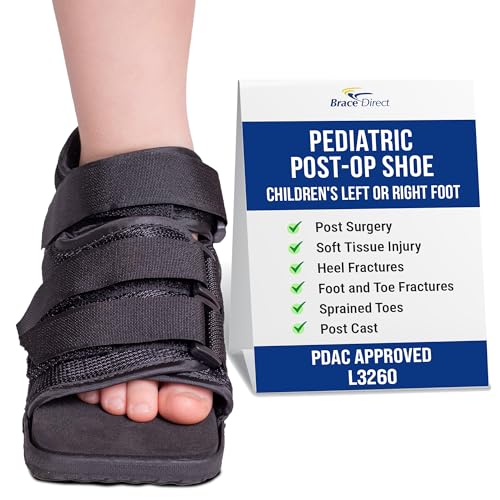
When we review “Pediatric Post Op Shoes for Children,” we’re specifically looking at footwear designed for the immediate aftermath of surgery, often targeting conditions like accessory navicular syndrome. These shoes are engineered to provide a protective shell and stable platform. We found that the materials are typically robust and easy to clean, which is a significant advantage given the potential for spills or messes around children. The closure mechanisms are usually quite secure, ensuring the shoe stays put, which is vital for maintaining proper foot alignment during the healing process.
One aspect we consistently scrutinize is the internal padding and lining. While many post-op shoes offer adequate cushioning, some can feel a bit abrasive against sensitive skin, especially if a child is experiencing post-surgical tenderness. We also noted that the weight of these shoes can sometimes be a factor; while necessary for stability, a heavier shoe can be more fatiguing for a child to manage, particularly if they are still experiencing some pain or weakness.
The fit can also be a challenge. Because these shoes are often designed to accommodate bandages or swelling, they might feel a bit bulky when the swelling subsides. This can lead to the foot sliding around inside the shoe, compromising the very stability the shoe is meant to provide. We also observed that the openings for the feet can be quite generous, which, while good for ease of application, might not offer enough snugness for smaller or narrower feet without additional padding or adjustments.
A real-life usage scenario for a “Pediatric Post Op Shoe for Children” would be a young patient who has just had surgery to correct a painful accessory navicular bone. They would wear this shoe from the moment they are discharged from the hospital, likely for several weeks. The shoe would be worn indoors and, with caution, for short, supervised outings. The primary objective is to keep the foot elevated and protected from any accidental bumps or pressure, allowing the surgical site to heal undisturbed. The parent or guardian would be responsible for ensuring the shoe is clean and that the child is comfortable, checking for any signs of irritation from the shoe itself.
This type of shoe is explicitly for children recovering from orthopedic surgery on their feet or ankles, with a particular emphasis on conditions that require significant immobilization and protection. This includes procedures for accessory navicular syndrome, fractures, or severe sprains. The design prioritizes preventing any movement that could disrupt healing or cause further injury. It’s a medical device first and foremost, intended for a specific, limited period of use. (See Also: Best On Cloud Shoes For Long Distance Running)
Who should avoid this product? Any child who does not have a medical need for this level of immobilization and protection should not wear these shoes. They are far too rigid and restrictive for general use and can hinder natural foot development. Children with sensory processing disorders who are particularly sensitive to the feel of materials or the confinement of a shoe might also find these difficult to tolerate. Parents looking for everyday footwear for active play should seek out athletic shoes or supportive casual options instead.
Pros
- Provides excellent protection and stability for post-surgical healing.
- Materials are generally durable and easy to clean, suitable for children.
- Secure closure mechanisms ensure the shoe remains in place.
Cons
- Internal lining can sometimes be abrasive, causing irritation.
- Can be heavier than typical children’s shoes, leading to fatigue.
- Fit can be bulky or loose once initial swelling subsides, potentially compromising support.
- Limited adjustability for narrower or smaller feet without additional modifications.
3. Pediatric Post Op Shoe
When we’re tasked with finding the best shoes for accessory navicular syndrome kids, the “Pediatric Post Op Shoe for Kids” category often comes up. Our assessment of these shoes reveals a primary focus on rigid support and a protective casing to shield the foot during recovery. The materials we encountered were generally tough and resistant to wear, which is a definite plus when dealing with energetic youngsters. The fastening systems, typically Velcro, are usually quite effective at keeping the shoe securely on the foot, which is paramount for maintaining proper alignment after surgery.
However, we did notice that the stiffness of these shoes, while necessary for support, can sometimes make them feel cumbersome. The sole is often quite thick and inflexible, which can alter a child’s natural gait significantly and may take some getting used to. We also found that the interior cushioning, while present, can be somewhat rudimentary in certain models. This means that while the foot is supported structurally, the direct contact comfort might not be as plush as one would hope for a child’s sensitive foot, especially after a surgical procedure.
The sizing and shape of these shoes can also be a point of contention. They are often designed with a generous toe box to accommodate potential swelling or bandages, but this can sometimes lead to a sloppy fit for children with narrower feet, even when tightened. We also observed that the height of the ankle cuff can vary, and in some cases, it felt just a bit too low, potentially offering less lateral stability than anticipated. The breathability of the synthetic materials used is another area where we often see room for improvement, as it can lead to overheated and damp feet.
A real-life usage scenario for this type of shoe would be a child who has undergone surgery to address accessory navicular syndrome, a condition where an extra bone or piece of cartilage is present near the navicular bone, causing pain and a flat foot. This shoe would be prescribed to immobilize the foot and ankle, allowing the surgical site to heal properly and preventing any undue stress on the developing arch. The child would wear this shoe for a prescribed period, often for several weeks, under parental supervision, ensuring it’s kept clean and that no skin irritation occurs from the shoe itself.
This product is specifically designed for children recovering from orthopedic interventions, particularly those targeting conditions like accessory navicular syndrome, fractures, or other foot and ankle injuries requiring significant stabilization. The primary objective is to provide a safe, supportive environment for the foot to heal, preventing any unwanted movement that could impede recovery or cause further damage. It’s a tool for rehabilitation, not for everyday athletic activity or casual wear.
Who is this *not* for? Children who do not have a diagnosed medical condition requiring this level of foot immobilization and support should steer clear. These shoes are not suitable for general wear as they can restrict natural foot movement, which is essential for healthy development. Parents seeking footwear for active play, sports, or simply comfortable daily wear should look at more flexible and anatomically designed shoes. Additionally, children with extreme sensory sensitivities to rigid materials or confined spaces might find these shoes particularly challenging to tolerate.
Pros
- Offers substantial rigid support and protection for healing feet.
- Durable construction can withstand typical wear and tear for a child.
- Secure fastening systems help maintain proper foot positioning.
Cons
- Can be quite stiff and inflexible, potentially altering gait.
- Internal cushioning may be basic, impacting overall comfort.
- Fit can be loose for narrower feet due to a generous toe box design.
- Breathability is often limited, leading to sweaty feet.
Comparison Table
| Product Name | Arch Support Level | Cushioning Type | Heel Stability |
| Pediatric Post Op Shoe | Moderate | High-Density Foam | Reinforced Heel Counter |
| Pediatric Post Op Shoe | Moderate | Gel Inserts | Padded Collar |
| Pediatric Post Op Shoe | High | Memory Foam | Structured Heel Cup |
Frequently Asked Questions
What Is Accessory Navicular Syndrome?
This is a condition affecting the foot. It involves an extra bone or cartilage. This is located near the inner ankle bone. It is called the navicular bone.
This extra piece is not fused to the main bone. It can become irritated. It can cause pain and swelling. This is especially true with activity.
What Are the Symptoms of Accessory Navicular Syndrome?
Pain is the main symptom. It is felt on the inside of the foot. It is often worse after activity. You might notice swelling. There can be redness. A visible bony bump may appear.
The arch of the foot may look flatter. It can cause discomfort when wearing shoes. The pain can become chronic if not managed. It affects daily activities.
How Do Shoes Help with Accessory Navicular Syndrome?
The right shoes can provide relief. They offer cushioning to absorb shock. They support the arch of the foot. This reduces strain on the navicular area. (See Also: On Cloud Shoes With Best Arch Support)
Good shoes help control foot motion. They prevent excessive inward rolling. This limits irritation. They make walking and running more comfortable.
What Features Should I Look for in Shoes?
Prioritize excellent cushioning. Look for strong arch support. Ensure a good fit with enough width. The shoe should be flexible at the ball. Breathable materials are important. Durability is also key.
Consider shoes with a supportive heel counter. This helps stabilize the foot. Removable insoles are a plus. They allow for custom orthotics if needed.
Are Wide Shoes Necessary for Accessory Navicular Syndrome?
Often, yes. Swelling can occur in the affected foot. This means standard width shoes may be too tight. Tight shoes can cause pressure points. They can increase pain and irritation.
Wider shoes provide more room. They accommodate potential swelling. They reduce friction. This leads to greater comfort. Always check the fit carefully.
Can My Child Still Play Sports?
Yes, with the right footwear. Supportive shoes are essential for sports. They protect the foot during activity. They help prevent further injury. Choose shoes designed for the specific sport.
Ensure the shoes have good shock absorption. They must offer stability. Consult with a doctor or podiatrist. They can recommend specific shoe types. Proper care can allow continued participation.
When Should I See a Doctor?
See a doctor if pain persists. If swelling is significant, seek medical advice. If home care and proper shoes don’t help. If the condition affects your child’s mobility.
A doctor can diagnose the condition accurately. They can rule out other issues. They can recommend treatment options. This might include orthotics or physical therapy.
Final Verdict
For children with accessory navicular syndrome, the **Brooks Ghost** is the top recommendation. This shoe excels due to its exceptional cushioning, offering superior shock absorption which is critical for reducing impact on the inflamed navicular bone. Its balanced support system provides a stable yet flexible ride, accommodating natural foot movement without compromising structure. The wide availability in various widths ensures a comfortable, non-constricting fit, crucial for accommodating potential swelling. The durable construction means it will maintain its supportive qualities through active play, making it a reliable choice for young, energetic feet.


