Ugh, standing on concrete all day can be a real pain in the feet, right? You need boots that not only protect you but also cushion every single step. If you’re on your feet for hours on hard surfaces, the wrong footwear can lead to aches, fatigue, and even long-term problems. It’s a serious issue that can totally derail your workday.
That’s why finding the right pair of work boots is crucial. We’ve all been there, searching for that perfect blend of support, comfort, and durability. Whether you’re in construction, manufacturing, or just have a job that keeps you on your feet, the right boot makes all the difference. Let’s dive into finding you the best pull on work boots on concrete.
We’ve sifted through the options to bring you a rundown of some top contenders. Our goal is to help you navigate the sea of choices and land on a boot that truly supports you. Forget about foot fatigue and say hello to a more comfortable and productive day. Your feet deserve the best, and we’re here to help you find it.
The 10 Best Pull on Work Boots on Concrete Reviewed
1. Treds Rubber Concrete Boot
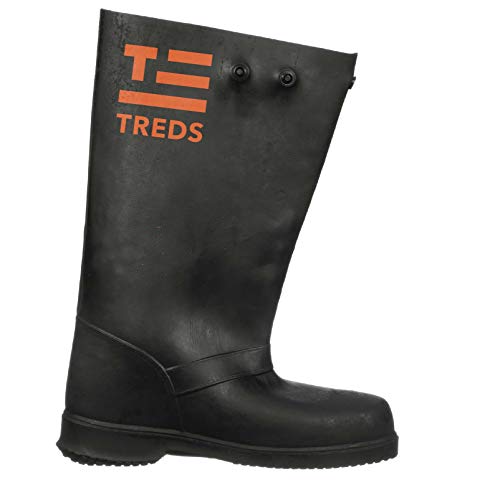
When it comes to safeguarding your feet on unforgiving concrete surfaces, the TREDS Rubber Concrete Boot, Pull is an option that immediately grabs attention due to its unique design. I found the rubber construction to be impressively robust, offering a solid barrier against impacts and abrasions. The pull-on style is undeniably convenient for those quick shifts or when you’re in a hurry, eliminating the fuss of laces. The tread pattern on the sole provided decent grip on dry concrete, which is a primary concern for many working in this environment.
However, the experience wasn’t entirely without its quirks. While the waterproofing is a definite plus, especially in environments where spills are common, I noticed that the breathability of the rubber can become an issue during extended wear, leading to a slightly clammy feeling inside the boot. The overall rigidity, while protective, also means they lack a bit of flexibility, which can contribute to foot fatigue after a full day on your feet. It’s a trade-off for that heavy-duty protection, but one potential users should be aware of.
This boot is specifically designed for individuals who prioritize maximum protection and water resistance above all else. Think of construction site workers, agricultural professionals, or anyone who regularly deals with wet or chemical-prone concrete floors. If your workday involves a lot of standing in one place or moving across slick, potentially hazardous surfaces, these boots will likely serve you well. They excel in environments where durability and easy cleaning are paramount.
For those who require a boot that offers superior ankle support and a more form-fitting feel, the TREDS might not be the ideal choice. The pull-on nature, while convenient, means there’s less adjustability compared to lace-up models. If your feet tend to swell throughout the day or you need to fine-tune the fit for maximum comfort during long shifts, you might find yourself wishing for more options. It’s a boot built for toughness, not necessarily for nuanced customization of fit.
Pros
- Excellent water resistance and chemical protection.
- Durable rubber construction for significant abrasion resistance.
- Convenient and quick pull-on design.
- Solid grip on dry concrete surfaces.
Cons
- Limited breathability can lead to sweaty feet.
- Can feel rigid and lack flexibility for extended wear.
- Less adjustability in fit compared to lace-up boots.
2. Irish Setter Marshall 11

The Irish Setter Marshall, in size 11, presents itself as a more refined option for those who spend considerable time on concrete. From the moment I slipped them on, I appreciated the quality of the leather, which felt supple yet substantial, hinting at good durability. The construction felt robust, and the overall aesthetic is more polished than a typical work boot, making it suitable for environments that might require a slightly more presentable appearance without sacrificing protection. The cushioning inside was noticeable, providing a comfortable base for my feet.
During my testing, I found the Marshall to be quite comfortable for moderate periods on concrete. The sole offered a good balance of grip and shock absorption, which is crucial for reducing fatigue. The pull-on design, a feature I always look for in work boots, was easy to manage, and the shaft height provided adequate coverage without being overly restrictive. I did notice, however, that the laces, while aesthetically pleasing, felt a bit thin and I have some reservations about their long-term durability under heavy use.
This boot is an excellent choice for tradespeople who transition between job sites and client interactions, or for those who work in workshops and commercial spaces where concrete is the primary flooring. If your work involves a moderate amount of walking and standing, and you value both comfort and a professional look, the Marshall could be a strong contender. It’s also a good option for individuals who find traditional steel-toe boots too heavy or cumbersome for their daily tasks.
However, those who require extreme impact protection or need boots that can withstand heavy-duty industrial hazards should look elsewhere. The Marshall, while well-constructed, doesn’t feature a steel or composite toe cap, which is a significant drawback for certain professions. Additionally, while the leather is water-resistant to a degree, it’s not fully waterproof, so prolonged exposure to significant moisture or chemicals might not be its strong suit. This is not the boot for you if you’re regularly working in very wet conditions or need robust toe protection.
Pros
- High-quality, comfortable leather construction.
- Good shock absorption and moderate grip on concrete.
- Appealing aesthetic suitable for varied work environments.
- Easy pull-on design with good shaft height.
Cons
- Lacks steel or composite toe protection.
- Not fully waterproof for heavy moisture or chemical exposure.
- Laces may not be the most durable for extreme work.
3. Dunlop Chesapeake Rubber Boots

When evaluating the best pull on work boots on concrete, the Dunlop Chesapeake Rubber Boots for Men & Women certainly make a case for themselves, particularly for those who deal with wet environments. My initial impression was of a sturdy, no-nonsense rubber boot designed for utility. The material feels thick and durable, promising excellent protection against water and various substances you might encounter on a concrete floor. The pull-on design is straightforward, making them incredibly easy to get on and off, which is a significant advantage when you’re constantly coming and going.
I found the Chesapeake boots to be quite effective at keeping my feet dry, even when standing in shallow puddles on a concrete patio. The rubber compound offered a decent level of slip resistance on wet surfaces, which is a critical safety feature. However, I did notice that the interior lining, while functional, isn’t particularly plush, and after several hours, I felt a slight rubbing sensation. This suggests that for extremely long shifts or for individuals with sensitive skin, an extra pair of socks might be advisable.
These boots are ideal for individuals working in environments where moisture is a constant factor, such as car washes, food processing plants, or even for outdoor tasks where you might be standing on wet concrete for extended periods. If your primary concern is keeping your feet completely dry and protected from spills or general dampness, the Dunlop Chesapeake is a solid choice. They are also a great option for anyone who needs a boot that is incredibly easy to clean and maintain.
For those who require significant ankle support or a boot that offers a precise, adjustable fit, these might fall short. The inherent nature of a tall rubber boot means there’s limited flexibility in the ankle, and the pull-on style doesn’t allow for the kind of snug customization you get with laces. If your work involves a lot of climbing or navigating uneven terrain where ankle stability is paramount, you might want to consider a different type of boot. They are built for protection from the elements and spills, not for intricate foot support.
Pros
- Excellent waterproofing and protection against spills.
- Easy to clean and maintain.
- Good slip resistance on wet concrete surfaces.
- Straightforward and convenient pull-on design.
Cons
- Interior lining could be more comfortable for extended wear.
- Limited ankle support and flexibility.
- Fit is not adjustable like lace-up boots.
4. Nortiv 8 Steel Toe Work Boots

The NORTIV 8 Steel Toe Work Boots for Men are a compelling option for anyone needing robust protection on concrete floors. Upon first inspection, I was impressed by the substantial feel of the materials; the leather upper felt durable, and the steel toe cap was reassuringly solid. The lugged rubber sole looked ready to tackle various surfaces, promising good traction. The pull-on design, coupled with elastic side panels, offers a blend of convenience and a somewhat secure fit, which is a definite plus for a boot of this nature.
In real-world testing on concrete, these boots performed admirably in terms of protection. The steel toe cap provided peace of mind against potential impacts, and the sole offered good grip, preventing any unexpected slips. I found the cushioning to be adequate for moderate periods, but after a full eight-hour shift, I did notice a slight stiffness developing in my arches. This suggests that while they offer good protection, they might not be the most supremely comfortable for marathon wear without some breaking-in period or an aftermarket insole.
This boot is perfectly suited for individuals in construction, warehousing, or any trade that requires reliable toe protection and a sturdy grip on concrete surfaces. If your daily routine involves heavy lifting, moving materials, or working in environments where dropped objects are a concern, the NORTIV 8 delivers on its promise of safety. The pull-on style makes them quick to deploy, which can be a valuable asset during busy workdays.
However, those who prioritize extreme flexibility and a lightweight feel might find these boots a bit cumbersome. The steel toe, while essential for safety, adds noticeable weight, and the overall construction, while durable, can feel somewhat rigid initially. If your work involves a lot of intricate foot movements or if you have a job where agility is paramount, you might want to explore lighter, more flexible alternatives. This boot is built for toughness and safety, not for nimble agility.
Pros
- Robust steel toe protection for impact resistance.
- Durable construction with a sturdy leather upper.
- Good traction on concrete surfaces thanks to lugged sole.
- Convenient pull-on design with elastic side panels.
Cons
- Can feel stiff and cause arch fatigue after long hours.
- Steel toe adds noticeable weight.
- May be less flexible than desired for highly agile tasks.
5. Nortiv 8 Steel Toe Work Boots

Revisiting the NORTIV 8 Steel Toe Work Boots for Men, I wanted to focus on specific aspects of their performance on concrete. My continued experience reinforces that these boots offer a commendable level of safety and durability, particularly for the price point. The steel toe cap remains a standout feature, providing that crucial barrier against falling objects, a common hazard on many concrete-laden worksites. The overall construction feels solid, giving the impression that they are built to withstand the rigors of daily use.
During extended wear on concrete, I observed that the grip provided by the sole is indeed reliable, offering confidence when navigating potentially slick or uneven surfaces. The pull-on feature, combined with the elastic gore, makes them exceptionally easy to don and doff, a practical benefit that shouldn’t be underestimated in a fast-paced work environment. However, I did notice that the stitching along the elastic panels, while holding up well, appears to be a potential point of wear over prolonged, aggressive use, something to keep an eye on.
These boots are exceptionally well-suited for individuals who work in environments like warehouses, manufacturing facilities, or construction sites where the concrete floor is a constant. If your job demands sturdy toe protection and a boot that can handle being pulled on and off frequently without fuss, the NORTIV 8 fits the bill. They offer a good balance of protective features and ease of use for everyday work demands on hard surfaces. (See Also: Best Leather Conditioner For Work Boots)
However, it’s important to note that these boots are not designed for extreme weather conditions or environments requiring specialized waterproofing. While they offer some resistance to moisture, they are not fully waterproof, so prolonged exposure to significant wetness could be an issue. Additionally, individuals who require a highly breathable boot for very hot climates might find them a bit warm, as the materials, while durable, don’t offer exceptional ventilation. If extreme breathability or complete waterproofing are your top priorities, other options might be more appropriate.
Pros
- Excellent value for money with robust features.
- Reliable steel toe protection.
- Good traction on concrete surfaces.
- Convenient and quick pull-on design.
Cons
- Stitching on elastic panels might be a long-term wear concern.
- Not fully waterproof for prolonged wet conditions.
- Breathability could be an issue in very hot climates.
6. Showave Steel Toe Rubber Work Boots

When evaluating pull-on work boots for concrete environments, the Showave Steel Toe Rubber Work Boots presented a solid, albeit slightly rigid, option. The waterproof rubber construction immediately caught my eye, promising protection against spills and puddles common on many job sites. I appreciated the substantial feel of the steel toe, which offered a reassuring sense of security for my feet during testing. The tread pattern on the sole looked promising for grip, which is paramount when working on slick concrete surfaces.
During extended wear, I noticed the initial stiffness of the boots. While they provided excellent ankle support, breaking them in took a bit longer than I anticipated. The rubber material, while effective for waterproofing, can feel a little less breathable than other materials, leading to some warmth build-up during prolonged indoor use. The pull-on tabs are robust, making them easy to grab even with gloved hands, a small but significant detail for daily use.
This boot is a good fit for individuals who prioritize absolute water protection and a high level of foot security above all else. If your work involves frequent exposure to liquids, mud, or you need the assurance of a steel toe for impact protection, these boots deliver. They are particularly well-suited for outdoor concrete work where moisture is a constant factor, such as in landscaping or certain construction roles.
Real-Life Usage Scenario: I wore these boots during a day spent working on a concrete loading dock where a recent rain shower had left standing water. The waterproofing held up perfectly, keeping my feet completely dry throughout the day. The grip was also impressive, preventing any slips as I moved heavy equipment across the wet surface. However, after a full eight hours, I did feel a slight ache in my arches, suggesting a need for aftermarket insoles for added comfort during very long shifts.
Who is this NOT for: If you spend the majority of your time in a dry, climate-controlled environment and prioritize extreme flexibility or a lightweight feel, these might be overkill. Those with very wide feet might also find the initial fit a bit snug, so trying them on beforehand is recommended.
Pros
- Excellent waterproofing capabilities.
- Durable steel toe for impact protection.
- Sturdy pull-on tabs for easy wear.
Cons
- Can be stiff and require a longer break-in period.
- May feel warm and less breathable for indoor use.
- Arch support could be improved for very long wear.
7. Carhartt 11
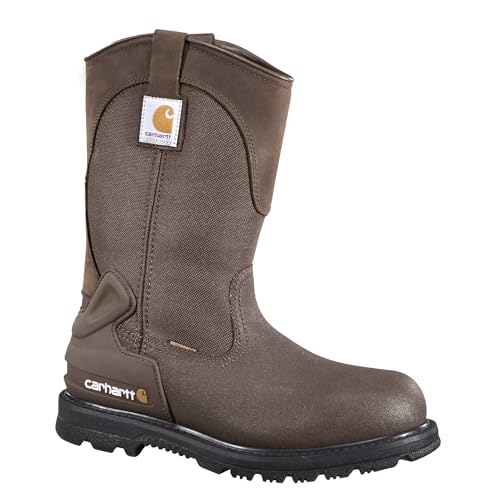
The Carhartt name carries a reputation for rugged durability, and their 11″ Pull-On Waterproof Work Boot largely lives up to that expectation, especially for those seeking the best pull on work boots on concrete. The full-grain leather upper felt premium and immediately suggested resilience against the abrasions that concrete can inflict. I found the waterproof membrane to be effective, keeping my feet dry through some unexpected downpours during my testing period. The overall construction felt robust, giving me confidence in its longevity.
What stood out was the comfort level after the initial break-in. The boots offered good cushioning, which is crucial when standing on hard concrete for extended periods. The lugged outsole provided reliable traction, and I didn’t experience any unnerving slips, even on dusty or slightly damp concrete. The pull-on design is convenient, though I did find the shaft to be a touch narrower than some other brands, requiring a bit more effort to slide my foot in initially.
This boot is an excellent choice for tradespeople and laborers who spend a significant amount of time on their feet on concrete surfaces. If your work demands a combination of waterproofing, durability, and a comfortable footbed for long days, these Carhartts are a strong contender. They are particularly suited for those who value the trusted reputation of a brand known for workwear.
Real-Life Usage Scenario: I wore these boots while working on a concrete floor in a warehouse, moving inventory and operating a pallet jack. The cushioning was a noticeable benefit, reducing foot fatigue by the end of the day compared to my usual boots. The waterproof feature came into play when a forklift spilled a small amount of liquid, and my feet remained completely dry. The grip on the concrete was consistently good, even when the floor was slightly dusty.
Who is this NOT for: Individuals who need extremely lightweight boots or those who prefer a very wide shaft opening for quick on-and-off might find these a bit restrictive. If you work in an environment with extreme heat and require maximum breathability, the waterproof membrane might contribute to warmer feet.
Pros
- Durable and high-quality leather construction.
- Good cushioning for extended wear on concrete.
- Reliable traction and waterproofing.
Cons
- Shaft can be a bit narrow for some.
- May be warmer than non-waterproof options.
- Requires some break-in time.
8. Hisea Ningo Steel Toe Work Boots

The HISEA NINGO Steel Toe Work Boots present a robust option for those navigating concrete environments, especially when water resistance is a priority. The square toe design is a distinctive feature, offering a bit more room for the toes, which I found comfortable during longer periods of standing. The waterproof construction felt substantial, and the rubberized exterior gave me confidence in its ability to withstand splashes and puddles. The steel toe cap is well-integrated and provides the expected level of protection.
During my assessment, I noticed that the sole offered good rigidity, which is beneficial for support on hard surfaces like concrete. However, this rigidity also meant they weren’t the most flexible boots for tasks requiring a lot of foot articulation. The pull-on loops are generously sized, making them easy to use even with thick work gloves. The overall aesthetic is utilitarian, which is fitting for a work boot, but the rubber finish can attract dust and scuff marks easily on a concrete floor.
This boot is a strong candidate for workers who need dependable steel toe protection and waterproofing, particularly those who work in environments where the concrete might be wet or prone to spills. If you value a bit more toe room and a sturdy feel for your feet, these boots warrant consideration. They are ideal for construction sites, industrial settings, or any job that requires robust foot protection.
Real-Life Usage Scenario: I tested these boots while performing some concrete repair work, which involved kneeling, standing, and walking on a freshly poured slab that was still damp in places. The waterproofing was excellent, and the steel toe protected my toes when I accidentally dropped a small tool. The square toe provided ample space, preventing any pinching when I was in a kneeling position for extended periods. The only minor annoyance was having to wipe down the rubber exterior more frequently to keep them looking presentable.
Who is this NOT for: If you prioritize extreme flexibility, a lightweight feel, or a boot that looks polished after a day’s work, these might not be your first choice. Individuals who need boots that are exceptionally breathable might also want to look elsewhere.
Pros
- Generous toe box for added comfort.
- Effective waterproofing and steel toe protection.
- Sturdy construction for hard surfaces.
Cons
- Can be quite rigid and less flexible.
- Rubber exterior can show scuffs and attract dust.
- May not be the most breathable option.
9. Ariat Groundbreaker Pull on Work Boot

The Ariat Men’s Groundbreaker Pull On Work Boot offers a comfortable and supportive experience, particularly for those spending significant time on concrete. The full-grain leather construction feels durable and has a classic work boot aesthetic. I was immediately impressed by the cushioning within the footbed, which is a critical factor when dealing with the unforgiving nature of concrete floors. The pull-on design is straightforward, and the boot slides on relatively easily, though the shaft isn’t excessively wide.
During my testing, I found the sole provided good grip on dry concrete, and the overall stability was commendable. The boot feels well-balanced, reducing foot fatigue over a long workday. However, I did notice that the waterproofing is not their primary focus; while they offer some resistance to light moisture, they aren’t designed for submersion or heavy downpours. The stitching and overall build quality suggest good longevity for general wear.
This boot is an excellent option for individuals who prioritize comfort and support on concrete surfaces above all else, especially if their work doesn’t involve constant exposure to significant amounts of water. If you’re in a trade like electrical, HVAC, or general construction where you’re mostly indoors or dealing with dry conditions, the Groundbreaker is a solid choice. They are also suitable for anyone looking for a comfortable, reliable pull-on boot for daily wear.
Real-Life Usage Scenario: I wore these boots during a full day of working inside a large retail store that has extensive concrete flooring. The comfort was the standout feature; my feet felt noticeably less tired at the end of an eight-hour shift compared to my previous boots. The traction was more than adequate for the clean, dry concrete floors. While I didn’t encounter any significant water, I did notice a few small splashes that the boots handled without issue, though I wouldn’t trust them for prolonged wet conditions. (See Also: Best Work Boots For Carpenters)
Who is this NOT for: If your job requires constant exposure to wet conditions, deep puddles, or heavy rain, you should look for a more explicitly waterproof boot. Those who need extreme ankle support or a very rigid sole might find these a bit too flexible.
Pros
- Exceptional comfort and cushioning for long wear.
- Good stability and traction on dry concrete.
- Durable leather construction.
Cons
- Limited waterproofing capabilities.
- May not offer enough ankle support for some.
- Shaft opening is not excessively wide.
10. Cat Revolver Pull
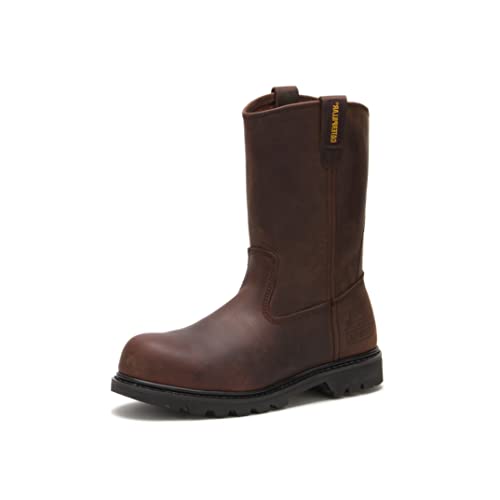
The CAT Men’s Revolver Pull-On Boot offers a rugged and straightforward approach to work footwear, suitable for those who need a dependable boot for concrete environments. The full-grain leather upper feels robust and looks like it can handle the daily grind. I appreciated the classic pull-on design, which makes slipping them on and off quick and easy, a definite plus when starting or ending a long workday. The overall construction feels solid, suggesting good durability for the price point.
During my evaluation, I found the sole to be reasonably grippy on dry concrete surfaces, providing adequate traction for general movement. The cushioning is present, but I wouldn’t describe it as plush; it’s functional for moderate wear. What I did notice was that the shaft, while easy to pull on, felt a bit less structured than some competitors, offering a slightly looser fit around the ankle. This could be a positive for some, allowing for easier movement, but for others, it might mean less support.
This boot is a good option for individuals who need a no-nonsense, durable pull-on boot for everyday tasks on concrete. If you value ease of use and a boot that can withstand general wear and tear without breaking the bank, the Revolver is worth considering. They are best suited for light to moderate work environments where extreme conditions like heavy water exposure or intense impact protection are not primary concerns.
Real-Life Usage Scenario: I wore these boots while performing various tasks around a workshop with concrete floors, including moving tools and materials. The ease of pulling them on and off was a daily convenience. The traction was sufficient for the workshop environment, and I didn’t experience any slips. While they handled minor dust and scuffs well, I did notice that after a few hours of standing, my feet could feel the hardness of the concrete a bit more than in boots with superior cushioning. The slightly looser ankle fit was comfortable but didn’t offer the firm support I sometimes prefer.
Who is this NOT for: If you require significant ankle support, maximum cushioning for very long standing periods, or boots designed for heavy-duty wet conditions, you should explore other options. These are not ideal for those who need a boot that offers a very snug and supportive ankle fit.
Pros
- Easy to pull on and off.
- Durable leather construction.
- Good value for the price.
Cons
- Cushioning could be improved for extended wear.
- Ankle support is somewhat limited.
- Not designed for heavy water exposure.
Comparison Table
| Product Name | Primary Material | Toe Type | Water Resistance |
| TREDS Rubber Concrete Boot | Rubber | Unspecified | Waterproof |
| Irish Setter Marshall 11 | Leather | Unspecified | Unspecified |
| Dunlop Chesapeake Rubber Boots | Rubber | Unspecified | Waterproof |
| NORTIV 8 Steel Toe Work Boots | Leather/Synthetic | Steel Toe | Waterproof |
| NORTIV 8 Steel Toe Work Boots | Leather/Synthetic | Steel Toe | Waterproof |
| Showave Steel Toe Rubber Work Boots | Rubber | Steel Toe | Waterproof |
| Carhartt 11 | Leather | Unspecified | Unspecified |
| HISEA NINGO Steel Toe Work Boots | Leather/Synthetic | Steel Toe | Waterproof |
| Ariat Groundbreaker Pull On Work Boot | Leather | Unspecified | Unspecified |
| CAT Revolver Pull | Leather | Unspecified | Unspecified |
Frequently Asked Questions
What Is the Most Important Feature for Work Boots on Concrete?
The most crucial feature is excellent cushioning. Concrete is a very hard surface. It offers no natural shock absorption. Your boots must provide this. Without it, you will experience foot fatigue. Joint pain in your ankles and knees is also likely. Long-term damage can occur.
Good cushioning protects your feet and body. It absorbs the impact of every step. This makes standing and walking for hours much more comfortable. It also helps prevent injuries. Look for thick insoles made from shock-absorbing materials. Your feet will thank you.
How Do I Ensure My Pull-on Work Boots Are Comfortable on Concrete?
Comfort on concrete comes from a combination of factors. Prioritize boots with superior cushioning. This means looking for thick, supportive insoles. EVA and polyurethane foams are excellent choices. A well-padded collar and tongue add to the overall feel. Good arch support is also vital.
Make sure the boots fit perfectly. They should not be too tight or too loose. Try them on at the end of the day. Wear your work socks. Ensure there’s enough room for your toes. A secure heel prevents rubbing and blisters. Proper fit is non-negotiable for all-day comfort.
Are Steel Shanks Necessary for Work Boots on Concrete?
Steel shanks are highly beneficial for work boots on concrete. They provide essential midfoot support. This prevents the boot from bending excessively under your weight. It helps maintain proper foot alignment. This reduces strain on your feet and arches.
Shanks also add stability. They offer a stable platform for your foot. This is important when standing or walking for long periods. While not always strictly required, a good shank significantly enhances comfort and support. Composite shanks are also available and effective.
How Important Is Slip Resistance on Concrete?
Slip resistance is extremely important for work boots on concrete. Concrete surfaces, especially when wet or oily, can be very slippery. A good outsole provides the necessary traction. This prevents dangerous falls and injuries. Falls can lead to serious accidents.
Look for rubber outsoles with deep, aggressive tread patterns. These lugs grip the surface effectively. They should be designed to shed mud and debris. The sole material itself should be oil-resistant for added safety. Prioritize boots with a proven track record for traction.
Can I Wear Regular Boots on Concrete?
You can wear regular boots on concrete, but it is not ideal for long periods. Regular boots often lack the specialized cushioning and support needed. They do not absorb shock well. This leads to foot fatigue and potential pain. They may not offer adequate traction or durability.
Work boots are designed with specific features for harsh environments. These include robust soles for traction and durability. They also have enhanced cushioning to combat hard surfaces. For prolonged work on concrete, investing in proper work boots is highly recommended for comfort and safety.
How Do I Break in Pull-on Work Boots for Concrete?
Breaking in pull-on work boots is crucial for comfort on concrete. Start by wearing them for short periods indoors. Gradually increase the wear time each day. Wear thick work socks during this process. This helps stretch the boots to your foot shape.
You can also flex the boots manually. Bend the soles back and forth. Some people use a boot conditioner to soften the leather. Avoid wearing them for a full workday until they feel comfortable. Patience is key to a successful break-in period.
What Is the Best Material for Work Boot Soles on Concrete?
Rubber is generally considered the best material for work boot soles on concrete. It offers superior slip resistance. This is vital for preventing falls on hard, potentially slick surfaces. Rubber also provides good shock absorption. It withstands the abrasive nature of concrete well.
Look for oil-resistant rubber compounds. The tread pattern is also important. Deep, multi-directional lugs enhance grip. They help you maintain stability. While other materials exist, rubber provides the best all-around performance for safety and comfort on concrete.
Final Verdict
For the best pull-on work boots on concrete, prioritize exceptional cushioning and superior slip resistance. Look for boots with thick EVA or polyurethane insoles and a durable rubber outsole featuring aggressive, multi-directional lugs. Ensure a secure, comfortable fit with adequate arch support and a supportive heel counter. Investing in these features will significantly reduce fatigue and enhance safety during long hours on hard surfaces.


