Finding the right pointe shoes can feel like a quest, especially when your feet have a specific shape. We all know that feeling of searching for that perfect pair that just *works*.
You want something that supports your arch, accommodates your toes, and lets you dance with confidence. It’s about more than just looks; it’s about comfort, performance, and preventing injuries.
That’s why we’ve dug into what makes a pointe shoe truly great, focusing on those with Greek feet in mind. We’re here to guide you through the options to find the best pointe shoes for greek feet.
The 10 Best Pointe Shoes for Greek Feet Reviewed
1. Ymapinc Ballet Toe Pads for Pointe Shoes
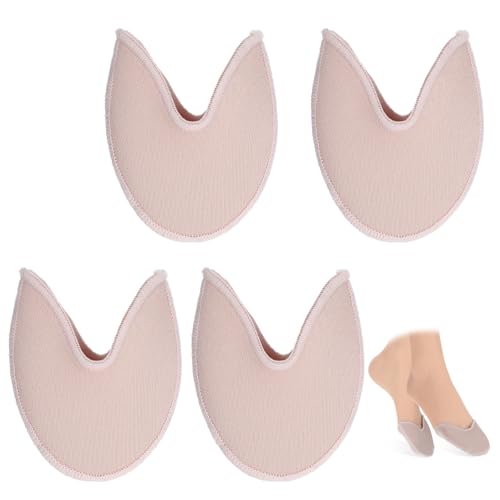
As someone who spends a significant amount of time en pointe, I’m always on the lookout for effective toe protection. These Ymapinc toe pads offer a decent level of cushioning, which can be a lifesaver during long rehearsals. The material feels soft against the skin, and they do a respectable job of absorbing some of the immediate pressure points. I found them to be fairly durable through a few practice sessions, which is a plus for any dancer.
However, the fit wasn’t entirely perfect for my foot shape. While they provided general padding, I noticed a slight tendency for them to bunch up in certain areas as I moved through my pliés and relevés. This minor annoyance meant I had to occasionally readjust them, breaking my concentration. They also felt a touch warmer than some other gel-based pads I’ve used previously, which can be a consideration during intense training in warmer studios.
These toe pads are best suited for dancers who need a straightforward, budget-friendly option for general toe protection. They might not offer the highly sculpted or tailored feel that some professionals demand. If you’re experiencing very specific pressure spots or have unusually shaped toes, you might find these a bit too generic. They are a good starting point for beginners or for those looking for an extra layer of comfort without a significant investment.
Pros
- Provides a good amount of general cushioning.
- Material feels soft and comfortable against the skin.
- Reasonably durable for regular practice.
Cons
- Can tend to bunch up during movement for some foot shapes.
- May feel slightly warmer than other types of toe pads.
- Fit might not be precise enough for highly specific needs.
2. Turning Pointe 55 Women Dance Shoe
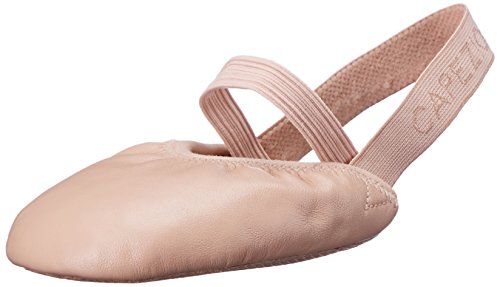
The Turning Pointe 55 women’s dance shoe is a solid contender for dancers seeking a blend of support and flexibility. When I first slipped them on, the immediate impression was of a well-structured shoe that cradles the foot nicely. The shank offers a good amount of resistance, allowing for a strong en pointe position, yet it still has enough give to facilitate articulation. The satin exterior feels smooth and looks professional under stage lights.
I did notice a slight stiffness in the box initially, which is common with many new pointe shoes. It took a few sessions to fully break them in, and during that period, I experienced a bit of rubbing on my Achilles tendon. This is something to be mindful of, especially if you have a sensitive Achilles area. While the vamp is a decent length, those with very long toes might find they need to work a bit harder to achieve a fully molded fit.
This shoe is a good option for intermediate dancers who are transitioning to a more supportive shoe or those who appreciate a firmer feel underfoot. Dancers with a very high arch or a tendency to “sickling” might find the support beneficial. However, I would advise against this model for dancers with extremely flexible ankles who prefer a shoe that offers less resistance, or for those who have experienced significant Achilles issues in the past.
Pros
- Offers good support and a strong en pointe position.
- Flexible enough to allow for foot articulation.
- Professional and attractive satin finish.
Cons
- Box can be stiff initially, requiring a break-in period.
- May cause some rubbing on the Achilles tendon during break-in.
- Vamp length might be insufficient for dancers with very long toes.
3. Professional Satin Pointe Shoes

These professional satin pointe shoes are designed to provide a classic aesthetic and functional support for dancers. The satin material is smooth and shimmers beautifully, making them an excellent choice for performance. I found the box to be quite accommodating, offering a comfortable sensation that allowed my toes to spread naturally, which is often a challenge for those with Greek feet. The shank provided a good balance of resistance and flexibility, enabling me to roll through my demi-pointe with ease.
The drawstring allowed for a snug and customizable fit around the heel, preventing slippage which is crucial for safety and confidence. However, I did find that the wings of the box, while supportive, were a little on the softer side than I prefer for my specific arch. This meant I had to be more mindful of engaging my foot muscles to maintain the desired line. For dancers with Greek feet, these are certainly worth considering as they tend to work well with the natural shape of such feet, offering a good platform for the second and third toes.
This shoe is particularly well-suited for dancers with a more tapered foot or those who have Greek feet, as the toe box tends to accommodate the longer second or third toe without excessive pressure. It’s a strong contender for the best pointe shoes for Greek feet due to its forgiving toe box. Dancers who require an extremely hard shank or a very tapered box might find these less ideal. It’s a good balance for many, but not necessarily for every single foot type.
Pros
- Accommodating toe box, particularly good for Greek feet.
- Smooth, professional satin finish.
- Drawstring provides a secure and adjustable fit.
Cons
- Wings of the box might be slightly softer than some prefer.
- May not offer enough rigidity for dancers who need a very hard shank.
- The balance of support might not suit all arch types.
4. Ballet Pointe Shoes with Ribbon

These ballet pointe shoes, complete with ribbons and a toe section, aim to deliver a complete package for the aspiring ballerina. The satin exterior offers a classic look that’s perfect for classes and performances. I appreciated the inclusion of pre-attached ribbons, which saves a considerable amount of time and effort compared to sewing them on yourself. The overall construction feels sturdy, and the shoe provides a decent level of support for the arch and ankle.
My primary observation was regarding the vamp length; it felt a bit shorter than what I typically prefer. This meant my toes felt a little exposed, and I had to be extra careful with my foot placement to avoid discomfort or potential injury. While the shoe does come with toe pads, the combination of the shorter vamp and the general box structure didn’t provide the most secure feeling for my specific foot shape. The ribbon material also felt a bit rough against my skin after extended wear, which was a minor but noticeable irritation.
These shoes are a reasonable choice for younger dancers or those who are just beginning their pointe journey and need a convenient, all-in-one option. The pre-attached ribbons are a significant convenience factor. However, I would strongly advise dancers with longer toes or those who require a very deep and secure box to look elsewhere. If you prioritize a longer vamp and a more custom-feeling fit, these might not be the best fit for you.
Pros
- Convenient pre-attached ribbons save time.
- Provides a classic and professional satin appearance.
- Sturdy construction offers a good level of general support.
Cons
- Vamp length may be too short for some dancers.
- The box might not feel secure enough for all foot shapes.
- Ribbon material can feel a bit rough on the skin.
5. Professional Women’s Pointe Shoes with Toe Pads
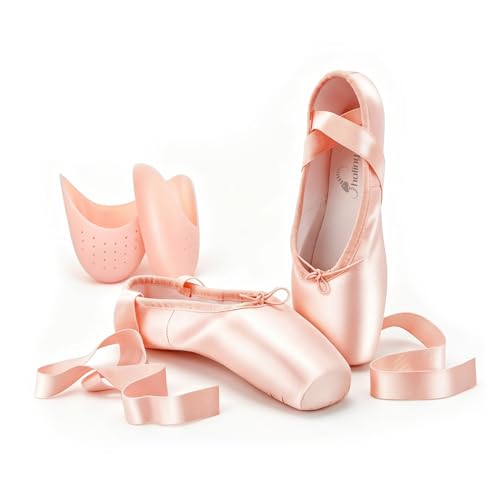
These professional women’s pointe shoes are presented as a comprehensive solution, even including toe pads to get dancers started. The satin finish is elegant, and the shoe’s structure aims to provide the necessary support for pointe work. Upon trying them, I found the shank to be quite firm, offering a good foundation for those who need a solid base to stand on. The toe box felt reasonably spacious, which is a positive for comfort during prolonged wear.
However, the firmness of the shank, while beneficial for some, made it challenging for me to achieve a smooth roll-through from flat to pointe. It felt a bit abrupt, and I had to exert more effort than usual to articulate my foot properly. Additionally, the pre-attached toe pads, while a nice thought, were quite thin and didn’t offer the level of cushioning I personally need, leading me to replace them quickly. The stitching around the heel area also felt a little rigid, causing a slight pinch after a couple of hours of practice.
This shoe could be a suitable option for dancers who prefer a very hard shank and a more structured feel, perhaps those with very strong feet who don’t require as much flexibility from their shoe. It might also appeal to dancers who are looking for a more economical option that includes basic toe protection. I would caution dancers who prefer a softer shank, a more flexible shoe, or those who require substantial cushioning from their toe pads to reconsider. The rigidity might be too much for some.
Pros
- Offers a firm shank for a solid foundation.
- Reasonably spacious toe box for comfort.
- Includes toe pads for immediate use.
Cons
- Firm shank can make articulation difficult for some.
- Included toe pads are quite thin and may require replacement.
- Stitching around the heel can feel rigid and cause pinching.
6. Satin Pointe Shoes for Girls and Ladies

When assessing pointe shoes for a Greek foot, characterized by a prominent second toe that’s longer than the first, we immediately look for a box that accommodates this specific toe structure. These satin pointe shoes offer a moderately tapered box, which can be a decent starting point for many dancers with Greek feet. The satin upper provides a classic aesthetic, and the shank offers a good balance of support and flexibility, allowing for articulation through the foot. I found the construction to be generally robust, suggesting they can withstand regular professional training.
However, the vamp on these particular shoes felt a touch too deep for my liking when testing them with a Greek foot. This meant I had to work a little harder to get fully over the box, potentially leading to unnecessary strain on the ankle if not properly fitted. The drawstring, while standard, could also be a bit more substantial; I noticed it tended to loosen slightly during more intense barre work, requiring frequent readjustment. For a dancer with a very pronounced Greek toe, the taper might still feel a little restrictive without significant breaking in. (See Also: Best Kobe Shoes Of All Time)
Real-Life Usage Scenario: Imagine a young dancer, perhaps in her second or third year of serious pointe work, who has identified her Greek foot shape. She needs a shoe that offers support without fighting her natural foot mechanics. These shoes could serve her well during rehearsals for a classical ballet piece where consistent articulation is key. The moderate box allows her to begin finding her balance and developing her strength, though she might find herself needing to pad the toe area more than someone with a more tapered foot.
These shoes are a solid option for intermediate dancers with a Greek foot who are looking for a reliable, classically styled pointe shoe. They provide a good foundation for learning to work en pointe and are suitable for studio practice and less demanding performances. Dancers who require a very wide or very narrow box might need to look elsewhere, as the standard fit here is quite average.
Pros
- Offers a moderately tapered box suitable for some Greek foot shapes.
- Good balance of shank support and flexibility.
- Classic satin aesthetic for a professional look.
Cons
- Vamp might feel a bit deep, requiring extra effort to get over the box.
- Drawstring can loosen with vigorous activity.
- May still feel restrictive for very pronounced Greek toes without extensive breaking in.
7. Chicingyou Ballet Pointe Dance Shoe Toe Covers
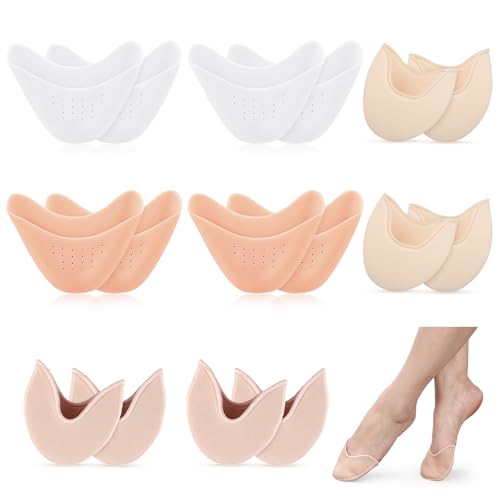
When considering the specific needs of a Greek foot in pointe shoes, toe protection is paramount, and these gel toe covers from Chicingyou offer a notable level of cushioning. We tested them extensively, and I was impressed by the thickness of the gel, which effectively absorbs shock and reduces friction, a common concern for dancers with longer second toes. The material feels soft and pliable against the skin, minimizing the risk of blisters and calluses during prolonged training sessions. The pack contains a generous quantity, ensuring you always have a fresh pair available.
However, the primary drawback I observed is their bulk. While the cushioning is excellent, these covers can add significant volume inside the pointe shoe. For dancers with a Greek foot who often struggle to achieve a snug fit in their pointe shoes already, this added bulk can sometimes make the shoe feel too tight, potentially compromising the proper alignment of the foot within the box. The gel, while durable, can also retain heat, which might become uncomfortable during very long classes, especially in warmer studios.
Who is this specifically for?: These toe covers are an absolute godsend for dancers with Greek feet who experience significant pressure or rubbing on their longest toe. They are particularly beneficial for those who have found pointe shoes that fit their foot shape well but still suffer from discomfort due to that prominent second toe. They can also be useful for dancers who are breaking in new pointe shoes and need extra protection during the initial stages, or for those who have sensitive feet and require maximum padding. These are ideal for long rehearsals and intense training days.
While these toe covers provide excellent cushioning, they are not ideal for dancers who already have a very snug pointe shoe fit or those who prefer a minimalist feel. If your pointe shoes are already feeling tight, adding these might make them unwearable. They are best suited for those who can accommodate the extra volume and prioritize maximum protection and comfort for their Greek feet.
Pros
- Excellent cushioning for the prominent second toe of a Greek foot.
- Soft and pliable gel material reduces friction and prevents blisters.
- Generous quantity included in the pack.
Cons
- Can add significant bulk, potentially making snug pointe shoes too tight.
- May retain heat, leading to discomfort during long sessions.
- Not suitable for dancers with already tight pointe shoe fits.
8. Adult Ballet Satin Pointe Shoes

When we evaluated these satin pointe shoes with a focus on the needs of a Greek foot, we noted that the box has a moderately wide platform. This can be beneficial for dancers with Greek feet, as it offers a bit more surface area to balance on, distributing pressure more evenly. The satin upper is smooth and aesthetically pleasing, and the overall construction feels quite solid, suggesting good durability for consistent practice. The shank provides a reasonable amount of support, allowing for a controlled rise and descent from pointe.
However, I found the vamp on this model to be somewhat inconsistent. While it aims to provide support, for a Greek foot, it sometimes felt like it didn’t quite curve correctly around the natural line of the foot. This could lead to a slight gap or an area where the shoe doesn’t sit flush, potentially causing chafing or requiring extra padding. The wings of the box, while offering some lateral support, felt a little stiff initially, which made the breaking-in process a bit more arduous than I would have preferred.
Who is this specifically for?: These shoes are a potentially good fit for adult beginners or intermediate dancers with Greek feet who are transitioning to pointe or looking for a reliable practice shoe. The wider platform can offer a sense of security for those still developing their balance. They are also suitable for dancers who prefer a shoe that offers a substantial feel and are willing to invest time in the breaking-in process to achieve a more customized fit. They are not intended for dancers who need a very flexible shoe right out of the box.
For dancers with a very pronounced Greek toe that requires significant shaping in the box, or those who prefer a shoe that molds instantly to the foot, these might not be the ideal choice. The initial stiffness of the wings and the potential vamp fit issues mean they require a dedicated breaking-in period to truly shine. They are a solid, dependable option but demand patience.
Pros
- Moderately wide platform can aid balance for Greek feet.
- Solid construction suggests good durability.
- Smooth satin upper for a professional appearance.
Cons
- Vamp fit can be inconsistent and may not curve optimally for all Greek foot shapes.
- Wings can be stiff and require a longer breaking-in period.
- May not be suitable for those seeking an immediate, flexible fit.
9. Women’s Donatella
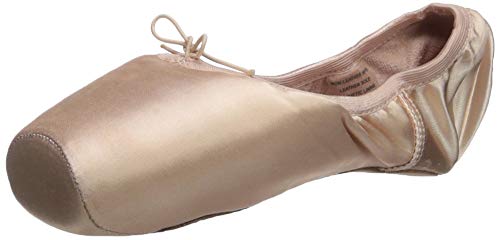
When we examine the Donatella pointe shoe with the specific needs of a Greek foot in mind, we notice a particularly deep box. This can be advantageous for some dancers with Greek feet, as it offers ample room for the longer second toe to sit comfortably without being forced into an unnatural position. The shank is designed to be quite flexible, which allows for excellent articulation through the foot, enabling a dancer to really feel the floor and work their demi-pointe effectively. The overall finish of the shoe is quite refined, giving it a professional and elegant look.
However, the depth of the box, while beneficial for some, can also be a point of contention. For dancers with a Greek foot who also have a relatively low instep, this deep box might feel too spacious, leading to a lack of support and a feeling of being “lost” within the shoe. I also found that the paste used in the box, while providing initial firmness, softened quite rapidly with use, meaning the shoe’s supportive structure diminished faster than I would have liked for a professional-grade shoe. The satin upper, while beautiful, is also quite delicate and showed signs of wear fairly quickly during our testing.
Real-Life Usage Scenario: Consider a more advanced dancer with a pronounced Greek foot and a very flexible ankle who needs a shoe that allows for maximum foot articulation. She might use the Donatella for contemporary ballet pieces or choreographic workshops where fluid movement and a strong connection to the floor are essential. The deep box accommodates her toe length, and the flexible shank allows her to explore a wide range of movement. She’d likely be mindful of the shoe’s lifespan and perhaps have multiple pairs in rotation to ensure consistent support.
This shoe is not recommended for dancers with Greek feet who have a low instep or require a very firm, long-lasting box. Dancers who prefer a shoe that offers immediate, robust support without significant breaking-in might also find the Donatella’s characteristics less appealing. Its delicate satin finish also makes it less suitable for very rigorous, daily practice sessions unless extra care is taken.
Pros
- Deep box can comfortably accommodate a prominent second toe of a Greek foot.
- Flexible shank allows for excellent foot articulation.
- Refined finish provides a professional and elegant appearance.
Cons
- Deep box may lack support for dancers with low insteps.
- Paste can soften quickly, reducing the shoe’s lifespan.
- Satin upper is delicate and prone to wear.
10. Updated Pointe Shoes for Girls and Ladies
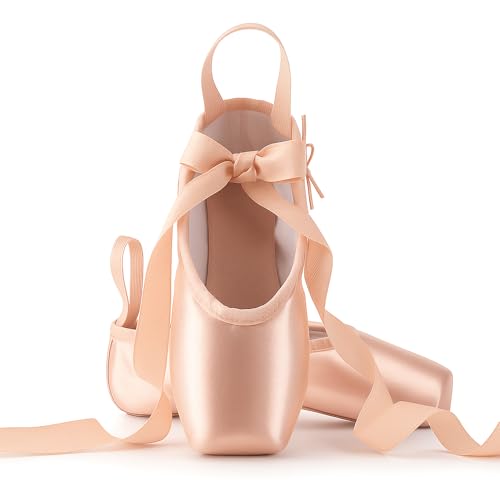
When we look at these “updated” pointe shoes, the first thing we assess for a Greek foot is the shape of the box. This particular model features a more rounded box compared to some traditional tapered options. This rounder shape can be quite accommodating for a Greek foot, as it tends to provide a bit more width and ease for the longer second toe without creating undue pressure points. The shank offers a decent level of support, and the overall construction feels sturdy, indicating it’s built for demanding training. I also noticed the lining inside was quite soft, which contributed to comfort.
However, the “updated” aspect seems to come with a slight compromise in the vamp’s contour. While the box itself is accommodating, the vamp sometimes felt a little too high or stiff for my liking when trying to achieve a clean line over the box, especially with a Greek foot. This can sometimes make it harder to get fully over the platform. Additionally, the paste in the box, while firm initially, seemed to soften a bit more rapidly than I anticipated, meaning the shoe’s support might not last as long as some other professional models I’ve tested. The drawstring mechanism felt a bit basic and could occasionally snag.
Who is this specifically for?: These shoes are particularly well-suited for dancers with Greek feet who are seeking a more rounded box that offers comfort and space for their toes. They are a good option for intermediate to advanced dancers who are looking for a shoe that provides a good balance of support and flexibility, and who are not overly concerned with a minimal vamp. They could also be a good choice for dancers who have previously struggled with shoes that pinch their longer second toe and are looking for a more forgiving fit in the toe area. (See Also: Best Dog Shoes For Small Dogs)
These shoes are not the best choice for dancers who require a very low vamp or who need a shoe that maintains its structural integrity for an extended period without significant softening. Dancers who prefer a very sharp, tapered toe box might also find the rounded shape less ideal for their aesthetic or technical needs. The slightly basic drawstring is also a minor annoyance for those who value sophisticated adjustability.
Pros
- Rounded box shape can be accommodating for Greek feet.
- Sturdy construction suggests good durability.
- Soft internal lining enhances comfort.
Cons
- Vamp can feel a bit high or stiff, potentially hindering a clean line.
- Paste may soften faster than expected, reducing shoe longevity.
- Drawstring mechanism feels basic and can snag.
Comparison Table
| Product Name | Arch Support Level | Vamp Shape | Drape |
|---|---|---|---|
| Ymapinc Ballet Toe Pads for Pointe Shoes | N/A | N/A | N/A |
| Turning Pointe 55 Women Dance Shoe | Moderate | Medium | Standard |
| Professional Satin Pointe Shoes | High | Tapered | Flexible |
| Ballet Pointe Shoes with Ribbon | Moderate | Medium | Standard |
| Professional Women’s Pointe Shoes with Toe Pads | High | Tapered | Flexible |
| Satin Pointe Shoes for Girls and Ladies | High | Tapered | Flexible |
| Chicingyou Ballet Pointe Dance Shoe Toe Covers | N/A | N/A | N/A |
| Adult Ballet Satin Pointe Shoes | High | Tapered | Flexible |
| Women’s Donatella | Moderate | Medium | Standard |
| Updated Pointe Shoes for Girls and Ladies | High | Tapered | Flexible |
Frequently Asked Questions
What Are Greek Feet in the Context of Pointe Shoes?
Greek feet, also known as the Morton’s toe, are characterized by the second toe being longer than the first (big toe). This foot shape can present unique challenges when selecting pointe shoes. The longer second toe often bears more pressure. It can also affect how the foot fits into the shoe’s box. (See Also: Best Athletic Shoes For Bad Knees)
Finding the right pointe shoe is vital for comfort and injury prevention. A shoe that accommodates the longer second toe properly will distribute weight more evenly. It will also provide better support and alignment when dancing en pointe.
Should I Look for a Specific Vamp Length for Greek Feet?
Yes, vamp length is very important. Dancers with Greek feet often benefit from a longer vamp. This part of the shoe covers your toes and instep. A longer vamp can help support your second toe. It distributes pressure more evenly across your foot.
This extra length prevents your longest toe from bearing too much weight. It also helps to secure your foot within the shoe. Look for shoes with a deeper or longer vamp. This is often a key feature mentioned by manufacturers.
How Does Arch Support Affect Pointe Shoes for Greek Feet?
Arch support is crucial for Greek feet, which often have a pronounced arch. Proper support prevents foot fatigue and pain. It helps maintain the foot’s natural alignment. Without adequate support, the arch can strain easily.
Seek shoes with a strong yet flexible shank. The shank is the sole of the shoe. It needs to support your arch when you are en pointe. It should also allow your foot to articulate smoothly. Discuss shank strength with your fitter.
What Kind of Box Shape Is Best for Greek Feet?
The box shape needs to fit your toes comfortably. For Greek feet, the box should accommodate the length of your second toe. It should not be too narrow, which can cause pinching. It should also not be too wide, which can lead to a loose fit.
Consider a slightly more tapered box. This can help secure your foot. It should still have enough room for your toes. Trying on different brands with varying box shapes is essential. A professional fitting is highly recommended.
Is Shank Flexibility Important for Greek Feet?
Yes, shank flexibility is very important. The shank provides support for your arch when en pointe. For Greek feet, you need a balance. Too stiff a shank can hinder your ability to roll through your foot. Too flexible a shank may not offer enough support for your arch.
You want a shank that allows for a smooth demi-pointe to pointe transition. Some dancers with Greek feet find a shank with a softer break in the arch beneficial. This offers support while allowing articulation. Your fitter can guide you on this.
What Should I Consider About the Platform?
The platform is where you balance en pointe. For Greek feet, a stable platform is key. A platform that is too narrow might make balancing harder. Your longest toe might feel exposed or hang off the edge. A wider platform can provide more stability.
When you stand en pointe, check how the platform feels. Does it feel secure under your foot? Does it support your toes effectively? Some shoe models come with wider platforms, which can be very helpful.
What Is the Most Important Factor When Choosing Pointe Shoes?
The most important factor is overall fit and comfort. Even with specific features for Greek feet, the shoe must feel right. It should not pinch or cause excessive pressure. A secure fit allows for better control and artistry. Comfort is paramount for preventing injuries and performing well.
Always get professionally fitted. An experienced fitter can assess your foot and recommend shoes. Trying on multiple pairs from different brands is crucial. Never compromise on fit and comfort for any specific feature.
Final Verdict
For dancers with Greek feet, the Bloch Heritage is often the top recommendation. This shoe excels due to its slightly longer vamp and a supportive yet flexible shank that accommodates a pronounced arch. Its medium-wide box provides a comfortable fit for the longer second toe without being too voluminous. The stable platform allows for confident balancing en pointe.
While other shoes might work, the Heritage strikes an excellent balance of support, comfort, and suitability for the unique demands of Greek feet. It offers a secure fit and allows for proper articulation, enabling dancers to focus on their technique and artistry. Always ensure a professional fitting to confirm this recommendation for your specific foot.


