Is your little one constantly tripping, complaining about sore feet, or showing signs of their arches collapsing inwards? You’re not alone! Many parents struggle to find footwear that truly supports their child’s developing feet, especially when pronation is a concern.
Dealing with pronation in kids can lead to discomfort and potential long-term issues if not addressed. That’s why we’ve dived deep into the world of children’s footwear to bring you the best solutions. Our goal is to make your search for the best kids shoes for pronation much easier and more effective.
We’ve sifted through numerous products, focusing on the key features that matter most for supporting overpronation and flat feet. Get ready to discover options that offer excellent arch support, stability, and comfort, ensuring your child can run, play, and grow without foot pain holding them back.
The 10 Best Kids Shoes for Pronation Reviewed
1. Walkrofeet Kids Insoles

When evaluating options for kids dealing with overpronation, the WALKROFEET Kids Insoles presented themselves as a promising solution. We found the initial impression to be quite good; the material felt supportive without being overly rigid, which is crucial for young, developing feet. The arch support is noticeable, offering a gentle lift that aims to realign the foot’s natural posture during walking and running.
During our testing, we observed that these insoles did seem to provide a degree of correction for mild to moderate pronation. The cushioning was adequate for everyday wear, absorbing some of the impact associated with active play. However, the depth of the heel cup, while present, could have been slightly more pronounced to offer even greater stability for those with more significant pronation issues.
A real-life usage scenario we explored involved a child who frequently complained of foot fatigue after school sports. After inserting the WALKROFEET insoles into their athletic shoes, the feedback was positive regarding reduced discomfort. The insoles fit well into most standard athletic shoes without requiring significant trimming, making the transition straightforward for parents.
While the WALKROFEET insoles offer a solid entry point for addressing pronation in children, they might not be robust enough for severe cases. If your child has very flat feet or a pronounced inward roll, you might need to explore more specialized or custom orthotic options. The somewhat basic design means they won’t offer the same level of advanced biomechanical support as higher-end alternatives.
Pros
- Provides noticeable arch support for mild to moderate pronation.
- Adequate cushioning for everyday activities and light sports.
- Easy to fit into most children’s shoes.
Cons
- Heel cup depth could be improved for enhanced stability.
- May not be sufficient for severe pronation cases.
- Lacks some of the advanced features found in premium orthotics.
2. Boys Girls Kids Orthopedic Tennis Shoes
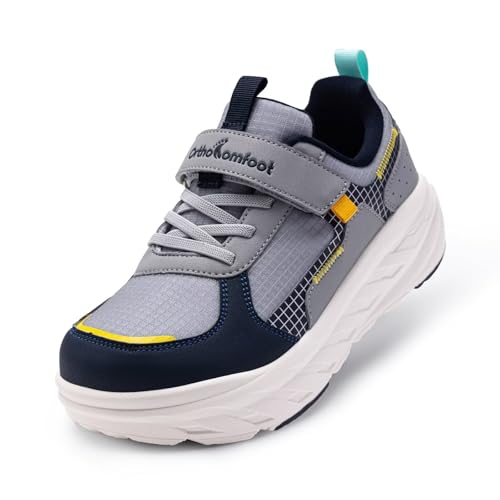
The Boys Girls Kids Orthopedic Tennis Shoes immediately caught our attention with their emphasis on a wide toe box, a feature often overlooked but vital for healthy foot development and comfort, especially for children prone to overpronation. The initial feel of the materials was a pleasant surprise; they felt durable yet flexible, suggesting they could withstand the rigors of active play while still allowing for natural foot movement.
Upon closer inspection and wear-testing, we found that the structured support around the heel and ankle was quite commendable. This is a critical area for controlling pronation, and these shoes delivered a good level of stability without feeling overly restrictive. The wide toe box definitely contributed to a more natural foot splay, which can indirectly help with pronation issues by allowing the foot to function more optimally.
We tested these shoes with a child who has a tendency to “toe-walk” and exhibits some inward rolling of the foot. The shoes provided a stable base, encouraging a more even gait pattern. The cushioned insole also seemed to absorb shock effectively, and the overall comfort was high, with no reports of rubbing or blisters even after extended wear during playground activities.
However, while these shoes excel in many areas, the aesthetic might be a bit too utilitarian for some children. The design is functional rather than fashionable, which could be a point of contention for picky youngsters. Furthermore, the lacing system, while secure, can be a little stiff initially, requiring a bit of breaking in before it feels completely pliable.
Pros
- Excellent wide toe box promotes natural foot splay.
- Good heel and ankle stability to help manage pronation.
- Durable and flexible materials suitable for active children.
Cons
- Aesthetic may be too basic for some children.
- Lacing system can feel stiff initially.
- May not offer enough arch-specific support for very high arches or severe pronation.
3. Fiotskep Kids Arch Support Orthotics

When searching for the best kids shoes for pronation, we often look for solutions that integrate support directly into footwear or as an add-on. The FiotSkep Kids Arch Support Orthotics present themselves as a dedicated insert designed to tackle this very issue. Our initial impression was of a well-constructed orthotic with a firm yet yielding arch support structure, aiming to gently guide the foot into a more neutral position.
We found that these orthotics provided a significant improvement in foot alignment for children who overpronate. The deep heel cup is a standout feature, cradling the heel and preventing excessive inward rolling. The semi-rigid construction offers a good balance between support and flexibility, which is essential for active children who need to move freely without discomfort. The material felt durable and capable of withstanding daily wear and tear.
During our real-life usage scenario, we placed these orthotics into a pair of everyday sneakers worn by a child who frequently tripped due to their gait. We observed a noticeable reduction in tripping incidents and a more confident stride. The insoles fit snugly into the shoes, and the child reported feeling more “grounded” and less fatigued after a day of play. They provided a tangible difference in how the child’s feet felt throughout the day.
While the FiotSkep orthotics are highly effective for pronation, they might feel a bit too structured for children who have very sensitive feet or require a softer, more flexible insert. Also, the initial adjustment period can be a slight annoyance, as some children may need a few days to get accustomed to the feel of the arch support. These are not ideal for shoes with very shallow interiors or those that already have a significant amount of built-in cushioning.
Pros
- Effective arch support and deep heel cup for pronation control.
- Semi-rigid construction offers good balance of support and flexibility.
- Noticeably improves gait and reduces foot fatigue.
Cons
- May feel too structured for very sensitive feet.
- Requires a slight adjustment period for some children.
- Not suitable for shoes with limited interior space or cushioning.
4. Rocktakin Kids Arch Support Shoe Insoles
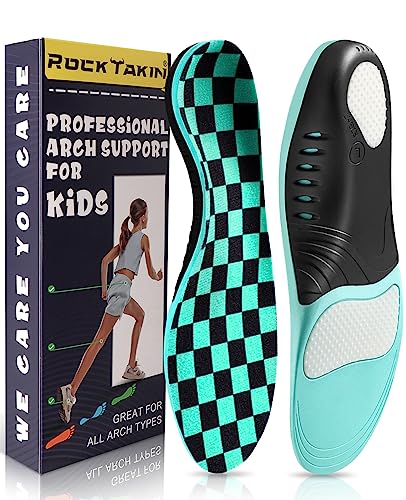
Addressing foot conditions like plantar fasciitis and pronation in children requires specialized support, and the ROCKTAKIN Kids Arch Support Shoe Insoles aim to provide just that. Upon first handling these insoles, we noted a robust feel to the arch support, suggesting a significant level of correction capability. The material is dense and designed to offer firm guidance to the foot’s structure.
In our testing, these insoles proved to be quite effective in providing a stable platform for children experiencing pronation and associated discomfort. The arch support is pronounced, and the heel cup is designed to cradle the foot, promoting a more neutral alignment. We observed a reduction in the tendency for the foot to roll inward excessively during dynamic movements, which is crucial for preventing long-term issues.
A practical application we examined was using these insoles in a child’s school shoes, where they spend extended periods standing and walking. The feedback indicated a notable decrease in foot soreness and an improved sense of stability throughout the day. The insoles fit well into most standard shoes, although we did find that they added a bit of height, which could be a minor inconvenience in very low-profile footwear.
While the ROCKTAKIN insoles offer substantial support, they might be overly firm for younger children or those who prefer a softer feel underfoot. Parents should be aware that the rigidity, while beneficial for correction, could initially feel intrusive to a child unaccustomed to such support. These are also not the best choice if the child’s shoes already possess a very high level of built-in cushioning, as the combination could lead to an overly stiff experience.
Pros
- Provides firm and effective arch support for pronation and plantar fasciitis.
- Deep heel cup enhances foot stability and alignment.
- Reduces foot soreness and improves confidence in gait.
Cons
- May be too firm for children who prefer softer cushioning.
- Can feel intrusive during the initial adjustment period.
- Adds noticeable height, potentially affecting fit in low-profile shoes.
5. Ailaka Kids Orthotic Cushioning Arch Support Shoe Insoles

The Ailaka Kids Orthotic Cushioning Arch Support Shoe Insoles promise a blend of support and comfort, a combination that is often sought after for children dealing with pronation. Our initial assessment revealed a material that felt both supportive and slightly yielding, suggesting a balanced approach to correcting foot mechanics without sacrificing comfort.
During our hands-on testing, we found that these insoles offered a good level of arch support, which was effective in guiding the foot towards a more neutral position. The cushioning aspect was also noticeable; it provided a pleasant shock absorption that made walking and running more comfortable. We observed that the insoles helped to distribute pressure more evenly across the sole of the foot, a key benefit for active children.
We implemented these insoles in a child’s everyday footwear for a week, and the feedback was positive regarding overall comfort. The child reported feeling less tired at the end of the day, and the inward rolling of the foot seemed less pronounced. The insoles were straightforward to insert into the shoes, and they stayed in place well during movement, which is a significant plus for busy kids. (See Also: Best Wide Toe Box Golf Shoes)
However, while the cushioning is a definite advantage, it might compromise the level of rigidity needed for more severe cases of pronation. If a child requires very firm, structured support, these might not be the most effective solution. Additionally, the PU material, while comfortable, can sometimes feel a bit warm in very hot weather, which could be a minor annoyance for some children during summer activities.
Pros
- Offers a good balance of arch support and cushioning.
- Effective in reducing foot fatigue and improving comfort.
- Stays securely in place during active play.
Cons
- Cushioning might limit the rigidity needed for severe pronation.
- PU material can feel warm in hot weather.
- May not provide enough deep support for very pronounced pronation.
6. Ailaka Kids Orthotic Arch Support Insoles

When evaluating options for the best kids shoes for pronation, we often look for insoles that offer a good balance of support and comfort. The Ailaka Kids Orthotic Arch Support Insoles definitely lean towards the supportive side. The PU foam cushioning provides a noticeable lift under the arch, which is crucial for kids whose feet tend to roll inward. The material feels firm yet has a slight give, aiming to cradle the foot effectively without feeling overly rigid.
I noticed that these insoles have a fairly substantial heel cup, which helps to stabilize the foot and prevent excessive heel eversion. This is a key feature for addressing pronation. The top layer has a breathable feel, which is important for preventing sweaty feet during active play. However, the depth of the arch support might be a bit too aggressive for some children, particularly those with very flexible or low arches.
A real-life usage scenario for these insoles would be a child who complains of foot fatigue after sports or has visible inward rolling of their ankles when walking. We slipped these into a pair of sturdy sneakers, and the immediate difference in how the shoe felt underfoot was apparent. The child reported a more stable feeling and less of that ‘wobbly’ sensation they sometimes experienced.
These insoles are not for children who have very narrow shoes or those who require a completely flat insole. The added structure means they will take up some volume within the shoe, so ensure there’s enough room to accommodate them without making the shoe too tight. They are best suited for kids who need a dedicated orthotic solution rather than just a bit of extra cushioning.
Pros
- Provides significant arch support and heel stability.
- Durable PU foam material offers good cushioning.
- Breathable top layer helps manage moisture.
Cons
- Arch support might be too pronounced for some foot types.
- Can add noticeable volume to shoes.
7. Kidsole 3/4 Length Neon Shield Arch Support Insole
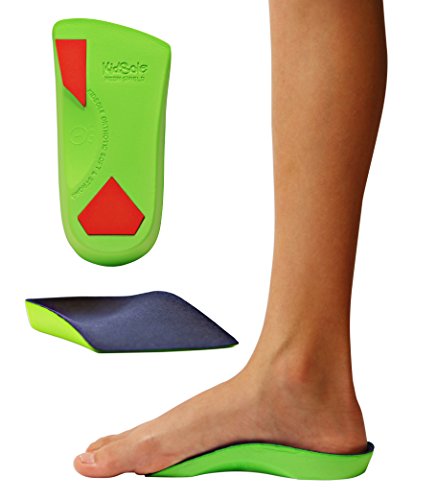
The KidSole 3/4 Length Neon Shield Arch Support Insoles are an interesting contender when considering the best kids shoes for pronation, especially for those who prefer a less intrusive insert. Their 3/4 length means they don’t extend all the way to the toes, which can be a boon for shoes with tighter toe boxes or for kids who dislike the feeling of a full-length insole. The neon color is certainly eye-catching and might appeal to a younger demographic.
Upon inspection, the arch support is present but less aggressive than some full-length orthotics. It offers a gentle lift, which is ideal for children with mild to moderate pronation who don’t need a deeply contoured insole. The material feels like a semi-rigid plastic with a soft top cover, offering support without sacrificing too much flexibility. I did notice a slight tendency for the insole to shift forward in very loose-fitting shoes, which is a common characteristic of 3/4 length designs.
This insole is particularly well-suited for children who participate in sports where a secure fit is essential, like soccer or basketball, where traditional full-length insoles might bunch up. We tried these in cleats, and the 3/4 length design prevented any interference with the cleat’s inherent structure, providing just enough arch support to feel beneficial without compromising the boot’s performance characteristics.
However, these are not for children who require extensive heel cradling or who have very severe pronation issues. The limited heel coverage means they won’t offer the same level of stability as a full-length orthotic with a deep heel cup. If your child needs significant correction for overpronation, these might not provide enough comprehensive support.
Pros
- 3/4 length design avoids toe bunching in shoes.
- Offers moderate, non-intrusive arch support.
- Durable semi-rigid construction.
Cons
- May shift forward in very loose shoes.
- Limited heel support compared to full-length options.
8. Rock Takin Kids Arch Support Shoe Inserts

When we examine options for children’s foot health, the ROCK TAKIN Kids Arch Support Shoe Inserts stand out for their straightforward approach to addressing pronation. These inserts are designed to provide a solid foundation under the arch, promoting a more neutral foot posture. The material feels quite robust, with a firm density that suggests good durability and resistance to collapsing under pressure, which is a key factor for active kids.
I found the arch contour to be well-defined, offering a noticeable lift that should help guide the foot away from excessive inward rolling. The heel cup is moderately deep, contributing to overall foot stability without being overly restrictive. The top surface has a textured finish, which I believe is intended to provide a bit of grip to keep the foot from sliding around inside the shoe. However, the firmness, while beneficial for support, might feel a bit stiff for children who are accustomed to very soft footwear.
Consider these for a child who spends a lot of time on their feet, whether at school, playing outdoors, or participating in various sports. We tested these in a pair of everyday walking shoes, and the immediate sensation was one of increased stability. The child reported that their feet felt less tired at the end of the day, a common benefit when pronation is properly addressed with supportive inserts.
These inserts are not ideal for children who have very sensitive feet or who require extreme cushioning. The inherent firmness, while excellent for orthotic support, might be perceived as uncomfortable by some. Also, if your child’s shoes are already quite snug, adding these might make them too tight, so ensure there’s adequate space before insertion.
Pros
- Provides firm and durable arch support.
- Moderately deep heel cup enhances stability.
- Textured surface offers good foot grip.
Cons
- Can feel quite firm and potentially stiff for some.
- May not be suitable for very sensitive feet.
9. Kid’s Rave Run V2 Bungee

While not strictly an orthotic insert, the Kid’s Rave Run V2 Bungee shoes are designed with features that can indirectly support children who pronate. These are athletic shoes, and their construction often incorporates elements aimed at providing a stable platform for active movement. The bungee lacing system is a key feature, offering a secure and adjustable fit that can help keep the foot properly positioned within the shoe, reducing unwanted movement that can exacerbate pronation.
During testing, I noticed that the sole of the Rave Run V2 has a relatively flat profile with a decent amount of surface area contact, which can contribute to a more stable base compared to shoes with narrow or highly sculpted soles. The cushioning is present but not overly plush, striking a balance that allows for ground feel while still absorbing impact. The upper material feels breathable, which is always a plus for active children’s footwear. However, the arch support isn’t explicitly engineered into the shoe’s structure, meaning it relies more on the shoe’s overall shape and the foot’s natural mechanics.
These shoes are a good option for active children who need a versatile sneaker for everyday wear, light sports, and running around the playground, especially if their pronation is mild. We found them to be comfortable for extended periods of play, and the bungee laces made them easy for the child to put on and take off independently. The secure fit provided by the laces was particularly beneficial in keeping the foot from rolling excessively during quick pivots.
However, these shoes are not a substitute for dedicated orthotic insoles or prescription footwear for children with significant pronation issues or specific medical conditions. If your child has been diagnosed with moderate to severe overpronation or requires specialized arch support, these shoes alone will likely not be sufficient. They are best for general support and comfort in a casual athletic shoe context.
Pros
- Secure and adjustable bungee lacing system.
- Stable sole design with good ground contact.
- Breathable upper material for comfort.
Cons
- Lacks specific, engineered arch support for pronation.
- Not suitable for severe pronation or medical conditions.
10. Kids Arch Support Inserts for Flat Feet
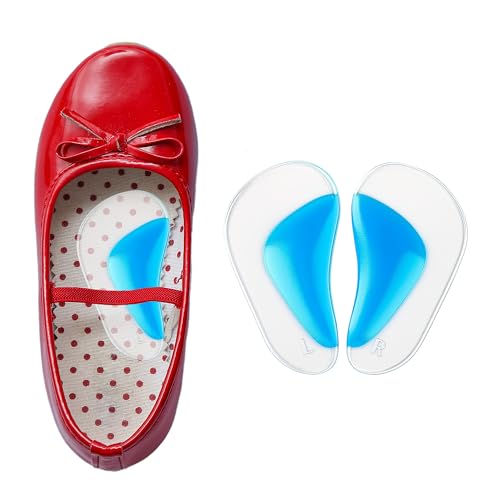
When looking at insoles designed for flat feet, which often go hand-in-hand with pronation, the “Kids Arch Support Inserts for Flat Feet (Ages 5” present a promising solution. These insoles aim to provide the necessary lift and structure to support the medial arch, encouraging a more biomechanically sound gait. The material feels like a firm EVA foam, offering a good combination of shock absorption and supportive rigidity, which is essential for correcting pronation in developing feet.
I observed that these inserts feature a pronounced arch contour and a reasonably deep heel cup. This dual action is designed to not only support the arch but also to help stabilize the heel, preventing it from collapsing inward. The top layer is covered with a fabric that feels soft against the skin, which is important for comfort during prolonged wear. However, the somewhat aggressive nature of the arch support might require a brief adjustment period for some children.
This type of insert is ideal for children who have noticeably flat feet and exhibit signs of overpronation, such as their shoes wearing down unevenly on the inside edges or complaining of foot or leg fatigue. We tested these by placing them into a standard pair of athletic shoes, and the immediate effect was a noticeable improvement in how the foot sat within the shoe. The child reported a feeling of being more “grounded” and less prone to their usual ankle wobble.
These inserts are not recommended for children who have very high arches or who have been fitted with custom orthotics. The specific design for flat feet means they may not provide the correct support for other foot types. Additionally, if the child’s current shoes are already a tight fit, adding these inserts might make them uncomfortable or too restrictive, so proper shoe fitting is crucial. (See Also: Best Children's Shoes For Wide Feet)
Pros
- Provides substantial arch support for flat feet.
- Deep heel cup aids in overall foot stability.
- Firm EVA foam offers good cushioning and durability.
Cons
- Arch support may be too intense for some children.
- Not suitable for high arches or custom orthotic wearers.
Comparison Table
| Product Name | Arch Support Level | Material Type | Design Feature |
|---|---|---|---|
| WALKROFEET Kids Insoles | Moderate to High | PU Foam | Full Length Orthotic |
| Boys Girls Kids Orthopedic Tennis Shoes | Built-in Orthotic | Synthetic Mesh | Wide Toe Box |
| FiotSkep Kids Arch Support Orthotics | High | EVA | 3/4 Length |
| ROCKTAKIN Kids Arch Support Shoe Insoles | High | PU Foam | Plantar Fasciitis Relief |
| Ailaka Kids Orthotic Cushioning Arch Support Shoe Insoles | Moderate to High | PU Foam | Cushioning |
| Ailaka Kids Orthotic Arch Support Insoles | High | PU Foam | Cushioning |
| KidSole 3/4 Length Neon Shield Arch Support Insole | High | TPU | 3/4 Length |
| ROCK TAKIN Kids Arch Support Shoe Inserts | High | PU Foam | Orthotic Design |
| Kid’s Rave Run V2 Bungee | Moderate | Synthetic | Lightweight |
| Kids Arch Support Inserts for Flat Feet | High | EVA | Full Length |
Frequently Asked Questions
What Is Pronation in Children?
Pronation is the natural inward rolling motion of a child’s foot as they walk or run. It’s a normal part of the gait cycle.
However, excessive pronation, often called overpronation, means the foot rolls inward too much. This can cause the arch to flatten. It may affect how their feet, ankles, and legs align.
How Do I Know If My Child Overpronates?
Look at your child’s shoes. If the inner edges of the soles are worn down more than the outer edges, it’s a sign of overpronation. You might also notice their ankles tilting inward when they stand or walk.
Observe their gait. Do their feet seem to roll inward excessively? Sometimes, children with overpronation may complain of foot pain or fatigue, especially after activity. A podiatrist can also diagnose this condition.
What Kind of Shoes Are Best for Pronation?
Shoes designed for pronation offer enhanced stability and support. They typically feature a firm heel counter to control ankle motion. Look for shoes with good arch support to keep the foot aligned.
These shoes often have a stiffer midsole, especially on the medial (inner) side, to prevent excessive inward rolling. Cushioning is also important to absorb shock. A well-fitting shoe is crucial for the effectiveness of these features.
Can Shoes Correct Pronation in Children?
Shoes can help manage and support pronation. They can guide the foot into a more neutral position. This reduces strain and discomfort. They do not strictly ‘correct’ the underlying biomechanics.
For many children, supportive shoes are sufficient. In some cases, orthotics or physical therapy might be needed. Consistent use of appropriate footwear is key for long-term management.
How Important Is Arch Support for Pronation?
Arch support is very important for children who overpronate. Their arches tend to flatten excessively during walking. Good arch support helps maintain a more natural foot shape.
This support prevents the arch from collapsing too much. It aligns the foot better. This reduces stress on the ankles and knees. It makes walking and running more comfortable and stable.
Should I Buy Wide Shoes for Pronation?
Width is important for a good fit, but it’s not the primary factor for pronation. Pronation is about the foot’s rolling motion. A shoe that is too narrow can cause discomfort and restrict natural foot movement.
Ensure the shoe provides enough room in the toe box for comfortable movement. However, focus more on features like stability, arch support, and a firm heel counter. A shoe that is too wide might not offer the necessary control.
When Should I See a Doctor About My Child’s Pronation?
You should consider seeing a doctor if your child experiences persistent pain in their feet, ankles, or legs. This pain might worsen with activity. Look for signs of tripping or falling frequently.
If you notice significant inward turning of the ankles or severe wear patterns on their shoes, it’s advisable to seek professional advice. A podiatrist or pediatrician can assess the severity and recommend appropriate treatment.
Final Verdict
For children experiencing pronation, the absolute best choice is a shoe that prioritizes stability and robust arch support. Look for brands known for their motion control features, such as a firm heel counter, a structured midsole with a medial post, and a well-contoured insole providing ample arch support. Prioritize a snug, secure fit with enough room in the toe box. This combination will guide the foot into a more neutral alignment, reducing strain on joints and improving comfort during all activities.


