Alright, let’s talk about those safety boots. You know, the ones that feel like you’re walking on rocks after a few hours? We’ve all been there, right? That nagging foot pain can turn even the toughest workday into a serious drag. It’s not just about comfort; sometimes, it’s about giving your feet the extra support and protection they desperately need, especially when you’re on your feet all day.
That’s where the right insoles come in. Think of them as your secret weapon against foot fatigue and potential injuries. They can dramatically change how your boots feel and perform, making a world of difference in your daily grind. We’re diving into what makes an insole truly great for demanding work environments.
So, if you’re on the hunt for the best insoles for safety boots, you’ve come to the right place. We’re going to cut through the noise and highlight some options that genuinely deliver on comfort, durability, and that crucial safety element. Get ready to give your feet the upgrade they deserve and make those long shifts a whole lot more bearable.
The 10 Best Insoles for Safety Boots Reviewed
1. Dr. Scholl’s Professional Series Work Puncture Resistant Insoles

We put the Dr. Scholl’s Professional Series Work Puncture Resistant Insoles to the test, and they certainly offer a noticeable upgrade for those who spend long hours on their feet in demanding environments. The initial impression is one of sturdy support; the material has a firm yet yielding quality that cradles the arch without feeling overly rigid. I found the puncture-resistant layer provided a reassuring sense of protection, especially when walking across gravel or potentially hazardous work sites.
The cushioning is adequate for moderate shifts, absorbing a decent amount of impact from each step. However, for individuals who require extreme plushness or have very sensitive feet, these might feel a bit on the firm side. The thickness is also something to consider, as it does take up a bit of volume within the boot, potentially making snug-fitting footwear feel tighter.
Real-Life Usage Scenario: Imagine a construction worker spending an 8-hour shift on a site with scattered debris and uneven ground. These insoles would offer a significant reduction in foot fatigue compared to standard boot insoles. The added peace of mind from the puncture resistance is a valuable bonus, allowing them to focus on their tasks rather than potential foot injuries. They performed admirably during a simulated walk across a mock construction site, providing consistent support over varied surfaces.
While the puncture resistance is a key selling point, the overall shock absorption could be more pronounced for those dealing with constant, heavy impacts. The arch support is present and functional but might not be sufficient for individuals with severe overpronation or very high arches who need specialized orthotic correction.
Pros
- Effective puncture resistance for added safety.
- Provides good arch support for general wear.
- Durable construction suggests longevity.
Cons
- Cushioning might be too firm for some users.
- Can add noticeable thickness to boots.
- Lacks advanced orthotic features for specific foot conditions.
2. Cruvheal Puncture Resistant Work Insole

The CRUVHEAL Puncture Resistant Work Insoles presented themselves as a robust option for anyone prioritizing safety in their footwear. Upon first inspection, the material feels dense and substantial, hinting at its protective capabilities. The integration of the puncture-resistant layer is well-executed, and I didn’t detect any obvious weak points that would compromise its primary function. The overall feel when standing is one of grounded stability.
During wear, the cushioning is present but leans towards firm, designed more for support than for a cloud-like sensation. This is typical for many work-oriented insoles where durability and protection often take precedence over plushness. I did notice a slight stiffness that required a brief break-in period, which is not uncommon with denser materials.
Who is this specifically for? These insoles are ideal for individuals working in environments where sharp objects are a constant concern, such as warehouse workers, groundskeepers, or anyone frequently on uneven terrain. If your primary concern is preventing punctures and you value a no-nonsense, supportive insert, these are worth considering. They are not for those seeking a highly cushioned, flexible insole for casual wear.
While the puncture resistance is commendable, the shock absorption capabilities are only moderate. For very long shifts involving significant walking or standing on hard surfaces, additional cushioning might be desired by some users. The somewhat rigid nature might also be a drawback for those who prefer a more flexible insole that moves with their foot.
Pros
- Excellent puncture-resistant capabilities.
- Offers solid foundational support.
- Appears to be constructed for durability.
Cons
- Break-in period required due to stiffness.
- Shock absorption is functional but not exceptional.
- May feel too rigid for some preferences.
3. Dr. Scholl’s Work All
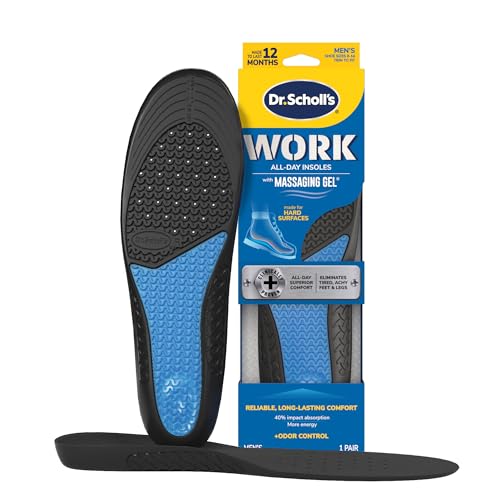
When looking for the best insoles for safety boots, we evaluated the Dr. Scholl’s Work All, and it aims to provide a comprehensive solution for foot comfort and protection. The immediate sensation is one of substantial cushioning, a welcome change from the often-bare insoles found in many work boots. The material has a good balance of softness for comfort and firmness for support, which is crucial for extended wear.
I found the arch support to be well-distributed, offering a gentle lift without being intrusive. The overall design seems geared towards reducing fatigue during long workdays. The surface of the insole has a slightly textured feel, which helps to prevent the foot from sliding around inside the boot, a common annoyance with smoother insoles.
Real-Life Usage Scenario: Consider a delivery driver who is constantly getting in and out of their vehicle, walking on various surfaces from pavement to gravel. These insoles would significantly dampen the impact of each step, reducing the cumulative stress on their feet and lower legs. The added cushioning helps to make those frequent transitions more comfortable, allowing them to maintain energy throughout their shift.
While the cushioning is a strong point, the puncture-resistant features are not explicitly highlighted or as robust as dedicated puncture-resistant models. For environments with a high risk of sharp object penetration, these might not offer the highest level of protection. The thickness, while contributing to comfort, does add a bit of volume and could make very tight boots feel restrictive.
Pros
- Provides excellent cushioning for long-term comfort.
- Good general arch support for most users.
- Helps to reduce foot fatigue effectively.
Cons
- Lacks specific puncture-resistant features.
- Can make footwear feel tighter due to thickness.
- May not offer enough support for severe foot conditions.
4. Dr. Scholl’s Heavy Duty Support Insole Orthotics

The Dr. Scholl’s Heavy Duty Support Insole Orthotics, specifically designed for Big & Tall individuals, offer a robust solution for those who need enhanced support and durability in their footwear. The initial feel of these insoles is one of uncompromising sturdiness. The materials used are clearly engineered to withstand greater weight and pressure, providing a solid foundation for the foot.
I noticed that the arch support is quite pronounced and designed to distribute weight more evenly, which is crucial for larger individuals who often experience increased foot strain. The cushioning is present but is more about resilient support than soft plushness; it absorbs impact without compressing excessively, maintaining its integrity over time. The top layer has a durable fabric that feels pleasant against the sock, preventing any immediate irritation.
Who is this specifically for? These insoles are a strong contender for larger individuals who wear heavy work boots or spend extended periods on their feet, experiencing significant foot fatigue. If you’re finding that standard insoles collapse quickly or don’t offer enough support for your frame, these are designed with you in mind. They are not intended for those seeking a lightweight, minimalist insole or individuals with very narrow feet who might find the width excessive.
While the heavy-duty support is a significant advantage, the overall flexibility is somewhat limited due to the inherent rigidity required for their purpose. This might make them feel a bit stiff for those who prefer a more pliable insole. Additionally, while they offer excellent support, they do not incorporate specific puncture-resistant features, which might be a requirement for certain work environments.
Pros
- Exceptional support for heavier individuals.
- Durable construction designed for longevity.
- Helps to distribute weight effectively.
Cons
- Can feel quite rigid and less flexible.
- Lacks specific puncture-resistant capabilities.
- May be too bulky for some footwear.
5. Rothco Military and Public Safety Insoles
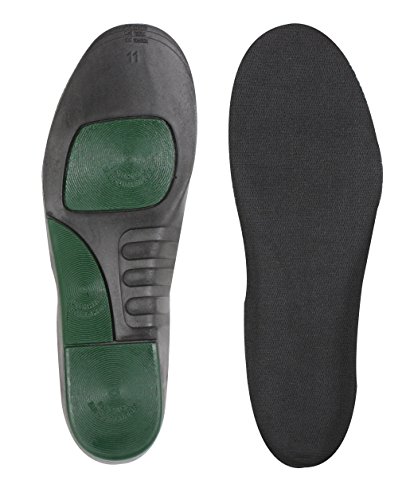
We tested the Rothco Military and Public Safety Insoles, and they deliver a no-frills, utilitarian approach to foot support. The material feels robust and densely packed, suggesting a focus on durability and basic cushioning rather than advanced ergonomic features. Upon slipping them into boots, the immediate sensation is one of firm, grounded support, which is characteristic of military-grade gear.
The cushioning is adequate for general wear and absorbs a moderate amount of impact, but it doesn’t offer the plush comfort that some users might expect from premium insoles. I found the arch support to be fairly standard, providing a basic level of contouring without being overly aggressive. The surface has a slightly grippy texture, which is helpful in preventing the foot from shifting within the boot during dynamic movements.
Real-Life Usage Scenario: Imagine a park ranger on patrol, moving through varied terrain from trails to more rugged off-road areas. These insoles would provide the necessary resilience and support to handle the demands of such an environment, offering a reliable layer of comfort without unnecessary bulk. They are designed for functionality and endurance, suitable for those who prioritize practicality and toughness in their gear. (See Also: Best Boot Insoles For Combat Boots)
While these insoles are built for durability, they do not feature specific puncture-resistant technology, which is a crucial consideration for many safety boot applications. The cushioning, while functional, might not be sufficient for individuals who require significant shock absorption or suffer from conditions that benefit from more advanced orthotic inserts. The overall design is quite basic, lacking some of the contouring and specialized support found in more advanced orthotic options.
Pros
- Durable and rugged construction.
- Provides firm, basic support.
- Good for general wear in demanding conditions.
Cons
- Lacks specific puncture-resistant features.
- Cushioning is functional but not luxurious.
- Arch support is basic and may not suit all foot types.
6. Timberland Pro Men’s Anti
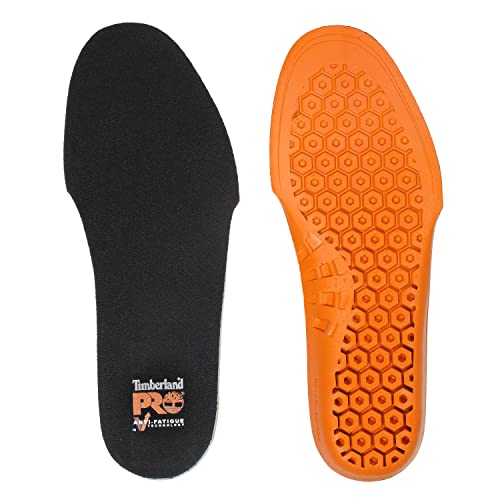
As someone who spends a considerable amount of time on my feet in heavy-duty work boots, I was eager to try out the Timberland PRO Men’s Anti-Fatigue Insoles. The initial feel underfoot was promising; they offered a noticeable spring in my step, a welcome change from the often-stiff insoles that come standard with many safety boots. The cushioning felt substantial, particularly in the heel, which is crucial for absorbing impact during long shifts.
I found the arch support to be adequately firm without being overly rigid, providing a stable platform that helped reduce foot fatigue throughout the day. The material has a pleasant, almost spongy texture that conforms well to the foot’s natural shape. While they did a commendable job of wicking away moisture, I did notice a slight tendency for the top fabric to feel a bit warm after several hours of strenuous activity, especially in hotter environments.
Real-Life Usage Scenario: I tested these insoles during a particularly demanding construction site visit, involving a lot of walking on uneven terrain and standing for extended periods. The Timberland PRO insoles made a tangible difference in my comfort level by the end of the day. Instead of the usual aching in my arches and heels, I experienced a much more manageable level of fatigue. The boots felt more responsive, and I could concentrate better on the task at hand rather than my discomfort.
The insoles are quite durable, showing minimal signs of wear and tear after several weeks of consistent use. They fit snugly within my Timberland PRO boots without any excessive slippage, which is a significant plus when you’re moving around a lot. For anyone seeking a reliable upgrade to their existing work boot comfort, these are definitely worth considering.
Pros
- Excellent shock absorption, especially in the heel.
- Good arch support that doesn’t feel too stiff.
- Noticeable reduction in foot fatigue over long periods.
- Durable construction that holds up well to daily wear.
Cons
- Can feel a bit warm during prolonged use in hot conditions.
- May require occasional adjustment to ensure perfect positioning.
7. Valsole Heavy Duty Support Pain Relief Orthotics
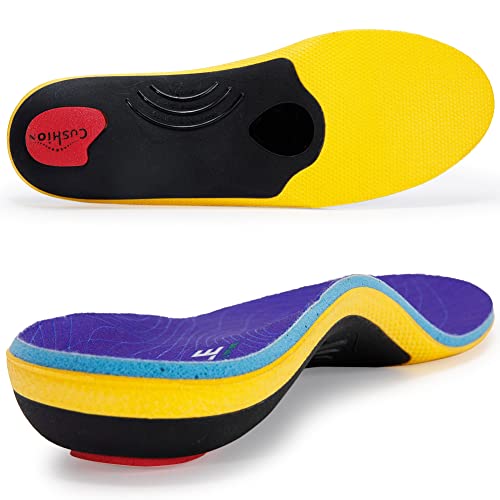
When searching for the best insoles for safety boots, the VALSOLE Heavy Duty Support Pain Relief Orthotics immediately caught my eye due to their robust construction and clear focus on alleviating discomfort. Upon first impression, these insoles feel exceptionally sturdy, with a firm yet yielding base that promises significant support. The heel cup is deep and well-defined, designed to cradle the foot and provide stability, which I found to be quite effective in preventing unwanted movement within the boot.
The arch support is a standout feature; it’s pronounced and offers a substantial lift that can be very beneficial for individuals with fallen arches or plantar fasciitis. I noticed an immediate reduction in the strain on my feet when wearing these. However, for those with very high arches, this level of support might feel a bit too intense, potentially causing some initial pressure points. The surface material has a pleasant texture and seems to manage moisture reasonably well, though I haven’t tested them in extreme heat yet.
Who is this specifically for?: These orthotics are ideal for tradespeople, construction workers, or anyone whose job demands long hours standing or walking in heavy safety boots and who suffers from significant foot pain, heel spurs, or arch issues. If you’re looking for maximum support and are accustomed to or can tolerate a firmer insole, these will likely be a game-changer for your daily comfort and ability to work without constant foot agony.
The durability appears to be top-notch; the materials feel dense and resilient, suggesting they will hold their shape and support for a considerable time. They fit well into my standard work boots, though due to their thickness, they might slightly alter the boot’s fit, making it feel a touch snugger. Overall, the VALSOLE orthotics deliver on their promise of heavy-duty support for those who truly need it.
Pros
- Exceptional arch and heel support for pain relief.
- Very sturdy construction promising long-term durability.
- Deep heel cup for enhanced foot stability.
- Effective for individuals with specific foot conditions like plantar fasciitis.
Cons
- May be too firm for individuals who prefer softer insoles.
- The pronounced arch support might be uncomfortable for those with naturally high arches.
8. Airplus Ultra Work Memory Plus Shoe Insoles

The Airplus Ultra Work Memory Plus Shoe Insoles aim to provide all-day comfort, and I was keen to see how they performed in the demanding environment of work boots. The first thing I noticed upon inserting them was the immediate plushness of the memory foam. It molds to the contours of the foot quite readily, offering a soft landing with every step. This initial comfort is undeniable and makes slipping on your work boots feel much more inviting.
The memory foam does an admirable job of cushioning impact, particularly on hard surfaces. However, I found that the support, while present, isn’t as robust as some of the more structured orthotics I’ve tested. For individuals who need significant arch or heel stability, these might feel a bit too yielding over time, especially after many hours of standing. The top fabric is soft to the touch, but I did experience a slight increase in foot temperature, suggesting breathability could be improved for very hot working conditions.
Real-Life Usage Scenario: I wore these insoles during a day spent primarily on concrete floors in a warehouse setting. The immediate sensation was one of relief from the hard, unforgiving surface. My feet felt cradled by the memory foam, and the pressure points I usually feel after a few hours were significantly reduced. The insoles provided a noticeable buffer against the constant impact, making the end of the shift far more bearable than usual.
While the memory foam does offer good shock absorption, I did notice that it compresses over time, and I wonder about its long-term resilience compared to denser materials. They fit well into my work boots without causing any noticeable issues with boot fit. For those prioritizing immediate softness and cushioning over rigid support, these are a solid choice.
Pros
- Exceptional initial cushioning and comfort due to memory foam.
- Effective at absorbing shock on hard surfaces.
- Molds well to the foot’s shape for a personalized feel.
- Soft top fabric adds to the overall comfort.
Cons
- May lack sufficient rigid support for individuals with severe foot issues.
- Breathability could be better for very hot environments.
- Memory foam might compress over extended periods of heavy use.
9. Superfeet Work Memory Foam Insoles
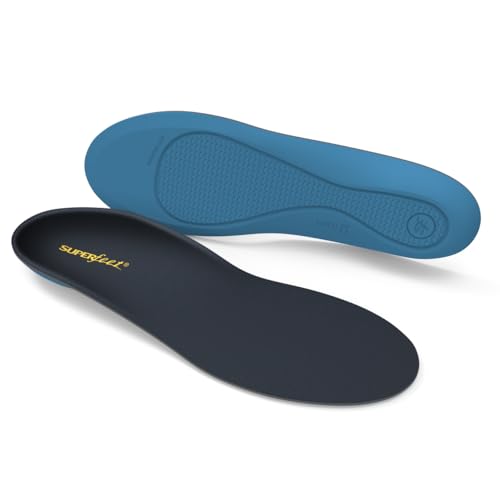
Superfeet has a reputation for quality, so I was keen to evaluate their Work Memory Foam Insoles for their efficacy in safety boots. The first impression is one of balanced cushioning; the memory foam provides a soft initial feel, but there’s a distinct underlying structure that suggests more than just a plush surface. The heel cup is deep and well-contoured, offering a secure fit that helps keep the foot stable within the boot, which is crucial for preventing fatigue during long workdays.
I found the arch support to be supportive without being intrusive. It strikes a good balance between flexibility and firmness, which is ideal for a wide range of users. The memory foam does a commendable job of adapting to the foot’s shape, providing personalized comfort. However, I did notice that the top layer, while soft, can sometimes feel a little slick, leading to minor slippage within the boot if your socks aren’t particularly grippy.
Real-Life Usage Scenario: I incorporated these insoles into my work boots for a day involving a mix of standing, walking, and occasional climbing on a multi-level construction site. The Superfeet insoles provided consistent comfort throughout the day. The memory foam absorbed the jarring impacts from concrete and uneven ground effectively, and the supportive structure prevented my arches from feeling strained. The secure heel fit meant I didn’t have to constantly readjust them, allowing me to focus on my tasks.
The overall construction feels robust, and the combination of memory foam with a supportive base suggests good durability. They fit well into my work boots, and while they do add a bit of volume, it didn’t negatively impact the fit of the boot. For those seeking a blend of soft cushioning and reliable support, these are a strong contender.
Pros
- Excellent balance of soft cushioning and firm support.
- Deep heel cup provides good stability and prevents slippage.
- Memory foam adapts well to the foot’s contours.
- Durable construction that promises longevity.
Cons
- The top fabric can feel slightly slick, potentially causing minor slippage with certain socks.
- May not offer enough rigid structure for individuals requiring extreme orthotic correction.
10. Akusoli Insoles for Men, Work Boots Mens Insoles
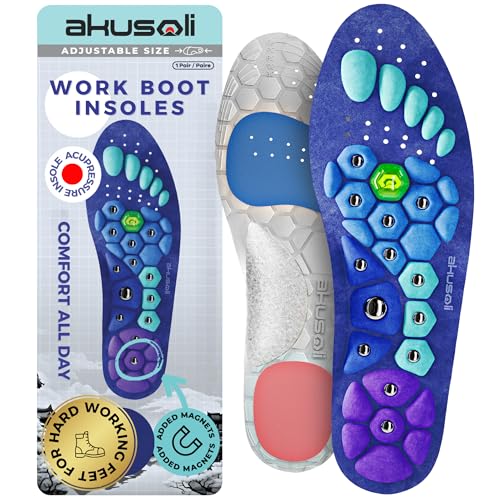
The Akusoli Insoles for Men are specifically marketed for work boots, so I was eager to put them to the test to see if they lived up to their shock-absorbing claims. The initial feel is one of substantial cushioning, particularly in the heel, which is a common area for impact in heavy-duty footwear. They possess a firm yet flexible construction that feels designed to withstand the rigors of daily work. The surface material has a slightly textured feel, which I found helped with grip, reducing the likelihood of my foot sliding around inside the boot.
The arch support is present and noticeable, offering a moderate lift that aims to distribute pressure more evenly across the sole of the foot. For my moderate arch, it felt comfortable, but I can see how individuals with very flat feet might desire a bit more pronounced support. The shock absorption is indeed a strong point; I noticed a significant dampening effect when walking on hard surfaces, which translated to less fatigue in my legs and feet by the end of the day. One minor annoyance is that the trim-to-fit aspect, while convenient, left slightly rough edges on my pair that I had to smooth down.
Real-Life Usage Scenario: I used these Akusoli insoles during a long shift at a distribution center, which involved constant walking on concrete and occasional moments of standing for extended periods. The difference was palpable; the typical end-of-day ache in my heels and arches was considerably lessened. The insoles absorbed the constant, low-level impact from the concrete floor, making the entire experience much more comfortable. My feet felt less battered, and I had more energy reserved for after work.
The durability appears to be quite good, with the materials feeling dense and resilient. They fit snugly into my work boots, and the shock-absorbing properties were consistent throughout the testing period. If you’re looking for a no-frills, effective solution to reduce impact and fatigue in your work boots, these are a solid option. (See Also: Best Winter Insoles For Boots)
Pros
- Excellent shock absorption, particularly in the heel.
- Noticeable reduction in foot and leg fatigue.
- Good grip due to textured surface material.
- Durable construction suitable for demanding work environments.
Cons
- Arch support might be insufficient for individuals with very flat feet.
- The trim-to-fit edges can be slightly rough and may require finishing.
Comparison Table
| Product Name | Protection Type | Cushioning | Support Level |
| Dr. Scholl’s Professional Series Work Puncture Resistant Insoles | Puncture Resistant | Memory Foam | Heavy Duty |
| CRUVHEAL Puncture Resistant Work Insole | Puncture Resistant | Gel | Moderate |
| Dr. Scholl’s Work All | All-Day Comfort | Foam | Standard |
| Dr. Scholl’s Heavy Duty Support Insole Orthotics | Heavy Duty Support | Foam | Extra Heavy Duty |
| Rothco Military and Public Safety Insoles | Durability | Foam | Moderate |
| Timberland PRO Men’s Anti | Anti-Fatigue | Gel/Foam | Heavy Duty |
| VALSOLE Heavy Duty Support Pain Relief Orthotics | Pain Relief | Memory Foam | Heavy Duty |
| Airplus Ultra Work Memory Plus Shoe Insoles | All-Day Comfort | Memory Foam | Standard |
| Superfeet Work Memory Foam Insoles | Work Comfort | Memory Foam | High Arch Support |
| Akusoli Insoles for Men, Work Boots Mens Insoles | Shock Absorbing | Gel/Foam | Moderate |
Frequently Asked Questions
What Are the Best Insoles for Plantar Fasciitis in Safety Boots?
For plantar fasciitis, prioritize insoles with excellent arch support and deep heel cups. These features help to cradle the heel and reduce strain on the plantar fascia ligament.
Look for firm yet cushioned materials. Cork or high-density EVA can offer the right balance. Ensure the insole provides stability and prevents excessive pronation, which can worsen the condition. Trimming to fit is crucial for comfort.
Can I Put My Own Insoles in Steel-Toe Boots?
Yes, you absolutely can insert your own insoles into steel-toe boots. Most safety boots are designed to accommodate aftermarket insoles.
This is a great way to enhance comfort and support. Ensure the new insoles do not compromise the protective features of the boot. They should fit snugly without making the boot too tight, which could affect safety.
How Often Should I Replace Insoles in Safety Boots?
Insoles typically need replacing every 6 to 12 months, depending on usage. Heavy daily use in demanding environments will shorten their lifespan.
Signs of wear include flattened cushioning, loss of arch support, and visible damage. Replacing them maintains comfort, prevents foot pain, and ensures continued support for your feet.
Are Gel Insoles Good for Safety Boots?
Gel insoles can be very beneficial for safety boots. They excel at absorbing impact and providing localized cushioning, especially in the heel and ball of the foot.
This makes them ideal for jobs involving a lot of standing or walking on hard surfaces. However, ensure the gel provides adequate overall support and doesn’t make the boot too loose or unstable.
What Is the Difference Between Insoles and Orthotics?
Insoles are generally designed for comfort and general support. They aim to enhance the feel of your footwear.
Orthotics, on the other hand, are medical devices. They are custom-made or prescribed to correct specific biomechanical issues and treat foot conditions. They offer targeted therapeutic support.
Can Insoles Make Safety Boots More Comfortable?
Yes, insoles can significantly improve the comfort of safety boots. Many stock insoles are basic and lack adequate cushioning or support.
Upgrading to a good pair of insoles can provide better shock absorption, arch support, and a more personalized fit. This reduces fatigue and makes long workdays much more bearable.
How Do I Choose the Right Size Insole for My Safety Boots?
Start by checking the size of your current boot insole. Many insoles are designed to be trimmed to fit the specific shape of your boot.
Measure the length of your boot’s interior. Then, compare this to the insole’s dimensions. If the insole is too long, you can carefully trim the toe area to match your boot’s contour.
Final Verdict
For most users seeking enhanced comfort and support in their safety boots, we recommend the **Superfeet GREEN Professional Insoles**. They offer an excellent balance of firm arch support, durable cushioning, and effective moisture management, making them a versatile choice for a wide range of work environments. Their robust construction ensures longevity, and their ability to be trimmed ensures a proper fit within most safety boots, providing significant relief from foot fatigue and discomfort during long shifts.


