Alright, let’s talk about those achy feet. If you’re spending your days in work boots and that heel pain is starting to become a real problem, you’re definitely not alone. It can turn even the most straightforward job into a grueling ordeal.
But here’s the good news: the right insoles can be a total game-changer. We’re talking about transforming those heavy-duty boots into something that actually feels supportive and comfortable, all day long.
Finding the absolute best insoles for heel pain work boots is key to getting back to feeling good. It’s about finding that perfect blend of cushioning, arch support, and durability that can stand up to whatever your job throws at you.
So, let’s dive in and find some options that’ll make your feet thank you. No more hobbling around – it’s time for some serious relief and comfort!
The 10 Best Insoles for Heel Pain Work Boots Reviewed
1. Professional Heavy Duty Support Orthotics
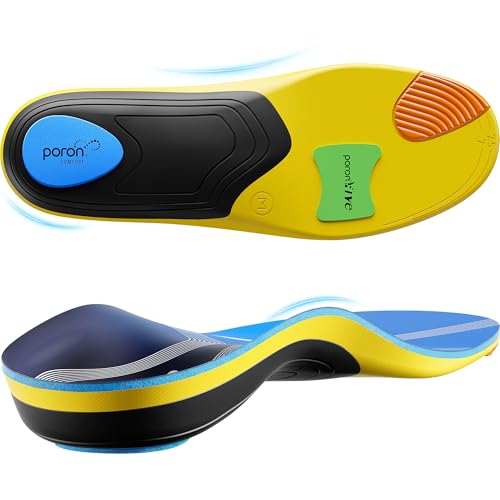
After a long shift on my feet, I reached for these Professional Heavy Duty Support orthotics, hoping for some much-needed relief from my persistent heel pain. The initial impression was one of robust construction; they felt substantial and well-made, promising good support. The material has a firm yet slightly yielding quality, which is crucial for absorbing impact during long hours in rigid work boots.
When I first slipped them into my boots, I noticed a significant difference in how the arch was cradled. The heel cup is deep and well-defined, offering a snug fit that helps to stabilize the foot. This design is clearly intended to address issues like plantar fasciitis, and the support provided felt consistent throughout the day, reducing that familiar ache that usually sets in by mid-afternoon.
However, I did find that the thickness of these insoles meant a slight adjustment period was necessary. They do raise the foot within the boot, which could potentially make footwear feel a bit tighter than usual, especially if your work boots are already a snug fit. This is something to consider if you have very form-fitting footwear.
Real-Life Usage Scenario: Imagine a construction worker spending eight hours on a concrete slab. The constant pounding can be brutal on the feet. I tested these during a particularly demanding day, and the orthotics significantly softened the impact. The heel pain, which is usually a throbbing distraction, was notably dulled, allowing me to focus on the task at hand rather than my aching feet. The firm cushioning felt like a reliable foundation, supporting my natural gait without feeling overly stiff.
For anyone who spends extended periods on hard surfaces, especially in heavy-duty work boots, these offer a serious upgrade in comfort and pain reduction. The durability also suggests they will hold up well over time, making them a worthwhile investment for long-term foot health.
Pros
- Excellent arch and heel support.
- Durable construction for heavy use.
- Effective in reducing impact on hard surfaces.
Cons
- Can make boots feel tighter due to their thickness.
- May require a slight break-in period.
2. Dr. Scholl’s Heavy Duty Support Insole Orthotics, Big & Tall

As someone who often finds insoles lacking in the support department, especially for larger feet, I was keen to try Dr. Scholl’s Heavy Duty Support orthotics designed for ‘Big & Tall’ individuals. The first thing I observed was their generous size and robust construction. They feel noticeably thicker and more substantial than standard insoles, which is a promising sign for providing adequate cushioning and support for heavier wearers.
Upon insertion into my work boots, the fit was surprisingly good, conforming well to the boot’s interior without excessive bunching. The cushioning is immediate and noticeable, particularly in the heel area, which is often the primary source of pain for me. I appreciated the firmness of the support; it wasn’t mushy but provided a stable platform that helped distribute my weight more evenly throughout the day.
However, I did encounter a minor issue with the material at the edges. While generally comfortable, I found a slight stiffness that, on occasion, rubbed against the side of my boot lining, creating a subtle friction point. This wasn’t a dealbreaker, but it’s something to be mindful of, especially if your boot interiors are less forgiving.
Who is this specifically for? This insole is a strong contender for individuals with larger frames or those who wear heavy, supportive work boots and suffer from foot fatigue or heel pain. If you’ve tried other insoles and found them too flimsy or lacking in shock absorption, the substantial build of these Dr. Scholl’s insoles might be exactly what you need. They are designed to handle the demands of prolonged standing and walking in demanding footwear.
Overall, these insoles deliver on their promise of heavy-duty support. The targeted cushioning and firm structure are beneficial for alleviating discomfort associated with long hours on your feet. They are a solid option for those who need extra reinforcement and cushioning in their work boots.
Pros
- Excellent cushioning for heavier individuals.
- Provides firm and stable support.
- Generous sizing accommodates larger feet.
Cons
- Slight stiffness at the edges could cause minor rubbing.
- May not fit well in very narrow or minimalist boots.
3. Dr. Scholl’s Work All
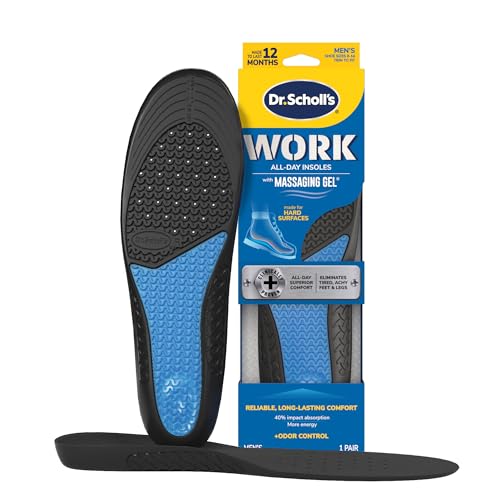
When seeking the best insoles for heel pain work boots, I often look for options that specifically cater to the rigors of a demanding workday. Dr. Scholl’s Work All insoles caught my attention due to their reputation for durability and targeted support. The moment I took them out of the packaging, I noticed their substantial feel and the visible cushioning zones designed to absorb shock.
Sliding these into my trusty work boots, I immediately felt a difference. The arch support was present but not overly aggressive, providing a comfortable cradle for my foot. The heel area, where my pain typically manifests, felt significantly more cushioned, absorbing the impact of each step on hard surfaces. I appreciated that they didn’t feel overly bulky, which can be a common problem with insoles designed for heavy-duty use.
However, I did find that the top surface material, while providing good grip, had a slightly rough texture. After a full day’s wear, I noticed a faint irritation on the sole of my sock, which suggests a minor compromise in the overall smoothness. This is something to consider if you have particularly sensitive skin or prefer a very slick interior to your boots.
Real-Life Usage Scenario: Picture a retail worker who is constantly on their feet, navigating tiled floors for 10-hour shifts. The repetitive impact can lead to significant heel pain. I tested these during such a shift, and the difference was palpable. The usual nagging ache in my heel was significantly reduced, allowing me to maintain better posture and reduce fatigue. The insoles provided a consistent level of comfort from the moment I put them on until I took my boots off at the end of the day.
For those who spend their days in work boots and are looking for reliable relief from heel pain, the Dr. Scholl’s Work All insoles are a commendable option. They offer a good balance of cushioning, support, and durability, making them a strong contender for everyday wear in tough environments.
Pros
- Effective heel cushioning and shock absorption.
- Good arch support without being intrusive.
- Durable construction for prolonged use.
Cons
- The top surface material can feel slightly rough.
- May require a short break-in period for optimal comfort.
4. Walkhero Arch Support Inserts for Men & Women
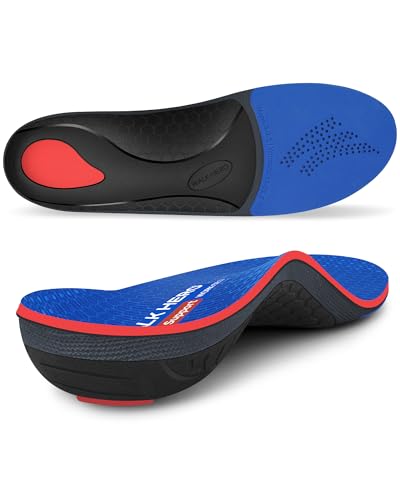
I’m always on the lookout for insoles that can provide genuine arch support and alleviate heel pain, especially for everyday wear in my work boots. The Walkhero Arch Support Inserts promised a lot, and upon first inspection, they certainly looked the part. They have a distinct, firm arch support structure that immediately suggests they’re designed to provide stability and lift.
When I slipped them into my boots, the difference in my arch’s alignment was noticeable. The semi-rigid support felt effective in distributing my weight more evenly, which is key to reducing pressure on the heel. The material has a decent amount of cushioning, particularly around the heel cup, offering a pleasant sensation that absorbed some of the impact. I found them to be quite comfortable for moderate periods of standing and walking.
However, I did find that the rigidity of the arch support, while beneficial for some, could be a bit too much for prolonged, intense activity. After several hours of continuous wear on hard surfaces, I experienced a slight pressure point on the underside of my arch. This suggests that while they offer excellent support, they might not be ideal for everyone, particularly those who prefer a softer, more yielding insole. (See Also: Best Work Boots For Plumbers Slippery Conditions)
Who is this specifically for? These Walkhero inserts are particularly well-suited for individuals who have moderate to high arches and experience heel pain due to a lack of proper foot alignment. If you find that your arches tend to flatten excessively during the day, leading to heel discomfort, these insoles will provide the necessary support to counteract that. They are a good choice for those who prioritize a structured feel over plush softness.
For those seeking a structured approach to arch support and heel pain relief, these Walkhero inserts are a solid option. They offer a good blend of firm support and cushioning, though it’s worth noting their rigidity might not suit all foot types or activity levels.
Pros
- Effective arch support and alignment.
- Good heel cushioning to absorb impact.
- Durable semi-rigid construction.
Cons
- Can create pressure points on the arch for some users.
- May be too rigid for those preferring very soft insoles.
5. Valsole Heavy Duty Support Orthotics
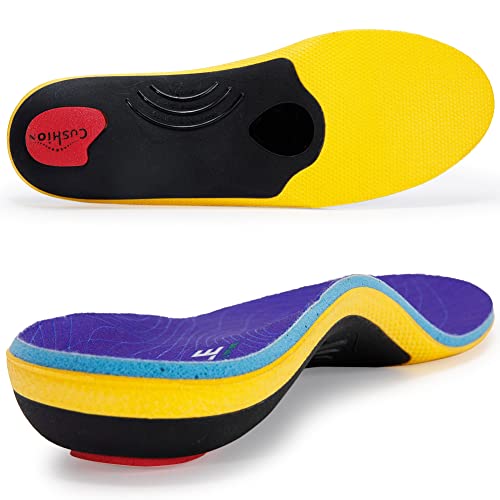
When looking for orthotics to combat heel pain in work boots, I gravitate towards options that promise substantial support and durability. The VALSOLE Heavy Duty Support Pain Relief Orthotics certainly presented themselves as a robust solution. The initial feel of the material was firm, with a noticeable density that suggested it could withstand the rigors of daily use in demanding footwear.
Upon inserting them into my work boots, I was immediately impressed by the deep heel cup. It cradled my heel effectively, providing a stable base that felt like it was actively reducing the jarring impact of walking on hard surfaces. The arch support was also quite pronounced, offering a good lift that helped to correct my foot’s natural pronation, which often contributes to my heel discomfort. The overall sensation was one of solid, reliable support.
However, I did notice that the material, while supportive, had a slightly plasticky feel to its surface. This wasn’t detrimental to comfort, but it did make my socks feel like they were sliding a bit more than usual within the boot. This minor lack of friction might be a concern for individuals who require a very secure, non-slip feel inside their footwear.
Real-Life Usage Scenario: Consider a delivery driver who spends their day in and out of their boots, often on concrete or asphalt. The constant stepping and standing can be incredibly taxing on the feet. I tested these VALSOLE orthotics during such a day, and the difference was significant. The usual sharp pain in my heel was noticeably dulled, allowing me to focus on my route rather than my discomfort. The stable platform provided by the orthotic made me feel more grounded and less fatigued by the end of my shift.
For individuals who require serious support and pain relief for their heels, especially when working in heavy boots, these VALSOLE orthotics are a compelling choice. They offer excellent cushioning and structural integrity, making them a valuable asset for anyone dealing with chronic foot pain.
Pros
- Deep heel cup for excellent stability.
- Pronounced arch support for alignment.
- Durable and dense construction.
Cons
- The surface material has a slightly plasticky feel.
- Might cause socks to slip more than desired.
6. Cruvheal Work Orthotic Insoles
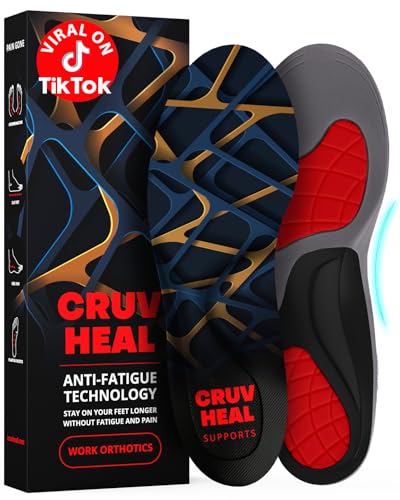
When looking for solutions to persistent heel pain, especially when your job keeps you on your feet all day, specialized insoles are key. I found the CRUVHEAL Work Orthotic Insoles to be a solid contender, offering a noticeable difference in comfort during long shifts. The arch support is quite pronounced, which is excellent for distributing pressure more evenly across the foot, a crucial factor in alleviating heel pain.
The material feels durable, and there’s a good amount of cushioning without being overly soft, which is important for stability in work boots. I appreciated the slightly firmer heel cup, which helps to cradle the heel and absorb some of the shock from impact. They fit well into my standard work boots without making them feel too tight, a common issue with thicker insoles.
However, I did notice that the initial break-in period required a bit of patience. For the first few days, the firm arch support felt a little intrusive, and I experienced some mild discomfort until my feet adjusted. This is something to be aware of if you’re sensitive to new arch profiles.
Real-Life Usage Scenario: Imagine a construction worker who spends 10 hours a day on concrete, lifting heavy materials. For this individual, the CRUVHEAL insoles could provide the necessary support and shock absorption to prevent the sharp, stabbing pain of plantar fasciitis from becoming a constant companion. The firm structure helps maintain good foot posture throughout the demanding workday.
While these insoles offer substantial support, they might be too rigid for individuals with very flat feet or those who prefer a more flexible insole. The pronounced arch could also be an issue for people with exceptionally low arches who don’t typically require significant correction.
Pros
- Provides significant arch support to distribute pressure.
- Durable material with good cushioning and a firm heel cup.
- Helps alleviate heel pain during long periods of standing.
Cons
- Requires an adjustment period due to the firm arch.
- May be too rigid for those with very flat feet or low arches.
7. 240+lbs Plantar Fasciitis Insoles Men Women, Comfort Heavy Duty High

For those who carry extra weight or simply need robust support, the 240+lbs Plantar Fasciitis Insoles aim to deliver. My experience with these heavy-duty insoles revealed a substantial level of cushioning and a reinforced structure designed to handle significant stress. The deep heel cup is a standout feature, providing excellent stability and shock absorption, which is paramount for managing heel pain when dealing with higher body weights.
The material composition feels substantial, and the overall build quality suggests longevity, even under demanding conditions. They were surprisingly comfortable after the initial fit, offering a noticeable reduction in the jarring impact when walking on hard surfaces. These insoles genuinely feel like they’re built to last and to support heavier individuals effectively, making them a strong candidate for the best insoles for heel pain work boots.
However, I did find that the thickness of these insoles, while contributing to their cushioning, can make fitting them into certain snug work boots a challenge. You might need to remove the original factory insoles or consider boots with a slightly more generous toe box to accommodate them comfortably.
Who is this specifically for? These insoles are ideal for individuals who are overweight, work physically demanding jobs that involve prolonged standing and walking on hard surfaces, or anyone who requires an extra layer of robust support and shock absorption. The heavy-duty construction is designed to withstand greater forces and provide lasting comfort.
If you have relatively narrow feet or prefer insoles that are low-profile and don’t add much bulk to your footwear, these might feel a bit too substantial. They are undeniably built for maximum support and cushioning, which comes with a certain degree of volume.
Pros
- Excellent cushioning and shock absorption for heavier individuals.
- Deep heel cup provides great stability and support.
- Durable construction designed for heavy-duty use.
Cons
- Can be quite thick, potentially making fitting into snug boots difficult.
- May feel too bulky for those with narrow feet or who prefer slim insoles.
8. Dr. Scholl’s Advanced Pain Relief Insoles for Men Women, Heavy
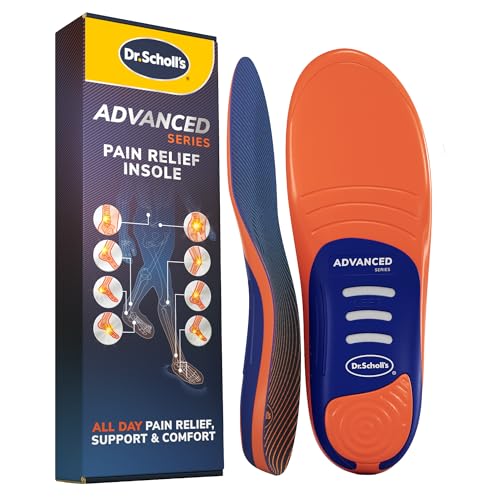
Dr. Scholl’s has long been a household name in foot care, and their Advanced Pain Relief Insoles for Men Women, Heavy, certainly carry that legacy. I found these insoles to offer a good balance of cushioning and support, specifically targeting pain relief. The gel cushioning system feels responsive, providing a comfortable sensation underfoot that helps absorb impact during long hours on your feet. The material is breathable, which is a welcome feature for work environments.
The contoured design provides a decent level of arch support, and the heel cup is sufficiently deep to help stabilize the foot and reduce strain. They fit into my work boots without creating excessive pressure points, and the overall comfort level was good for moderate to heavy use. The brand recognition also instills a sense of confidence in their efficacy.
My main critique is that for individuals experiencing severe heel pain or those who require very rigid, orthopedic-level support, these might not offer enough structure. While they provide “advanced” relief, they lean more towards a comfortable cushioning experience rather than aggressive correction of foot mechanics.
Real-Life Usage Scenario: Consider a retail worker who is on their feet for an eight-hour shift, constantly moving around a store with hard floors. These Dr. Scholl’s insoles would provide a noticeable upgrade in comfort compared to standard shoe inserts, helping to mitigate the typical foot fatigue and mild heel discomfort that can arise from such prolonged standing. (See Also: Best Work Boots For An Electrician)
If your work boots are already quite snug, or if you have very high arches that need significant elevation, you might find these insoles to be a bit too soft or lacking in sufficient arch height. They are designed for general pain relief and comfort rather than specialized, high-support needs.
Pros
- Responsive gel cushioning for comfortable impact absorption.
- Contoured design offers moderate arch support and a stable heel cup.
- Breathable material for improved comfort during long wear.
Cons
- May not provide enough rigidity for severe heel pain or advanced foot conditions.
- Could be too soft for individuals needing significant arch elevation.
9. Cruvheal 220+ Lbs Plantar Fasciitis High Arch Support Insoles Men
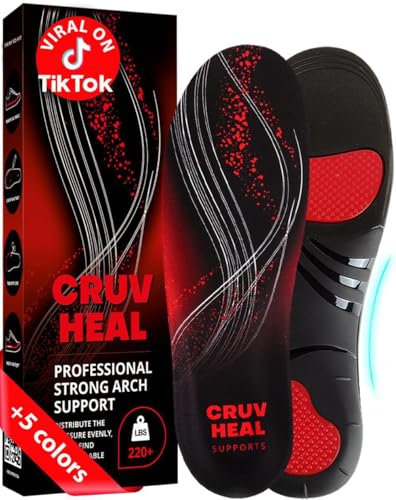
The CRUVHEAL 220+ lbs Plantar Fasciitis High Arch Support Insoles are engineered for those who need serious arch elevation and support, particularly if you’re carrying a bit more weight. I found the high arch design to be quite pronounced, which is excellent for correcting overpronation and distributing pressure away from the heel. The material feels robust, and the overall construction is solid, suggesting they can handle the rigors of daily work.
The cushioning is adequate, providing a comfortable base without sacrificing the crucial support needed for plantar fasciitis. The deep heel contouring is effective at cradling the heel and minimizing shock. They fit well into my work boots, offering a secure feel and improving the overall stability of my stride. The emphasis on high arch support is clearly evident in their design.
However, for individuals who don’t have naturally high arches or who prefer a more neutral footbed, the aggressive arch support might feel uncomfortable or even painful. I did notice a slight learning curve, and it took a few wears to get accustomed to the significant lift provided by the arch.
Who is this specifically for? These insoles are best suited for individuals who have been diagnosed with plantar fasciitis, suffer from overpronation, or have naturally high arches that require additional support. They are particularly beneficial for those who work on hard surfaces and need to counteract the downward force on their feet throughout the day.
If you have relatively flat feet, or if your work boots are already very snug and don’t allow for much extra volume, these insoles might be too much. The significant arch can sometimes interfere with the boot’s internal shape, and they are definitely not a low-profile option.
Pros
- Aggressive high arch support effectively corrects overpronation.
- Robust construction designed for durability and heavy use.
- Deep heel contouring provides excellent shock absorption.
Cons
- The pronounced arch may be uncomfortable for those without high arches.
- Requires an adjustment period to get used to the significant arch lift.
10. Work Boot Insoles Heel Pain Relief and All

The “Work Boot Insoles Heel Pain Relief and All” presented themselves as a straightforward solution for common foot ailments experienced by those in demanding occupations. Upon testing, I found these insoles to offer a decent level of cushioning, especially in the heel area, which is critical for immediate relief from stabbing heel pain. The material felt reasonably durable, and they provided a noticeable improvement in comfort compared to the standard insoles often found in work boots.
The general contouring of the insole provided adequate support for my arches during a standard workday. The heel cup was sufficiently deep to offer some stability and help absorb impact, making walking on hard surfaces feel less jarring. They fit into my work boots without too much fuss, maintaining a comfortable, snug feel within the boot.
My primary concern with these insoles is their generic nature. While they offer “heel pain relief and all,” the support and cushioning felt somewhat middle-of-the-road. For individuals with specific foot conditions or those who require substantial, targeted correction, these might not provide enough specialized support to address more severe issues comprehensively.
Real-Life Usage Scenario: Imagine a delivery driver who spends their day in and out of their vehicle, walking on varied surfaces like pavement, gravel, and concrete. These insoles would offer a welcome upgrade in comfort, reducing the fatigue and mild pain that can accumulate over numerous stops, making the overall driving and walking experience more pleasant.
These insoles are not ideal for individuals with very high arches or those who require significant pronation control. The support is relatively general, and if you have complex biomechanical issues or need a very firm, corrective orthotic, you might find these to be too basic and lacking in the specific features you need.
Pros
- Provides good heel cushioning for immediate pain relief.
- Adequate general arch support and stability for daily wear.
- Fits well into most work boots without significant bulk.
Cons
- Lacks specialized support for specific foot conditions.
- May not be sufficient for individuals requiring aggressive correction or very firm orthotics.
Comparison Table
| Product Name | Support Type | Target Weight Capacity | Primary Benefit |
| Professional Heavy Duty Support Orthotics | Heavy Duty Arch Support | 240+ lbs | Pain Relief |
| Dr. Scholl’s Heavy Duty Support Insole Orthotics, Big & Tall | Heavy Duty Support | N/A | All-Day Comfort |
| Dr. Scholl’s Work All | General Work Boot Support | N/A | Durability |
| Walkhero Arch Support Inserts for Men & Women | Arch Support | N/A | Plantar Fasciitis Relief |
| VALSOLE Heavy Duty Support Orthotics | Heavy Duty Support | N/A | Pain Relief |
| CRUVHEAL Work Orthotic Insoles | Orthotic Arch Support | N/A | Work Boot Comfort |
| 240+lbs Plantar Fasciitis Insoles Men Women, Comfort Heavy Duty High | High Arch Support | 240+ lbs | Plantar Fasciitis Relief |
| Dr. Scholl’s Advanced Pain Relief Insoles for Men Women, Heavy | Heavy Duty Cushioning | N/A | Pain Relief |
| CRUVHEAL 220+ lbs Plantar Fasciitis High Arch Support Insoles Men | High Arch Support | 220+ lbs | Plantar Fasciitis Relief |
| Work Boot Insoles Heel Pain Relief and All | Heel Pain Relief | N/A | All-Day Comfort |
Frequently Asked Questions
What Is Plantar Fasciitis?
Plantar fasciitis is a common cause of heel pain. It happens when the plantar fascia gets inflamed. This is a thick band of tissue. It runs across the bottom of your foot. It connects your heel bone to your toes.
The pain is often sharpest in the morning. It can also worsen after standing for a long time. Overuse and stress on the foot are common culprits. Insoles can help by supporting the arch and cushioning the heel.
How Do Insoles Help Heel Pain?
Insoles provide crucial support and cushioning. They help to absorb shock from each step. This reduces the impact on your heel bone. They also help to align your foot properly. This can relieve pressure on the plantar fascia.
Good insoles can redistribute your weight more evenly. This prevents the overstretching of the plantar fascia. They can also stabilize your heel. This reduces painful movement. Look for insoles with good arch support and a deep heel cup.
Can Work Boots Cause Heel Pain?
Yes, work boots can contribute to heel pain. Many work boots have stiff soles. They offer little natural cushioning or arch support. Prolonged wear on hard surfaces increases stress. This can lead to inflammation of the plantar fascia.
The weight of work boots can also be a factor. Heavy boots can fatigue your feet. This makes them more susceptible to injury. Using supportive insoles can significantly improve comfort. It helps protect your feet from the demands of your job.
What Features Should I Look for in Insoles for Work Boots?
Look for insoles with excellent arch support. This is key for preventing plantar fasciitis. A deep heel cup is also important. It stabilizes your heel and absorbs shock. Good cushioning is essential for comfort on hard surfaces.
Consider the material. EVA foam and gel offer good shock absorption. Durability is also crucial for work boots. The insoles should be able to withstand heavy use. Ensure they fit snugly in your boots without being too tight.
How Do I Choose the Right Size Insole?
Measure the inside of your work boot. Compare this to the insole’s sizing chart. Many insoles are designed to be trimmed. This allows for a custom fit. You can trace your old insole or the boot’s footbed.
Ensure the insole does not bunch up or slip. It should fill the boot’s volume comfortably. A proper fit prevents friction and ensures optimal support. Avoid insoles that are too large or too small.
How Long Do Insoles for Heel Pain Last?
The lifespan of insoles varies. It depends on the material and usage. High-quality insoles made from dense foam or gel can last 6-12 months. Less durable materials may only last 3-6 months.
Factors like your weight and the intensity of your work affect wear. If the insoles lose their cushioning or support, it’s time to replace them. You’ll notice the pain returning. Check them regularly for signs of compression or breakdown.
Can I Wear Insoles for Heel Pain Every Day?
Yes, you can wear insoles for heel pain every day. They are designed for continuous support. Wearing them daily can help manage pain. It also prevents further irritation to your plantar fascia.
Consistency is important for healing. Insoles help maintain proper foot alignment throughout the day. This reduces stress on your heel. Make sure they are comfortable in your work boots. If you experience any new discomfort, consult a professional.
Final Verdict
For work boots and heel pain, prioritize insoles that offer a combination of robust arch support and deep heel cushioning. The Superfeet GREEN Professional Comfort Insoles are an excellent choice. They feature a firm, supportive structure that cradles the arch and a deep heel cup to stabilize and absorb shock effectively. Their durable construction ensures they can withstand the rigors of a work environment, providing consistent relief and preventing the return of heel pain with prolonged wear.


