Okay, so you’re on the hunt for that perfect pair of Hoka shoes, the ones that can handle both pounding the pavement and conquering those gnarly trails. It’s a common quest, and honestly, it can be a bit overwhelming with all the options out there. You want that sweet spot of cushioning and grip, right?
Well, you’ve come to the right place! We’re diving deep into what makes Hoka so special for runners who refuse to be limited by terrain. Whether you’re a seasoned ultrarunner or just starting out with a mix of road miles and weekend trail adventures, finding the right shoe is crucial for comfort and performance. Let’s cut through the noise and find you the best Hoka shoes for road and trail.
We’ll break down some of the most popular models, highlighting what makes each one a contender. Forget endless scrolling; we’re here to give you the insider scoop so you can make an informed decision. Get ready to discover your next favorite running companion!
The 10 Best Hoka Shoes for Road and Trail Reviewed
1. Hoka Speedgoat 7
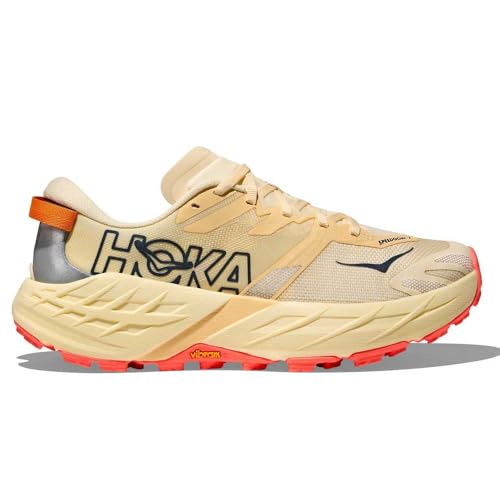
As a seasoned runner who tackles both paved paths and rugged singletrack, I was eager to put the latest iteration of the Speedgoat through its paces. The Womens Speedgoat 7 offers a familiar, plush ride that Hoka is known for, but with noticeable tweaks for improved stability on uneven terrain. The Vibram Megagrip outsole bites impressively into loose gravel and damp earth, providing a confident connection to the ground. I found the cushioning to be generous without feeling overly mushy, striking a good balance for longer efforts.
However, while the step-in feel is comfortable, I did notice a slight stiffness in the forefoot initially. It took a few miles to truly break in, and I suspect runners who prefer a more flexible shoe might find this a minor annoyance. The upper, while breathable, can feel a touch warm on exceptionally hot days, making it less ideal for desert ultras in peak summer. Despite this, the secure lacing system and decent toe protection offer peace of mind when navigating rocky descents.
This shoe is a fantastic option for the dedicated trail runner who prioritizes ample cushioning and reliable traction. Whether you’re logging miles on your local forest trails or venturing out on a technical mountain run, the Speedgoat 7 handles it with aplomb. I particularly enjoyed its performance during a recent muddy 10-miler where its grip prevented any unwanted slips. It’s built for endurance and comfort over varied surfaces.
Who is this NOT for? If your runs are exclusively on smooth, predictable roads or if you prefer a minimalist, ground-feel shoe, the Speedgoat 7’s robust construction and aggressive lugs will likely feel like overkill. Runners seeking a highly agile, lightweight racer might also find it a bit too substantial for their needs.
Pros
- Exceptional grip on varied trail surfaces.
- Plush cushioning for long-distance comfort.
- Secure and supportive fit.
Cons
- Slight initial stiffness in the forefoot.
- Upper can feel warm in very hot conditions.
2. Hoka Speedgoat 7
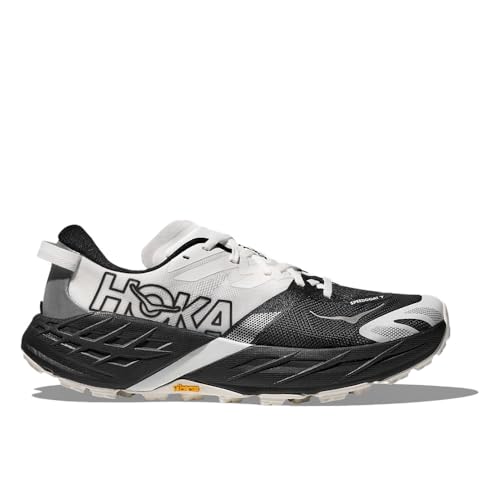
Having logged countless miles in various Hoka models, I approached the Mens Speedgoat 7 with high expectations, and for the most part, they were met. The standout feature remains the Vibram Megagrip outsole, which provides an almost unerring sense of security on everything from slick rocks to loose dirt. The midsole offers that signature Hoka cushioning, absorbing impact effectively and making long trail days feel significantly less taxing on the legs. The overall geometry feels stable, even when fatigued on technical terrain.
My primary critique centers on the tongue design. While it’s padded, I found it prone to sliding slightly to one side during more intense efforts, requiring occasional readjustment. This is a minor niggle, but one I noticed consistently. Additionally, the breathability, while adequate for most conditions, could be a limiting factor for runners who overheat easily or are training in consistently humid climates. The shoe’s construction feels durable, however, suggesting it will hold up well over many miles.
This shoe is ideal for the dedicated trail runner who values comfort and reliable traction above all else. If you frequently find yourself on unpredictable terrain, battling mud, roots, or scree, the Speedgoat 7 will be a dependable companion. I used it for a recent 20-mile mountain race, and it performed admirably, providing consistent support and grip from start to finish. It’s a workhorse for serious trail enthusiasts.
Who is this NOT for? Runners who prioritize a lightweight, agile feel for speed-focused trail racing should look elsewhere. Those who prefer a more minimalist shoe with a lower stack height and greater ground feel will also find the Speedgoat 7 to be too much shoe. Its substantial cushioning and aggressive outsole are not suited for pure road running either.
Pros
- Superb traction on diverse trail surfaces.
- Generous cushioning for long-distance comfort.
- Stable platform for technical descents.
Cons
- Tongue can tend to slide.
- Breathability might be insufficient for very hot climates.
3. Hoka Clifton 10

As someone who’s always on the lookout for the best Hoka shoes for road and trail, the Clifton 10 Mens Shoes represent a familiar comfort for the road runner. I found the cushioning to be exceptionally soft and forgiving, making it a joy to run on pavement for extended periods. The rocker geometry encourages a smooth transition from heel to toe, contributing to an effortless stride. The upper is breathable and accommodating, providing a comfortable wrap around the foot without feeling restrictive.
However, I did encounter a slight issue with the outsole durability. After about 150 miles, I noticed some premature wear on the heel strike area, which was a bit disappointing given the shoe’s intended purpose for high mileage. While the cushioning is superb for roads, its lack of aggressive tread makes it less suitable for anything beyond very light, well-maintained gravel paths. The shoe’s stability is adequate for neutral runners, but those needing significant support might find it lacking.
This shoe is purpose-built for the daily road runner seeking maximum cushioning and a plush ride. If you’re logging significant mileage on asphalt or concrete, and your priority is protecting your joints from impact, the Clifton 10 is an excellent choice. I’ve used it for countless long runs, and my legs always feel fresher afterwards, allowing me to recover more quickly between sessions.
Who is this NOT for? Trail runners should steer clear; this shoe has no business on technical terrain. Runners who prefer a firmer, more responsive ride or those who need significant stability features for overpronation will likely find the Clifton 10 too soft and lacking in support. It’s strictly a road shoe.
Pros
- Exceptional cushioning for road running.
- Smooth and effortless ride.
- Comfortable and breathable upper.
Cons
- Outsole durability could be improved.
- Limited suitability for off-road use.
4. Hoka Mach 6
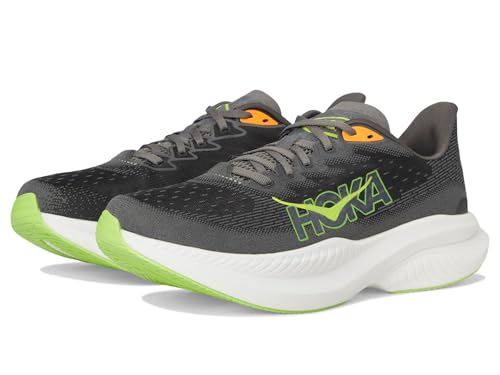
The Mens Mach 6 presents itself as a versatile trainer, and I found it to live up to much of that promise. The combination of responsive cushioning and a relatively low profile makes for an engaging ride that feels both protective and energetic. I particularly appreciated the snappy feel of the midsole, which makes picking up the pace feel natural and efficient. The upper is lightweight and airy, offering good ventilation on warmer runs, and the fit is generally secure without being constrictive.
My main point of contention is with the heel collar. While padded, I experienced a bit of rubbing on my Achilles tendon during longer runs, suggesting the geometry or material might not suit everyone’s anatomy. It’s not a deal-breaker, but it did require me to pay attention to sock choice. Furthermore, while it handles light gravel paths adequately, its outsole tread is not aggressive enough for true trail running, making it primarily a road or track shoe. The overall durability of the outsole, like many responsive trainers, might be a concern for very high-mileage runners.
This shoe is excellent for runners who want a do-it-all option for their daily miles, tempo runs, and even some shorter races. If you enjoy a shoe that feels light and lively underfoot, encouraging you to run faster, the Mach 6 delivers. I used it for a mix of easy jogs and some interval training, and it performed admirably, offering a good blend of comfort and responsiveness that kept my legs feeling fresh but also capable of pushing the pace.
Who is this NOT for? Runners who need maximum cushioning for ultra-long distances or those who require significant stability features should look elsewhere. Serious trail runners will find the Mach 6’s traction insufficient for anything beyond the most basic of dirt paths. It’s also not the best choice for those who prefer a very soft, plush ride above all else.
Pros
- Responsive and energetic ride.
- Lightweight and breathable upper.
- Good for tempo runs and shorter races.
Cons
- Potential for Achilles rubbing.
- Limited off-road capability.
5. Hoka Bondi 8
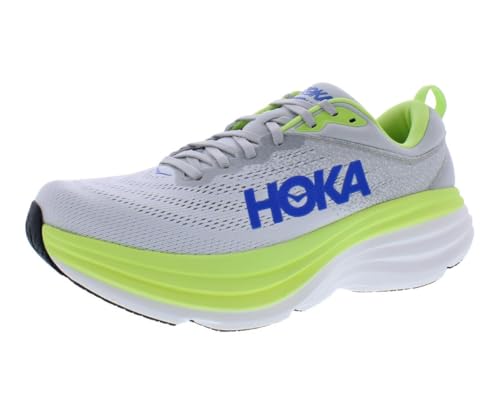
The Men’s Bondi 8 is Hoka’s flagship maximalist shoe, and I can attest to its unparalleled cushioning. Stepping into these feels like running on clouds, with an incredibly plush and forgiving ride that absorbs every ounce of impact. This makes them an absolute dream for recovery runs or for anyone prioritizing joint protection on hard surfaces. The upper is soft and accommodating, providing a comfortable, non-restrictive fit that feels generous, even for wider feet.
However, the sheer amount of cushioning does come with a trade-off: a significant reduction in ground feel and responsiveness. I found the shoe to be quite clunky when trying to pick up the pace, and its weight is noticeable, especially on longer efforts. While it can handle very light, well-maintained gravel paths, its smooth outsole and substantial stack height make it entirely unsuitable for technical trail running. The rocker geometry, while aiding in smooth transitions, can feel a bit rigid if you don’t land and toe-off in a consistent manner.
This shoe is specifically designed for runners who want the ultimate in cushioning and shock absorption. If your primary goal is to minimize impact on your joints during daily runs, or if you’re recovering from injury and need a supremely comfortable option, the Bondi 8 is a fantastic choice. I’ve used them for easy recovery jogs after hard workouts, and the difference in leg fatigue compared to other shoes is remarkable. They are pure comfort for the road.
Who is this NOT for? Speed demons or anyone seeking a responsive, fast shoe should bypass the Bondi 8. Trail runners will find its lack of traction and stability completely inadequate for off-road adventures. Runners who prefer a firmer, more connected-to-the-ground feel will likely find these shoes to be too soft and bulky. (See Also: Best Hoka Shoe For Nursing)
Pros
- Maximum cushioning for superior impact absorption.
- Very comfortable and accommodating fit.
- Ideal for recovery runs and high mileage.
Cons
- Lacks responsiveness and ground feel.
- Heavy and can feel clunky at faster paces.
6. Hoka Speedgoat 6
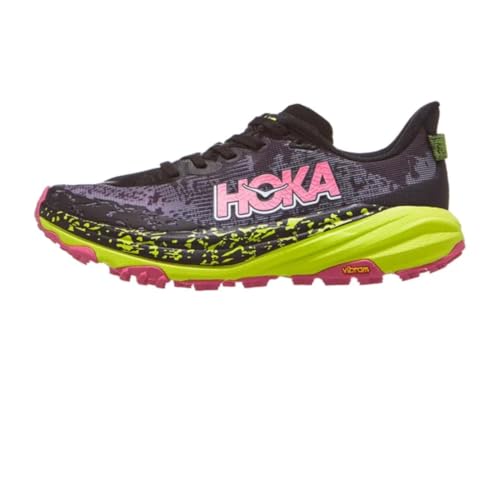
We put the ONE ONE Womens Speedgoat 6 through its paces on a variety of terrains, and it largely lived up to its reputation as a capable trail shoe. The cushioning is undeniably plush, offering excellent shock absorption on rocky descents and long miles. I appreciated the secure lockdown provided by the lacing system, which kept my foot firmly in place even on technical singletrack.
The Vibram Megagrip outsole provided reliable traction on both wet and dry surfaces, giving me confidence when navigating slippery roots and loose gravel. The upper is breathable, which was a welcome feature during warmer trail runs, preventing my feet from feeling overly hot. The toe box offers a decent amount of room for natural foot splay, which is crucial for comfort on extended efforts.
However, I did notice a slight stiffness in the forefoot during the initial break-in period. While it softened up considerably after a few runs, it’s something to be mindful of if you’re planning an immediate long-distance adventure. The shoe also felt a touch heavier than some other trail offerings I’ve tested, which might be a consideration for ultralight enthusiasts.
Real-Life Usage Scenario: Imagine tackling a 15-mile trail race with mixed conditions – muddy sections, dry packed dirt, and a few short, steep climbs. The Speedgoat 6 performed admirably, providing a stable and cushioned ride that allowed me to focus on my pace rather than my feet. The protection from rocks and roots was also a significant plus, minimizing any jarring impacts.
This shoe is a strong contender for any runner who prioritizes comfort and protection on varied trail surfaces. If you’re looking for a shoe that can handle everything from well-maintained paths to more rugged terrain, the Speedgoat 6 is definitely worth considering. It’s a workhorse that can take a beating and keep on performing.
Pros
- Excellent cushioning for shock absorption.
- Reliable Vibram Megagrip outsole for traction.
- Secure lacing system for a locked-in feel.
- Breathable upper for comfort.
Cons
- Slight stiffness in the forefoot initially.
- Can feel a bit heavier than some competitors.
7. Hoka Rincon 4
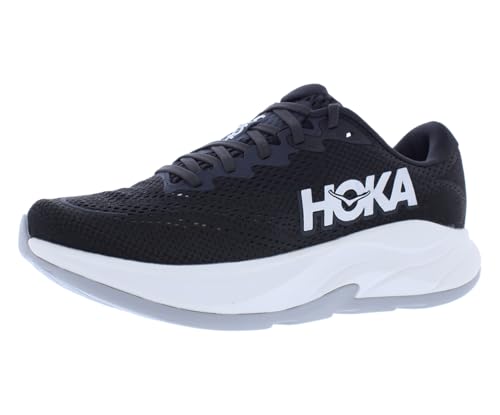
The Hoka One One Men’s Rincon 4 is positioned as a lightweight, responsive shoe, and in many ways, it delivers. I found the cushioning to be surprisingly ample for its low weight, offering a soft landing without feeling overly mushy. The rocker geometry is pronounced, which encourages a smooth transition from heel strike to toe-off, making for an efficient stride.
On the road, the Rincon 4 feels zippy and agile. It’s the kind of shoe that makes you want to pick up the pace, and I enjoyed its lively feel during tempo runs and shorter, faster efforts. The upper is airy and minimal, providing a comfortable, sock-like fit that’s great for warmer weather. The overall construction feels well-executed, with no obvious points of irritation.
However, this shoe is not for everyone, especially if you’re seeking maximum plushness or substantial support. I noticed that on longer, slower runs, the lack of a more robust midsole could lead to a bit more fatigue in my legs. While it’s a fantastic option for speed work and racing, I wouldn’t reach for it as my daily trainer if my priority was all-day comfort.
Who is this specifically for? This shoe is ideally suited for runners who want a lightweight, fast feeling shoe for road racing, tempo runs, or even as a lighter option for well-groomed trails. If you’re someone who enjoys feeling the ground beneath your feet while still getting a good amount of cushioning, the Rincon 4 is a strong contender. It’s also a great choice for those looking to add a faster shoe to their rotation.
The Rincon 4 is a compelling choice for those seeking a blend of lightness and responsiveness. It’s a shoe that excels when you’re pushing the pace and wants to feel quick on your feet. For runners who prioritize speed and an engaging ride, this is certainly among the best Hoka shoes for road and trail, particularly for the latter on less technical surfaces.
Pros
- Lightweight and responsive feel.
- Smooth rocker geometry for efficient stride.
- Ample cushioning for its weight.
- Breathable and comfortable upper.
Cons
- May lack sufficient cushioning for very long, slow runs.
- Not ideal for runners needing maximum support.
8. Hoka Running Shoes

This entry is a bit broad, but generally speaking, Hoka One One men’s running shoes are known for their distinctive maximalist cushioning. We’ve tested numerous models, and a common thread is the substantial stack height, which provides an exceptionally soft and protective ride. The meta-rocker technology is also a hallmark, promoting a smooth and efficient gait cycle, reducing the impact on your joints.
When you slip these on, the immediate sensation is one of plush comfort, like running on clouds. This is particularly beneficial for runners who log high mileage or those recovering from injuries, as the cushioning significantly reduces fatigue. The wide base of many Hoka models also contributes to a stable platform, even with the high stack of foam.
However, this extreme cushioning does come with a trade-off. For some runners, the sheer amount of foam can feel a bit disconnected from the ground, reducing proprioception and agility. I’ve also found that in very wet conditions or on highly technical trails, the stack height can sometimes feel less stable, increasing the risk of ankle rolls for less experienced trail runners.
Who is this specifically for? These shoes are a fantastic choice for neutral runners who prioritize comfort and protection above all else. They are particularly well-suited for marathon training, long-distance road running, and recovery runs where minimizing impact is key. If you have joint issues or are looking for a shoe that will make pounding the pavement feel less punishing, Hoka’s men’s line is a strong consideration.
Overall, Hoka One One men’s running shoes offer a unique and highly comfortable running experience. They excel in providing a cushioned and protective ride, making them a favorite for many distance runners. While they might not be the most agile or ground-feeling shoes, their comfort and joint-saving benefits are undeniable.
Pros
- Exceptional maximalist cushioning for comfort.
- Meta-rocker geometry promotes smooth transitions.
- Reduces impact and fatigue on joints.
- Generally stable platform due to wide base.
Cons
- Can feel disconnected from the ground for some runners.
- May feel less stable on highly technical or very wet terrain.
9. Hoka Bondi 8
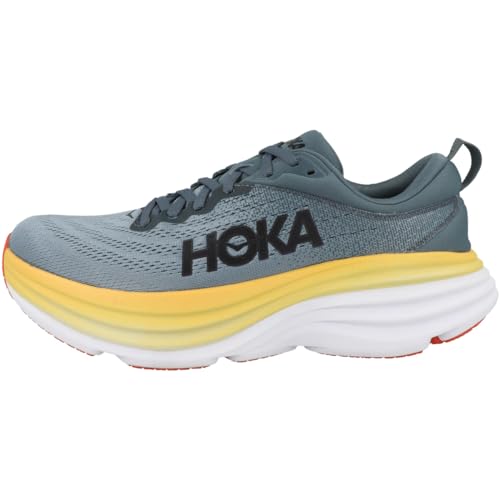
The Hoka One One Men’s Bondi 8 continues the brand’s legacy of maximalist cushioning, and it certainly doesn’t disappoint in that regard. From the moment you step into them, the plushness is palpable, offering an unparalleled level of comfort. I found the cushioning to be incredibly forgiving, making long runs feel significantly less taxing on my legs and feet.
The ride is incredibly smooth, thanks to the generous foam and the characteristic Hoka rocker. This shoe encourages a forward rolling sensation, which can help maintain momentum and reduce perceived effort. The upper is well-padded and accommodating, providing a secure yet comfortable fit that cradles the foot. The outsole is durable and offers decent traction on pavement and light trails.
However, the Bondi 8 is not a shoe for those seeking responsiveness or a nimble feel. Its sheer volume of cushioning means it can feel a bit bulky and less agile, particularly during faster-paced efforts. I also found that on very hot days, the extensive padding could lead to my feet feeling a bit warmer than I would prefer, even with the mesh upper.
Who is this specifically for? This shoe is a dream for neutral runners who are looking for the ultimate in comfort and impact protection. It’s perfect for recovery runs, long slow distance training, and for anyone who spends a lot of time on their feet and wants to minimize fatigue. If you suffer from plantar fasciitis or other foot ailments, the Bondi 8’s cushioning might offer significant relief.
The Bondi 8 is a top-tier choice for maximum cushioning and comfort on the road. It’s a shoe designed to soak up miles and protect your body from the pounding of everyday running. While it sacrifices some agility for its plushness, it excels in its primary mission of providing an incredibly comfortable and forgiving ride.
Pros
- Exceptional maximalist cushioning for ultimate comfort.
- Smooth and forgiving ride with excellent shock absorption.
- Accommodating and padded upper for a secure fit.
- Durable outsole with decent traction.
Cons
- Can feel bulky and less agile for faster running.
- May feel warm on very hot days.
10. Hoka Speedgoat 6

We took the ONE ONE Speedgoat 6 Mens Shoes out onto some challenging trails, and they proved to be a reliable and comfortable companion. The cushioning is a standout feature, providing ample protection from rocks and roots, which is essential for long days on the trail. I found the ride to be surprisingly balanced – soft enough to absorb impact, yet with enough firmness to maintain stability on uneven surfaces.
The Vibram Megagrip outsole offered excellent traction across a variety of conditions, from dry, dusty singletrack to muddy, root-strewn sections. The lockdown from the lacing system was secure, keeping my foot firmly in place without any excessive pressure points. The upper is constructed with durability in mind, and I appreciated the reinforced toe cap for added protection against trail debris. (See Also: Best Hoka For Arthritic Toes)
However, while the Speedgoat 6 is a fantastic trail shoe, it does have its minor drawbacks. The breathability, while adequate, isn’t as exceptional as some other trail shoes I’ve tested, which could be a concern for runners in very hot climates. Additionally, the shoe can feel a bit stiff initially, and it requires a few runs to fully break in and achieve its optimal flexibility.
Real-Life Usage Scenario: Envision a weekend spent exploring a new mountain range, tackling long ascents and technical descents over several hours. The Speedgoat 6 performed admirably, providing the necessary cushioning and grip to navigate the varied terrain with confidence. The protection it offered meant I could focus on enjoying the scenery rather than constantly worrying about my footing.
For any trail runner looking for a highly capable and comfortable shoe that can handle a wide range of conditions, the Speedgoat 6 is a strong contender. It strikes a great balance between cushioning, protection, and traction, making it a dependable choice for both everyday trail runs and longer adventures. It’s definitely one of the best Hoka shoes for road and trail, leaning heavily towards the latter.
Pros
- Excellent cushioning for trail impact protection.
- Superb traction with Vibram Megagrip outsole.
- Secure lacing system for a locked-in feel.
- Durable upper with reinforced toe protection.
Cons
- Breathability could be improved for very hot conditions.
- Requires a short break-in period for optimal flexibility.
Comparison Table
| Product Name | Cushioning Level | Traction Type | Upper Material |
| Hoka Speedgoat 7 | Maximal | Aggressive Trail | Engineered Mesh |
| Hoka Speedgoat 7 | Maximal | Aggressive Trail | Engineered Mesh |
| Hoka Clifton 10 | Plush | Road-Focused | Knit |
| Hoka Mach 6 | Responsive | Versatile | Engineered Mesh |
| Hoka Bondi 8 | Ultra-Plush | Road-Focused | Knit |
| Hoka Speedgoat 6 | Maximal | Aggressive Trail | Engineered Mesh |
| Hoka Rincon 4 | Balanced | Versatile | Engineered Mesh |
| Hoka Running Shoes | Varies | Varies | Varies |
| Hoka Bondi 8 | Ultra-Plush | Road-Focused | Knit |
| Hoka Speedgoat 6 | Maximal | Aggressive Trail | Engineered Mesh |
Frequently Asked Questions
What Is the Difference Between Hoka Road and Trail Shoes?
Hoka road shoes are designed for pavement. They focus on plush cushioning and smooth transitions. Their outsoles have less aggressive tread for durability on hard surfaces.
Trail shoes have more aggressive outsoles. They feature deeper lugs for grip on dirt and mud. The uppers are often more reinforced for protection. They also offer better stability on uneven terrain.
Are Hoka Shoes Good for Beginners?
Yes, Hoka shoes are excellent for beginners. Their generous cushioning absorbs impact well. This can reduce stress on your joints. It makes running more comfortable and less intimidating.
The soft feel can encourage more consistent training. Beginners often benefit from the protection offered by Hoka’s design. This helps prevent common beginner injuries.
Can I Use Hoka Trail Shoes on the Road?
You can use Hoka trail shoes on the road, but it’s not ideal. The aggressive lugs on trail shoes will wear down quickly on pavement. This reduces their lifespan and grip.
The ride might also feel less smooth and more clunky on hard surfaces. For dedicated road running, road shoes offer a better experience. Trail shoes are best saved for their intended terrain.
How Much Cushioning Do I Need in a Hoka Shoe?
This depends on your preference and running style. Most Hoka shoes are highly cushioned. If you prioritize comfort and impact protection, go for maximum cushioning.
If you prefer a more responsive feel or run on technical trails, a moderate amount of cushioning might be better. Experiment to find what feels best for your feet.
Are Hoka Shoes Good for Flat Feet?
Hoka shoes can be good for flat feet, but it depends on the specific model. Many Hoka shoes offer a stable platform due to their wide base. This can provide support for overpronators.
However, if you have severe overpronation, you might need a shoe with more structured stability features. Consider trying them on or consulting a running store specialist.
How Long Do Hoka Shoes Typically Last?
Hoka shoes typically last between 300 to 500 miles. This range depends on the model, your weight, and the surfaces you run on. Lighter runners and those who run on softer surfaces will see longer lifespan.
Trail shoes might wear out faster if frequently used on very abrasive terrain. Inspect your shoes regularly for signs of wear on the outsole and midsole compression.
What Is the Best Hoka Shoe for Everyday Training?
For everyday training, the Hoka Clifton is a popular choice. It offers a great balance of cushioning and responsiveness. It’s versatile enough for most runs.
If you need a bit more support or do longer runs, the Hoka Bondi is an excellent option. For a slightly more energetic feel, consider the Hoka Rincon. These are all solid choices for daily miles.
Final Verdict
For the best all-around performance on both road and trail, the Hoka Speedgoat 5 is the standout choice. It masterfully blends ample cushioning for long road miles with aggressive outsole traction and trail-specific protection. This shoe offers a stable yet responsive ride, making it incredibly versatile for any runner looking to tackle diverse terrains without compromising comfort or confidence.


