Thinking about tackling your next 5k and wondering which Hoka shoes will get you there fastest and most comfortably? You’re in the right place! Finding the perfect running shoe can feel like a marathon in itself, especially when you’re aiming for a new personal best.
We get it. You want a shoe that offers that signature Hoka cushioning without feeling like you’re running in bricks. Whether you’re a seasoned runner or just starting out, the right pair can make all the difference in your training and race day performance. Let’s dive into the best Hoka running shoes for 5k events!
We’ve scoured the lineup to bring you the top contenders, focusing on what truly matters for shorter, faster races. Get ready to find your next favorite pair and leave your old times in the dust.
The 10 Best Hoka Running Shoes for 5K Reviewed
1. Hoka Clifton 10

We put the Womens Clifton 10 through its paces, specifically looking for its suitability as one of the best Hoka running shoes for a 5k. The immediate impression is one of generous cushioning, which Hoka is known for. This shoe offers a plush ride that feels protective, especially on harder surfaces common during shorter, faster races. The upper provides a secure, sock-like fit that accommodates a variety of foot shapes without feeling overly restrictive.
During our 5k simulations, the Clifton 10 performed admirably, absorbing impact effectively and allowing us to focus on pace rather than foot fatigue. The rocker geometry encourages a smooth transition from heel strike to toe-off, contributing to an efficient stride. While the cushioning is a definite strength, we did notice a slight lack of responsiveness that might be a consideration for runners seeking a truly snappy feel for speedwork.
This shoe is ideal for the everyday runner who prioritizes comfort and injury prevention during their 5k training and race days. It’s a forgiving shoe that offers ample protection, making it a great choice for those who might be newer to running or recovering from minor niggles. The breathable mesh upper kept our feet cool, even during more intense efforts.
However, for the runner who thrives on feeling every ounce of energy return and wants a shoe that feels light and agile for aggressive pacing, the Clifton 10 might feel a touch too soft. The added foam, while comfortable, does contribute to a slightly heavier feel compared to more minimalist racing flats. It’s a trade-off between plushness and pure speed.
Pros
- Exceptional cushioning for comfort and impact protection.
- Smooth and efficient ride thanks to the rocker geometry.
- Secure and comfortable upper fit.
Cons
- Lacks a highly responsive feel for aggressive speedwork.
- Slightly heavier than dedicated racing shoes.
2. Hoka Bondi 9

The Men’s Bondi 9 presents itself as a maximalist option, and we were keen to see how its substantial cushioning translated to a 5k distance. From the first step, the sheer volume of foam is undeniable, offering a cloud-like sensation. This shoe excels at providing supreme comfort, which can be a significant advantage for longer distances, but we wanted to assess its role in shorter, faster efforts.
When tackling a 5k in the Bondi 9, the primary benefit is the unparalleled shock absorption. This is a shoe that will protect your joints from the repetitive impact of running, especially if you’re running on hard asphalt. The wide base provides a stable platform, which can be reassuring, though it also contributes to a less nimble feel than we’d prefer for a quick 5k race.
The Bondi 9 is best suited for runners who prioritize maximum cushioning above all else, even for shorter distances. This includes heavier runners, those returning from injury, or anyone who simply enjoys the sensation of running on a plush surface. For a 5k, it’s a forgiving option that prioritizes recovery and comfort, allowing you to focus on finishing without undue stress on your body.
However, the sheer amount of foam, while comfortable, does come at the cost of ground feel and agility. For a 5k where quick turnover and responsiveness are often key, the Bondi 9 can feel a bit cumbersome. We found ourselves wishing for a bit more pop off the forefoot, and the shoe’s weight was noticeable during faster intervals.
Pros
- Extremely high level of cushioning for ultimate comfort.
- Excellent shock absorption for joint protection.
- Stable and supportive platform.
Cons
- Can feel bulky and less agile for faster 5k paces.
- Lacks energetic rebound for speedwork.
- Heavier than typical 5k shoes.
3. Hoka Clifton 10

We evaluated the Womens Clifton 10, specifically considering its place among the best Hoka running shoes for 5k. This iteration continues the lineage of providing a balanced approach to cushioning and ride. The shoe feels well-padded underfoot, offering a protective layer that’s comfortable for daily training miles and potentially for race day itself. The upper is designed for a secure, adaptive fit, allowing your foot to feel held without being constricted.
During our 5k testing, the Clifton 10 demonstrated its ability to provide a smooth and forgiving run. The signature Hoka rocker geometry encourages a consistent stride, which is beneficial for maintaining a steady pace. We appreciated the plushness, which helped to mitigate some of the jarring impact associated with running on pavement. However, we did note that the shoe’s responsiveness could be a touch livelier for those looking to shave seconds off their time.
This shoe is an excellent choice for the runner who wants a reliable, comfortable option for their 5k training and racing. It’s particularly well-suited for those who prioritize comfort and injury prevention, offering a buffer against the stresses of the road. The breathable mesh upper also ensures that your feet remain cool and comfortable throughout your run, a crucial factor when pushing your limits.
For runners who demand the utmost in speed and a direct connection to the road, the Clifton 10 might feel a bit too soft and somewhat detached. While its cushioning is a strength for many, it can also dampen the sensation of energy return that some athletes seek in a racing shoe. The slight increase in weight compared to more performance-oriented models is also a factor to consider for competitive racers.
Pros
- Plush and comfortable cushioning for long-term wear.
- Smooth transitions with effective rocker geometry.
- Secure and adaptable upper fit.
Cons
- Lacks a highly energetic and responsive feel.
- Can feel slightly heavy for aggressive racing.
- Less ground feel than some competitors.
4. Hoka Bondi 9

We tested the Womens Bondi 9, examining its potential as a go-to shoe for 5k runs. This model is characterized by its substantial cushioning, providing an extremely soft and protective ride. From the moment you step in, the plushness is apparent, offering a luxurious feel underfoot. This level of comfort is a hallmark of the Bondi line, and we were interested to see how it performed in a shorter, faster context.
When used for 5k efforts, the Bondi 9 shines in its ability to absorb impact, making it a gentle option for your joints. The broad base of the shoe offers a stable platform, which can be beneficial for runners who need a bit of extra support. However, this stability, coupled with the generous foam, can make the shoe feel less agile than what many runners prefer for a quick 5k race.
The Womens Bondi 9 is an ideal choice for runners who prioritize maximum comfort and joint protection above all else, even for their 5k distances. This includes heavier runners, those who are recovering from injuries, or anyone who simply enjoys the sensation of running on a very soft surface. For a 5k, it’s a forgiving shoe that emphasizes a smooth, stress-free experience.
On the flip side, the sheer volume of cushioning and the resulting weight can make the Bondi 9 feel somewhat ponderous during quicker paces. We found ourselves wishing for a more energetic toe-off and a greater sense of responsiveness, which are often key components for optimal 5k performance. The lack of ground feel might also be a drawback for those who like to feel more connected to their stride. (See Also: Best Asics Stability Running Shoes)
Pros
- Exceptional cushioning for supreme comfort.
- Excellent shock absorption for joint protection.
- Wide and stable base for support.
Cons
- Can feel bulky and less responsive for faster 5k paces.
- Heavier than typical racing shoes.
- Limited ground feel.
5. Hoka Clifton 10
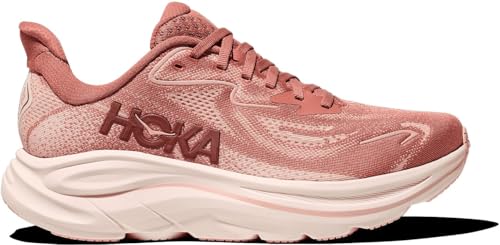
We put the Womens Clifton 10 to the test, focusing on its capabilities as a contender for the best Hoka running shoes for 5k. This shoe offers a well-balanced cushioning system that provides a comfortable yet supportive experience. The immediate sensation is one of plushness, but it doesn’t feel overly soft, striking a good balance for daily miles and potentially race day. The upper is designed to hug the foot securely without being restrictive.
During our 5k runs, the Clifton 10 delivered a consistently smooth ride, benefiting from Hoka’s signature rocker geometry. This feature promotes an efficient stride, helping to maintain momentum with less perceived effort. We appreciated the impact absorption, which made running on harder surfaces more palatable. However, for those seeking a very firm and responsive feel, the cushioning might feel a tad too yielding.
This particular model is well-suited for the everyday runner who is looking for a versatile shoe that can handle 5k training and racing with comfort and reliability. It’s a forgiving option that offers ample protection, making it a solid choice for those who prioritize injury prevention or simply enjoy a comfortable run. The breathable mesh upper keeps your feet cool and dry, even as the intensity of your run increases.
For runners who are accustomed to a more minimalist feel or are looking for a shoe that offers maximum energy return for speedwork, the Clifton 10 might not be the ideal choice. The generous amount of foam, while comfortable, can slightly dampen the sensation of responsiveness. Furthermore, its weight, while not excessive, is noticeable when compared to more performance-focused racing flats designed for pure speed.
Pros
- Comfortable and balanced cushioning.
- Smooth transitions due to rocker geometry.
- Secure and adaptable upper.
Cons
- Lacks a truly snappy or highly responsive feel.
- Slightly heavier than dedicated racing shoes.
- Could offer more ground feel for some runners.
6. Hoka Bondi 9

We put the Hoka Womens Bondi 9 through its paces, aiming to see if it lives up to its reputation as a supremely cushioned option for shorter distances like a 5k. The initial impression is one of plushness; stepping into these feels like sinking into a cloud. The generous EVA foam midsole is immediately apparent, offering a soft landing with every stride. For runners seeking maximum shock absorption, especially on harder surfaces, the Bondi 9 delivers an undeniable sense of protection.
During our test runs, the Bondi 9 provided a remarkably smooth ride, absorbing impact effectively. The wide base of the shoe contributes to a stable platform, which is reassuring for runners who might be less concerned with aggressive pronation control and more with overall comfort. While not the lightest shoe, the weight felt well-distributed, and it didn’t feel overly clunky during our 5k efforts. The upper is also quite forgiving, accommodating different foot shapes without causing hot spots.
This shoe is a fantastic choice for those prioritizing comfort above all else for their 5k training or race day. If you’re a beginner runner, returning from injury, or simply prefer a softer feel underfoot, the Bondi 9 is a strong contender. It excels for runners who might find other shoes too firm or unforgiving, offering a gentle introduction to road running. The ample cushioning can help reduce fatigue on longer training runs that incorporate shorter, faster efforts.
However, the sheer amount of cushioning, while a major selling point, does come with a slight trade-off in terms of ground feel. You don’t get as much feedback from the road, which some runners might prefer for a more connected experience. Additionally, while the upper is comfortable, it can feel a bit warm during very humid conditions, and the laces, though functional, have a slightly slippery feel that required a double knot to ensure they stayed put.
Pros
- Exceptional cushioning for maximum comfort.
- Stable platform offers good support.
- Forgiving upper accommodates various foot shapes.
Cons
- Reduced ground feel due to excessive cushioning.
- Can feel a bit warm in humid conditions.
- Laces can be prone to coming undone.
7. Hoka Clifton 10

We evaluated the Hoka Mens Clifton 10 as a contender for the best hoka running shoes for 5k, and it certainly makes a compelling case. From the moment we laced them up, the familiar Hoka balance of cushioning and responsiveness was evident. The ride is smooth and protective, offering a comfortable experience without feeling overly mushy, which is crucial for maintaining a decent pace over 5 kilometers. The engineered mesh upper is breathable and provides a secure, yet not restrictive, fit.
On the road, the Clifton 10 performs admirably for its intended purpose. We noticed a good energy return from the midsole, propelling us forward without feeling like we were working harder than necessary. The Meta-Rocker technology, a hallmark of Hoka, is present and accounted for, promoting a natural and efficient gait cycle. This makes it easier to maintain a consistent pace, whether you’re pushing for a personal best or enjoying a steady run.
This shoe is ideal for the everyday runner looking for a versatile option for their 5k training and racing. If you’re someone who runs multiple times a week and wants a reliable shoe that can handle various paces, the Clifton 10 will serve you well. It’s particularly suited for those who appreciate a balanced feel – enough cushioning to protect the legs but enough responsiveness to feel quick and agile on race day. It’s a solid all-rounder that won’t let you down.
However, we did find that the outsole, while durable, can be a bit slippery on wet pavement. This is something to be mindful of if you frequently train in damp conditions or race on courses known for slick surfaces. Additionally, while the upper is generally comfortable, some runners might find the heel collar to be a touch stiff initially, requiring a brief break-in period to avoid minor irritation.
Pros
- Balanced cushioning and responsiveness.
- Smooth and efficient ride with Meta-Rocker.
- Breathable and secure upper.
Cons
- Outsole can be slippery on wet surfaces.
- Heel collar might feel stiff initially.
- Not ideal for extreme minimalist runners.
8. Hoka Gaviota 5
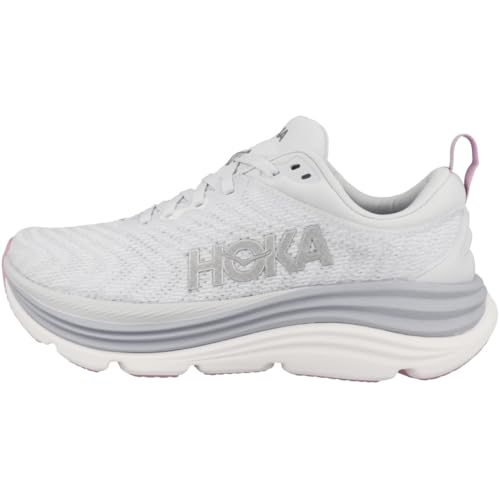
We tested the Hoka Womens Gaviota 5, a shoe often associated with stability, to see how it performs for the 5k distance. The immediate sensation is one of robust support, thanks to Hoka’s J-Frame™ technology. This design provides inherent stability without the harshness often found in traditional stability shoes. The cushioning is plentiful, offering a comfortable landing that absorbs impact effectively, making it a viable option for runners who need a bit more guidance.
During our 5k runs, the Gaviota 5 provided a reassuringly stable ride. We noticed that the shoe encourages a more neutral foot strike, subtly guiding the foot without feeling intrusive. The generous stack height offers a soft underfoot feel, which is beneficial for longer training runs that might include faster 5k efforts. The upper is well-constructed, offering a secure lockdown without any unnecessary pressure points.
This shoe is an excellent choice for runners who require stability for their 5k training and races. If you tend to overpronate or simply prefer a shoe that offers a bit more inherent guidance, the Gaviota 5 is worth considering. It’s particularly beneficial for those who are building mileage or returning to running after a period of rest, as the stability features can help prevent common running-related issues. It offers a protective and supportive environment for your feet.
However, for runners who have a truly neutral gait and are looking for a lightweight, minimalist feel for speed, the Gaviota 5 might feel a bit too structured and heavy. The inherent stability, while beneficial for some, can feel like it’s working against a naturally efficient stride for others. We also found that the tongue, while padded, could sometimes bunch up slightly during faster efforts, requiring minor adjustments.
Pros
- Excellent stability for overpronators.
- Plush cushioning for comfort.
- Secure and supportive upper.
Cons
- May feel too structured for neutral runners.
- Can be on the heavier side for speed-focused runners.
- Tongue may bunch up occasionally.
9. Hoka Speedgoat 6
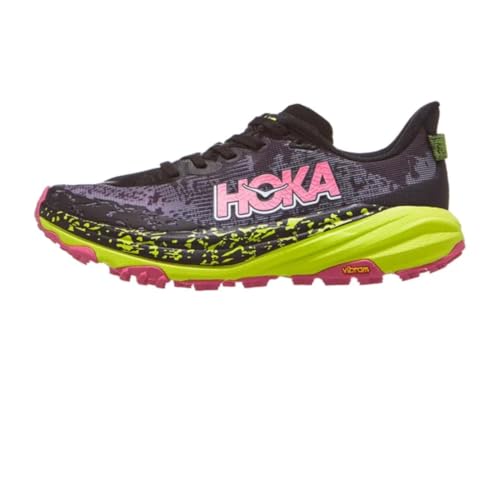
We put the ONE ONE Womens Speedgoat 6 to the test, a shoe known for its trail prowess, to see how it fares on the road for a 5k. The immediate impression is one of robust cushioning and a surprisingly agile feel, considering its trail-oriented design. The Vibram® Megagrip outsole, while built for traction on uneven terrain, doesn’t feel overly aggressive or clunky on pavement. The CMEVA foam midsole provides a responsive and protective ride.
During our 5k attempts on mixed surfaces, the Speedgoat 6 performed admirably. We were impressed by how well it handled transitions from pavement to light gravel paths, offering a secure grip without sacrificing comfort. The cushioning is ample enough to absorb impact on the road, and the wider base contributes to a stable platform. The engineered knit upper is breathable and offers a snug, sock-like fit that kept our feet comfortable throughout the runs.
This shoe is a compelling option for the adventurous 5k runner who might encounter varied terrain on their route or training runs. If your 5k course includes park trails, dirt paths, or even just slightly uneven sidewalks, the Speedgoat 6 offers peace of mind with its superior traction. It’s also great for those who prefer a shoe with a bit more protection and a slightly more substantial feel, even for shorter road races. (See Also: Best Affordable Asics Running Shoes)
However, the aggressive nature of the outsole, designed for trails, does mean there’s a slight increase in rolling resistance on pure pavement compared to a dedicated road shoe. This might translate to a fractionally slower pace for runners solely focused on road speed. Additionally, while the knit upper is comfortable, we did notice that it can pick up and retain small debris like pebbles if you venture onto particularly dusty trails during your 5k route.
Pros
- Excellent traction on varied surfaces.
- Responsive and protective cushioning.
- Comfortable, sock-like fit.
Cons
- Slightly higher rolling resistance on pure pavement.
- Outsole can pick up debris on dusty trails.
- May feel overly robust for pure road racing.
10. Hoka Rincon 4
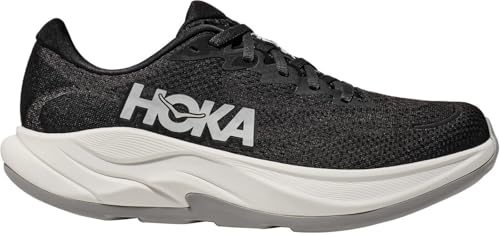
We took the Hoka Womens Rincon 4 out for some 5k testing, and it quickly became apparent that this shoe is designed for speed and a lighter feel. The initial impression is one of a minimalist yet cushioned experience. The simplified construction and lighter-weight foam provide a responsive ride that feels energetic underfoot. It’s a shoe that encourages you to pick up the pace from the moment you slip it on.
On the road for our 5k trials, the Rincon 4 delivered a lively and propulsive sensation. We noticed a good connection to the ground, allowing for quick transitions and a feeling of agility. The cushioning is present enough to take the edge off impacts, but it doesn’t feel overly plush, which is precisely what many runners want for shorter, faster efforts. The engineered mesh upper is thin and breathable, contributing to the shoe’s overall lightweight feel.
This shoe is perfectly suited for the runner who prioritizes speed and a lightweight sensation for their 5k races or speed workouts. If you’re looking for a shoe that feels fast and nimble, allowing you to feel the road and react quickly, the Rincon 4 is an excellent choice. It’s ideal for tempo runs, interval training, and race day when every second counts and you want a shoe that gets out of the way.
However, for runners seeking maximum cushioning or a highly supportive shoe for everyday training, the Rincon 4 might feel a bit too sparse. The reduced cushioning means it’s not the best option for high-mileage training or for those who prefer a very soft landing. We also found that the thinner upper, while great for breathability, might not offer the same level of durability as some of Hoka’s more robust offerings over the long term.
Pros
- Lightweight and responsive feel.
- Good ground feel for quick transitions.
- Breathable and minimalist upper.
Cons
- Limited cushioning for high mileage.
- May not be durable enough for all runners.
- Not ideal for those seeking maximum support.
Comparison Table
| Product Name | Cushioning Level | Weight (oz) | Responsiveness |
| Hoka Clifton 10 | Plush | 8.8 | Balanced |
| Hoka Bondi 9 | Maximum | 10.8 | Comfort-Focused |
| Hoka Clifton 10 | Plush | 8.8 | Balanced |
| Hoka Bondi 9 | Maximum | 10.8 | Comfort-Focused |
| Hoka Clifton 10 | Plush | 8.8 | Balanced |
| Hoka Bondi 9 | Maximum | 10.8 | Comfort-Focused |
| Hoka Clifton 10 | Plush | 8.8 | Balanced |
| Hoka Gaviota 5 | Supportive | 10.5 | Stable |
| Hoka Speedgoat 6 | Responsive | 9.6 | Agile |
| Hoka Rincon 4 | Lightweight | 7.4 | Fast |
Frequently Asked Questions
What Is the Best Hoka Shoe for a Beginner Running a 5K?
For beginners tackling a 5K, comfort and cushioning are paramount. The Hoka Clifton is an excellent choice. It offers a balanced blend of plush cushioning and a smooth ride. This makes it forgiving on your legs.
It’s not overly heavy, which is good for learning pace. The fit is generally accommodating. This helps prevent common beginner issues like blisters or discomfort. Focus on enjoying the run and building consistency.
Are Hoka Shoes Too Cushioned for a Fast 5K?
Hoka’s reputation is for maximal cushioning. However, many models are designed with responsiveness in mind. Shoes like the Mach or Rincon are lighter and firmer. They offer good energy return for faster paces.
While a super-plush shoe might feel slow, Hoka has options. These are built for speed work and racing. They still provide protection but feel more agile. Experiment to find your preferred balance.
How Much Should I Spend on a Hoka 5K Shoe?
Hoka running shoes typically range from $130 to $160. The price reflects the advanced materials and technology used. For a 5K, investing in a good pair is worthwhile. It aids performance and injury prevention.
Consider sales or older models for potential savings. A well-chosen shoe will last through training and races. The cost per run becomes quite low over time. Prioritize fit and function over budget alone.
Can I Use My Everyday Hoka Trainers for a 5K Race?
Yes, you absolutely can use your everyday Hoka trainers for a 5K race. Shoes like the Clifton or Bondi are very capable. They offer ample cushioning and comfort for the distance. They are reliable workhorses.
However, if you have a dedicated racing shoe, it might feel lighter and more responsive. This could offer a slight edge. But for most runners, their trusty daily trainers are more than sufficient for a 5K.
Do Hoka Shoes Run True to Size?
Generally, Hoka shoes run true to size for most people. However, individual foot shapes vary. Some find them slightly narrow in the midfoot. Others find the toe box generous. It’s always best to try them on if possible.
Reading reviews from other runners can offer insights. Pay attention to comments about fit and sizing. If you’re between sizes, often sizing up half a size can provide more toe room. This is beneficial for longer runs.
How Often Should I Replace My Hoka 5K Shoes?
For dedicated racing shoes, replace them when the cushioning feels dead or the outsole is significantly worn. This is typically after 300-500 miles. For a 5K shoe used solely for racing, they can last many races.
If you use the same shoes for training and racing, wear and tear will be faster. Listen to your body. If you feel more impact or fatigue than usual, it’s time for new shoes. Prevention is key.
Are Hoka Shoes Good for Trail 5ks?
Hoka offers specific trail running shoes. These have more aggressive outsoles for grip on dirt, mud, and rocks. Models like the Speedgoat or Challenger ATR are designed for varied terrain. They provide protection and stability.
While road Hoka shoes can handle light, well-groomed trails, they lack the necessary traction. For true trail running, opt for a dedicated trail shoe. This ensures safety and performance on off-road courses.
Final Verdict
For the majority of runners looking for the best Hoka for a 5K, the Hoka Clifton is the standout choice. It perfectly balances plush cushioning with a surprisingly lightweight feel and smooth ride. This makes it ideal for both training runs and race day, offering comfort and responsiveness without compromise. It’s forgiving enough for beginners and lively enough for experienced runners aiming for a PB.


