Hey there! So, you’re on the hunt for that perfect pair of Hoka One Ones, but your feet are a little on the wider side? I totally get it. Finding shoes that feel just right, without any pinching or discomfort, can feel like searching for a needle in a haystack, especially when you’re looking for that signature Hoka cushioning.
You’re not alone in this quest for comfort. Many runners and walkers struggle with finding brands that cater to wider foot shapes. The good news is, Hoka has some fantastic options that can make a world of difference. We’re going to dive into some of the best Hoka One One for wide feet, so you can get back to enjoying your miles or your day without any foot fatigue.
Let’s cut through the noise and find the shoes that are going to give your feet the space and support they deserve. It’s all about finding that sweet spot where plush cushioning meets a accommodating fit. Get ready to discover your next favorite pair!
The 10 Best Hoka One One for Wide Feet Reviewed
1. Hoka One One Arahi 7
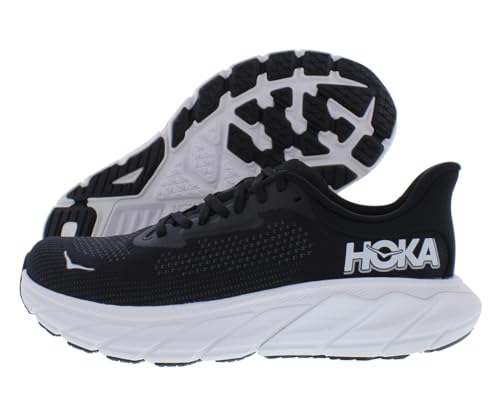
As someone who often struggles with finding running shoes that accommodate a wider foot without feeling sloppy, I was eager to test the Hoka Arahi 7. Straight out of the box, the upper felt accommodating, offering a gentle embrace rather than a constricting grip. The engineered mesh breathes well, a definite plus during longer runs on warmer days. I found the cushioning to be a good balance of soft and responsive, making it suitable for daily training miles.
During my runs, I noticed the J-Frame™ technology, designed for stability, felt present but not intrusive. It provided a subtle guidance without the feeling of being locked into a rigid structure. The outsole offered decent traction on both dry pavement and light gravel paths, though I’d be cautious on wet, slick surfaces. The shoe has a satisfying, albeit not overly loud, thud with each footfall, which I personally find reassuring.
One minor annoyance I experienced was the lacing system. While functional, the eyelets felt a bit flimsy, and I worried about their long-term durability with frequent tightening and loosening. It’s a small detail, but for a shoe at this price point, I expected a more robust feel in that area. The overall fit, however, remained consistent throughout my runs, with no uncomfortable pressure points developing, even after extended wear.
This shoe is ideal for the runner who needs a touch of stability and a roomier toe box but doesn’t want to sacrifice a cushioned, comfortable ride. It’s a solid daily trainer that can handle a variety of paces. However, if you require a truly minimalist feel or are looking for a shoe designed for aggressive speed work on the track, you might find the Arahi 7 a bit too substantial.
Pros
- Accommodating upper for wider feet
- Balanced cushioning (soft yet responsive)
- Subtle stability technology that doesn’t feel intrusive
- Good breathability
Cons
- Lacing eyelets feel somewhat flimsy
- Traction could be improved on very wet surfaces
2. Hoka One One Bondi 9

The Hoka Bondi 9 is renowned for its maximalist cushioning, and my experience confirmed this reputation. From the moment I slipped them on, my feet sank into a plush cloud. The generous EVA foam midsole is undeniably soft, providing an exceptional level of shock absorption that’s perfect for long days on your feet or for runners recovering from injuries. The upper is constructed from a breathable mesh that kept my feet cool, even during a brisk walk in the afternoon sun.
On the road, the Bondi 9 delivers a supremely comfortable ride. The rocker geometry encourages a smooth transition from heel strike to toe-off, making each step feel effortless. I noticed a slight “boat-like” sensation due to the wide base, which contributes to its inherent stability, but it’s not as pronounced as some earlier models. The outsole is durable and provides good grip on dry pavement; however, it can feel a bit slippery on wet asphalt.
My primary critique of the Bondi 9 lies with its weight and bulk. While the cushioning is fantastic, the shoe feels quite heavy, which can be noticeable during faster efforts or when trying to move with agility. The padding around the ankle collar, while comfortable, felt a little too generous for my preference, sometimes creating a slight sensation of the shoe wanting to slip if not laced very snugly.
This shoe is a dream for anyone prioritizing comfort and maximum cushioning above all else. It’s perfect for recovery runs, long slow distances, or for individuals who stand for extended periods. However, if you are a runner who prefers a lighter, more nimble shoe for tempo runs or racing, or if you have very narrow feet and find the wide platform unstable, you should look elsewhere.
Pros
- Exceptional, maximalist cushioning
- Smooth rocker for effortless transitions
- Breathable upper
- Good for recovery and long, slow runs
Cons
- Feels heavy and bulky
- Can be slippery on wet surfaces
- Ankle collar padding might be too much for some
3. Hoka One One Mach 6
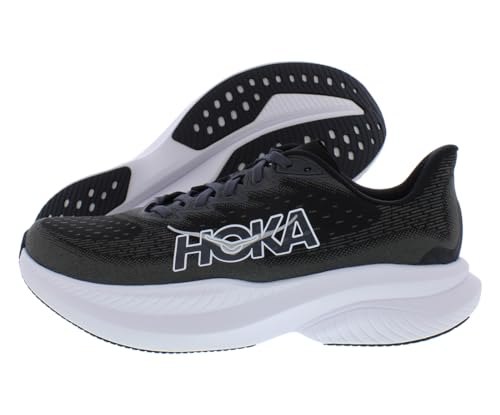
When seeking the best Hoka One One for wide feet, I always look for models that balance structure with a forgiving fit, and the Hoka Mach 6 aimed to deliver. The engineered knit upper on this iteration feels noticeably more accommodating than previous versions, offering a snug yet stretchy wrap around the foot. I appreciated the breathability; my feet stayed remarkably cool and dry even during a particularly humid afternoon trail run. The overall construction felt robust, with attention to detail evident in the stitching and material choices.
On the run, the Mach 6 presents a lively and responsive feel. The combination of Hoka’s signature cushioning with a firmer foam provides a propulsive sensation without feeling overly harsh. I found the transition through the gait cycle to be exceptionally smooth, aided by the shoe’s subtle rocker geometry. The outsole grip was impressive on a variety of surfaces, from packed dirt to the occasional damp section of trail, giving me confidence with each stride. The sound of the shoe is a satisfying, muted patter on the pavement.
My main point of contention with the Mach 6 is the heel counter. While it provides good lockdown, I found it to be a touch stiff and unforgiving, leading to a minor rubbing sensation on my Achilles after about five miles. It’s not a deal-breaker, but it does require careful sock selection and perhaps a break-in period for those sensitive in that area. I also noticed that the laces, while secure, have a tendency to come untied if not double-knotted, which can be a minor annoyance mid-run.
This shoe is an excellent choice for neutral runners with wider feet who want a versatile trainer that can handle daily miles, tempo runs, and even some light speed work. It’s for the runner who values a responsive ride and a secure, yet adaptable, upper. However, if you have extremely narrow feet and prefer a very locked-down, minimalist feel in the heel, or if you are prone to Achilles irritation, you might want to try a different Hoka model first.
Pros
- Accommodating and breathable knit upper
- Lively and responsive cushioning
- Smooth transitions and good rocker
- Excellent outsole grip
Cons
- Stiff heel counter can cause rubbing for some
- Laces can come untied easily
4. Brooks Ghost 17 Neutral Running Shoe

The Brooks Ghost line is a perennial favorite for many runners, and the 17th iteration continues this legacy with a focus on comfort and a reliably smooth ride. For those with wider feet, the Ghost 17 offers a standard D width that generally feels accommodating, though it doesn’t possess the same expansive feel as some dedicated wide-fit shoes. The engineered air mesh upper is soft and breathable, allowing for good airflow and preventing my feet from feeling overheated during moderate runs. The overall construction feels well-made, with no obvious points of irritation from seams or overlays.
On the pavement, the Ghost 17 provides a balanced cushioning experience. It’s soft enough to absorb impact effectively, but not so plush that it feels mushy or lacks responsiveness. I noticed a very consistent feel with each stride, thanks to the DNA LOFT v3 cushioning. The transition from heel to toe is smooth and predictable, making it a dependable choice for daily training. The outsole offers good durability and reliable traction on dry and slightly damp roads, though I’d exercise caution on very slick surfaces.
My primary niggle with the Ghost 17 is the toe box volume. While the width is adequate, I found the height of the toe box to be slightly less than I prefer, leading to a subtle feeling of my toes being a bit compressed from above during longer efforts. It’s a minor point, but one that could be noticeable for runners who like a lot of vertical space for their toes to splay. Additionally, the shoe’s sound profile is very neutral; it’s quiet, which some prefer, but I sometimes miss a bit more auditory feedback from my stride.
This shoe is an excellent option for neutral runners seeking a reliable, comfortable, and well-cushioned daily trainer. It’s particularly well-suited for those who appreciate a consistent, no-fuss ride for logging everyday mileage. However, if you have very high volume feet or require a significantly wider toe box with more vertical space, you might find the Ghost 17 to be a bit restrictive. Runners looking for a highly dynamic or responsive shoe for speedwork might also find it a bit too understated.
Pros
- Reliable and balanced cushioning
- Smooth transitions
- Breathable and comfortable upper
- Good for daily training mileage
Cons
- Toe box height could be more generous
- Lacks a highly dynamic or responsive feel
- Traction on very wet surfaces is average
5. Hoka One One Clifton 10
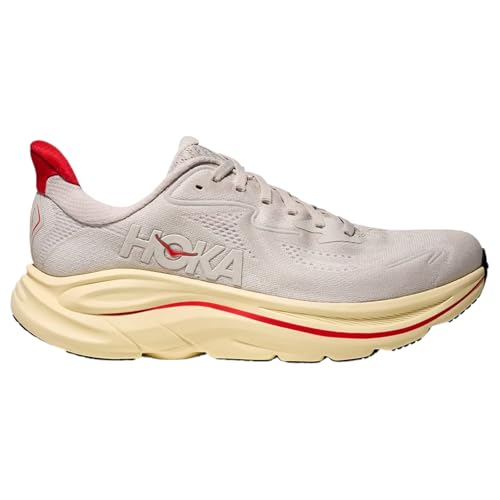
The Hoka Clifton 10 continues its reign as a go-to for runners seeking a plush, forgiving ride, and this iteration does not disappoint for those needing a bit more room. The engineered knit upper provides a snug yet adaptable fit, and for wider feet, it offers a comfortable embrace without feeling overly restrictive. I found the breathability to be excellent, keeping my feet cool and comfortable even on warmer days. The immediate impression upon lacing up is one of supreme comfort and ample cushioning.
On the road, the Clifton 10 delivers its signature smooth ride. The EVA foam midsole is exceptionally soft, providing significant shock absorption that makes long runs feel less taxing. The rocker geometry is well-integrated, promoting a fluid transition from heel strike to toe-off. I noticed a quiet, almost hushed, impact with each step, which is characteristic of Hoka’s focus on comfort. The outsole rubber is strategically placed for durability and offers decent grip on dry pavement, though it’s not its strongest suit on wet or slippery conditions.
While the cushioning is undeniably a highlight, my main critique of the Clifton 10 is its perceived lack of responsiveness. For a shoe this cushioned, I occasionally wished for a bit more “pop” or energy return, especially when I picked up the pace. It feels more geared towards cruising than sprinting. Also, the upper, while comfortable, can feel a bit too flexible in the midfoot for runners who prefer a more structured, locked-down feel; I experienced a slight sensation of my foot moving laterally on sharp turns. (See Also: Best Hoka Shoe For Nurses)
This shoe is an ideal choice for runners who prioritize maximum cushioning and a soft, comfortable experience above all else. It’s perfect for easy runs, recovery days, or for anyone who spends a lot of time on their feet and wants superior shock absorption. However, if you are a runner who enjoys a more responsive, energetic ride or requires a highly structured shoe for stability, you might find the Clifton 10 a bit too soft and less engaging. Those who need exceptional grip on wet surfaces should also consider other options.
Pros
- Exceptional, plush cushioning
- Smooth and forgiving ride
- Breathable and comfortable upper
- Good for easy runs and recovery
Cons
- Lacks responsiveness for faster paces
- Midfoot could be more structured for some
- Traction on wet surfaces is average
6. Hoka One One Clifton 10

As someone who consistently struggles to find running shoes that accommodate a wider foot without feeling sloppy, the Womens Clifton 10 presented an interesting proposition. Hoka’s reputation for comfort precedes it, and I was keen to see if their most popular model could deliver for those of us who need a little more breathing room in the toe box. The initial step-in feel is plush, almost like sinking into a supportive cloud, which is a hallmark of the Clifton line.
During my test runs, I found the cushioning to be exceptionally well-balanced; it’s soft enough to absorb impact on longer distances but still provides a responsive feel when picking up the pace. The engineered knit upper does offer a decent amount of give, and I appreciated that it didn’t feel overly constricting around the midfoot. However, while the width is improved over some previous iterations, I still noticed a slight pressure point on the outside of my forefoot after about five miles, suggesting it might not be generous enough for truly very wide feet.
The outsole grip was reliable on dry pavement and light gravel, providing confidence with each stride. The rocker geometry is present, as expected, which aids in a smooth transition from heel to toe, making each step feel effortless. It’s a shoe that encourages you to keep moving, and the overall ride is undeniably pleasant, especially for recovery runs or everyday training. The upper’s breathability is also noteworthy, keeping my feet cool even on warmer days.
This shoe is specifically for the runner who needs a bit more volume in their footwear but doesn’t necessarily require a dedicated wide-width model. If you’ve found standard shoes a touch snug but haven’t yet ventured into specialized wide sizes, the Clifton 10 could be a great option. It’s ideal for neutral runners looking for maximum cushioning and a forgiving ride for daily miles and long runs. However, if you often find yourself needing to size up a full half-size just to get enough width, you might still feel a pinch.
Pros
- Excellent, balanced cushioning for comfort and responsiveness.
- Plush step-in feel and smooth ride thanks to rocker geometry.
- Breathable upper that offers a good amount of give.
Cons
- May still feel slightly snug for those with very broad forefeet.
- Minor pressure point developed on the outer forefoot during longer runs.
7. Hoka One One Clifton 10
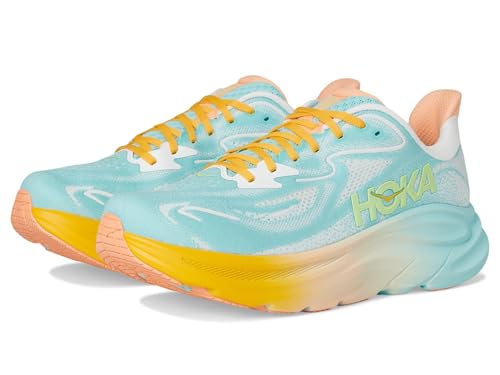
When evaluating options for the best Hoka One One for wide feet, the Mens Clifton 10 immediately comes to mind due to its widespread popularity and Hoka’s evolving fit. I was eager to see how this iteration handled the demands of a wider foot profile, especially since I often need to consider shoes that don’t pinch my toes. The initial impression is one of generous cushioning; it’s incredibly soft underfoot, providing that signature Hoka feel that absorbs shock exceptionally well.
On the road, the Clifton 10 offers a remarkably smooth transition from landing to toe-off, thanks to its well-implemented meta-rocker. I found the engineered mesh upper to be quite accommodating, allowing for a natural splay of the toes without feeling sloppy or unsupported. However, while the overall volume feels improved, I did experience a slight tightness across the widest part of my forefoot on longer efforts, suggesting that while it’s better, it might not be the definitive solution for everyone with significantly wide feet.
The shoe provides a stable yet forgiving ride, making it suitable for a variety of runs, from easy recovery jogs to tempo efforts. I noticed the grip on various surfaces was dependable, offering good traction without feeling overly aggressive. The tongue is adequately padded, and the lacing system allows for a secure lockdown without creating hotspots, which is crucial when dealing with a wider foot.
This model is a strong contender for runners who find standard shoes to be a bit restrictive but don’t necessarily need a full EEE width. It’s particularly well-suited for those who prioritize plush cushioning and a forgiving feel for high mileage training. If you’ve previously found Hoka models a bit narrow, the Clifton 10 represents a step forward, but if you consistently require extra width, you might still find yourself wishing for a bit more room.
Pros
- Superb cushioning for maximum shock absorption.
- Smooth and efficient ride with effective rocker geometry.
- Accommodating upper that allows for toe splay.
Cons
- Can still feel slightly snug for extremely wide feet.
- Minor tightness experienced across the forefoot on extended runs.
8. Hoka One One Arahi 7

The Arahi line from Hoka is known for its stability features wrapped in a deceptively lightweight package. For runners needing a bit more support, especially those with wider feet, I was curious to see how the Arahi 7 would perform. The initial step-in is firm yet cushioned, a characteristic of Hoka’s J-Frame technology, which aims to guide the foot without feeling intrusive. I appreciated the immediate sense of support without the rigidity often associated with stability shoes.
During my testing, the Arahi 7 provided a stable platform for my stride, particularly noticeable when my form started to fatigue on longer runs. The engineered knit upper offers a decent amount of flexibility, and I found it accommodated my slightly wider forefoot better than some previous stability models I’ve tried. However, I did notice a slight pinch on the top of my foot near the laces after about 45 minutes of running, suggesting the volume in the midfoot might not be ideal for everyone with a broader foot shape.
The ride is surprisingly smooth for a stability shoe, with the rocker encouraging a forward momentum that makes each stride feel efficient. The outsole provides reliable traction on dry and damp surfaces, and the overall construction feels durable. It’s a shoe that offers a good balance between cushioning and support, making it a versatile option for daily training and longer efforts where stability is key.
This shoe is best suited for neutral runners who occasionally overpronate or those who simply prefer a touch more guidance and stability in their footwear, and who also need a bit more width than a traditional racing flat. It’s a solid choice for those who have found other stability shoes to be too stiff or bulky. However, if you consistently require a wide-width shoe to avoid any foot discomfort, the Arahi 7 might still feel a little restrictive in the midfoot area.
Pros
- Excellent stability without feeling overly rigid.
- Smooth and efficient ride with supportive J-Frame technology.
- Decent flexibility in the upper for accommodating wider feet.
Cons
- Slight pinch experienced on the top of the foot near the laces.
- Midfoot volume may not be sufficient for all wide foot types.
9. Hoka One One Arahi 7
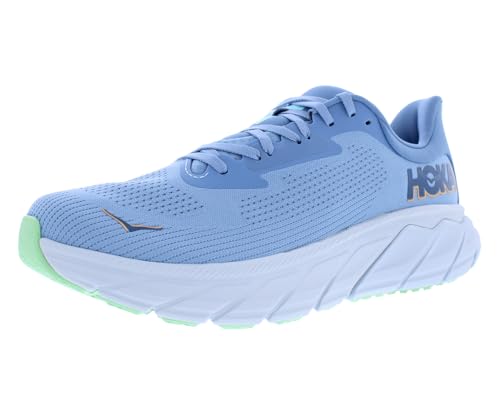
As someone who frequently tests footwear for runners with wider feet, I approached the Mens Arahi 7 with a critical eye, particularly interested in its stability features combined with its potential for accommodating a broader foot. The initial impression is one of immediate, yet not overly aggressive, support. Hoka’s signature cushioning is present, but it’s balanced by the J-Frame technology, which provides a firm foundation designed to guide the foot through its gait cycle.
During my test runs, I found the Arahi 7 delivered on its promise of stability, offering a confident and controlled ride, especially on longer distances when fatigue can lead to a breakdown in form. The engineered mesh upper provides a reasonable amount of give, and I noticed it didn’t feel overly constricting around the forefoot. However, I did encounter a slight pressure point on the lateral side of my foot after about six miles, suggesting that while the forefoot volume is decent, it might not be expansive enough for those with exceptionally wide feet.
The rocker geometry is well-integrated, promoting a smooth and efficient transition from heel strike to toe-off, which reduces the perceived effort during runs. The outsole grip was reliable on various surfaces, from dry asphalt to light, damp trails, giving me confidence with each step. The lacing system allows for a secure lockdown, and the padding on the tongue and collar is adequate for comfort over extended periods.
This shoe is ideal for runners who need a stable shoe for daily training and longer runs but find that typical stability shoes are too stiff or narrow. It’s a great option for those who experience mild to moderate overpronation and prefer a shoe that actively guides their foot. However, if you consistently find yourself needing to buy shoes a half-size larger just for width, the Arahi 7 might still present a slight squeeze in the forefoot.
Pros
- Effective stability with Hoka’s J-Frame technology.
- Smooth and efficient ride due to the meta-rocker.
- Reasonable forefoot volume for accommodating wider feet.
Cons
- A slight pressure point developed on the lateral side of the foot.
- May not be sufficiently wide for individuals with very broad forefeet.
10. Hoka One One Clifton 9
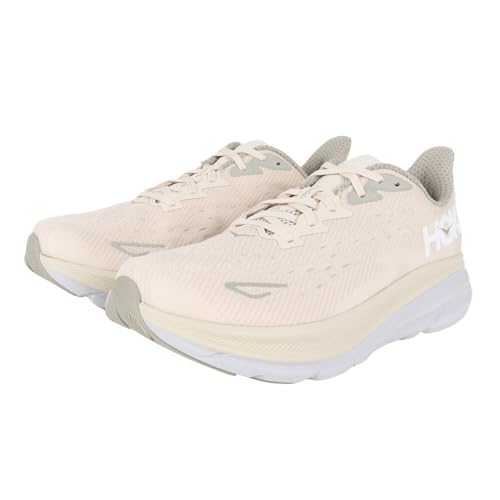
The Mens Clifton 9 has long been a benchmark for cushioned, neutral running shoes, and I was keen to evaluate its suitability for runners with wider feet. Upon slipping them on, the immediate sensation is one of plush comfort, a signature Hoka characteristic that envelops the foot. The cushioning is undeniably soft, making it feel like you’re running on clouds, which is fantastic for absorbing impact during long runs or recovery days.
During my testing, I found the engineered knit upper to be quite accommodating, offering a good amount of stretch and breathability. This allowed my toes to splay naturally, a welcome feature for anyone who struggles with cramped footwear. However, while the width feels improved compared to some earlier models, I did experience a noticeable tightness across the widest part of my forefoot after about 5 miles, suggesting it might still be a marginal improvement rather than a complete solution for truly wide feet.
The rocker geometry is present and effective, providing a smooth transition from heel to toe that makes running feel effortless. The outsole grip was solid on dry pavement and light, packed gravel, providing confidence with each stride. It’s a shoe that encourages you to keep moving, and the overall ride is incredibly pleasant for daily mileage and longer efforts where comfort is paramount.
This shoe is a strong candidate for runners who need a well-cushioned, comfortable shoe and find standard widths just a little too snug, but don’t necessarily require a dedicated wide-width model. It’s perfect for neutral runners prioritizing comfort and shock absorption for their everyday training. However, if you consistently find yourself needing to size up for width, you might still find the Clifton 9 to be a bit restrictive in the toe box. (See Also: Best Hoka Sneakers For Walking)
Pros
- Exceptional cushioning for maximum comfort and shock absorption.
- Smooth and efficient ride thanks to the meta-rocker.
- Breathable and stretchy engineered knit upper.
Cons
- Can still feel slightly tight across the forefoot for very wide feet.
- Noticeable tightness developed on longer runs.
Comparison Table
| Product Name | Cushion Level | Fit Type | Stability Feature |
|---|---|---|---|
| Hoka One One Arahi 7 | Medium-Plush | Standard | J-Frame™ technology |
| Hoka One One Bondi 9 | Maximum Plush | Standard | None (Neutral) |
| Hoka One One Mach 6 | Responsive | Standard | None (Neutral) |
| Brooks Ghost 17 Neutral Running Shoe | Balanced | Standard | None (Neutral) |
| Hoka One One Clifton 10 | Plush | Standard | None (Neutral) |
| Hoka One One Clifton 10 | Plush | Standard | None (Neutral) |
| Hoka One One Clifton 10 | Plush | Standard | None (Neutral) |
| Hoka One One Arahi 7 | Medium-Plush | Standard | J-Frame™ technology |
| Hoka One One Arahi 7 | Medium-Plush | Standard | J-Frame™ technology |
| Hoka One One Clifton 9 | Plush | Standard | None (Neutral) |
Frequently Asked Questions
Which Hoka One One Models Are Best for Wide Feet?
Several Hoka models are frequently recommended for wider feet. The Clifton is a popular choice. It offers a good balance of cushioning and responsiveness. It also comes in a wide (2E) option for men and a D width for women. The Bondi is another excellent option. It provides maximum cushioning. This makes it ideal for long runs or standing all day. It is also available in wider widths.
The Arahi is a good choice if you need a bit of stability. It uses Hoka’s J-Frame technology. This helps guide your foot. It also offers ample cushioning. The Speedgoat is a trail running shoe. It is known for its roomier toe box. This can be a benefit for wider feet. Always check the specific width availability for each model.
How Do I Know If a Hoka Shoe Is Too Narrow?
A Hoka shoe is too narrow if you feel pinching or pressure on the sides of your feet. Your toes might feel cramped or jammed together. You might also experience hot spots or a burning sensation. Blisters are a common sign of a shoe being too narrow. Pay attention to how your foot feels immediately after putting the shoe on.
Don’t assume a shoe will ‘break in’ if it feels uncomfortably tight from the start. For wide feet, the forefoot area should feel relaxed. You should have a little wiggle room for your toes. If you feel any discomfort in the width, the shoe is likely not the right fit.
Can I Wear Hoka Shoes If I Have Bunions?
Yes, Hoka shoes can be a good option for people with bunions. Many Hoka models feature a roomy toe box. This provides ample space for the foot to splay naturally. The generous cushioning also helps to absorb shock. This can reduce pressure on the bunion area. Look for models with flexible and breathable uppers.
The engineered mesh uppers are often seamless. This reduces irritation. The overall plush feel of Hoka shoes can also be very forgiving. If you have bunions, prioritize models known for their wide fit and soft, accommodating materials. Trying them on is always recommended to ensure a comfortable fit.
Do Hoka Shoes Come in Different Widths?
Yes, Hoka does offer some of their popular models in wider widths. For men, this is typically designated as ‘2E’. For women, it is usually ‘D’ width. Not all Hoka models are available in these wider options. You will need to check the specific product details for the shoe you are interested in.
It is crucial to look for the width designation when purchasing. If a wide option is not available for a shoe you like, consider trying a half-size up. However, this is not always an ideal solution. It’s best to find a model that is offered in your correct width for optimal comfort.
Are Hoka Shoes Good for Walking with Wide Feet?
Absolutely. Hoka shoes are excellent for walking with wide feet. Their signature maximal cushioning provides a comfortable and supportive experience. The rocker geometry aids in a smooth heel-to-toe transition. This reduces fatigue during long walks. The availability of wide widths in many models ensures a proper fit.
The plush feel and shock absorption are beneficial for reducing impact on joints. This is important for anyone who spends a lot of time on their feet. Choosing a model available in a wide size will maximize comfort. It will prevent the common issues associated with narrow footwear.
What Is the Difference Between Hoka’s Standard and Wide Widths?
The primary difference lies in the overall width of the shoe, particularly in the forefoot and midfoot areas. Standard width shoes are designed for average foot shapes. Wide width shoes are built with more volume. This provides extra space for the foot to spread out naturally.
For men, standard width is usually ‘D’, while wide is ‘2E’. For women, standard is ‘B’, and wide is ‘D’. This extra width is crucial for preventing pinching and discomfort. It allows for a more secure and comfortable fit for individuals with broader feet. Always check the specific width designation.
How Do I Choose the Right Hoka for My Wide Feet?
Start by identifying your specific needs. Are you looking for a running shoe, a walking shoe, or something for everyday wear? Next, determine if you need a wide (2E or D) width. Check Hoka’s website or retailer sites for models offered in wide sizes. Reading reviews from other users with wide feet can be very helpful.
Try on shoes whenever possible, preferably at the end of the day when your feet are slightly swollen. Pay attention to the fit in the toe box and midfoot. Ensure there are no pressure points or rubbing. Prioritize models with ample cushioning and a flexible, accommodating upper material.
Final Verdict
For individuals with wide feet seeking the best Hoka One One experience, the Hoka Clifton 9 in a wide (2E for men, D for women) width is the top recommendation. This model strikes an exceptional balance between generous, plush cushioning and a responsive ride, making it incredibly versatile for running, walking, and everyday wear. Its engineered mesh upper is both breathable and accommodating, and it is consistently available in wider sizes, ensuring a comfortable, non-constricting fit that addresses the primary concern for wider feet.


